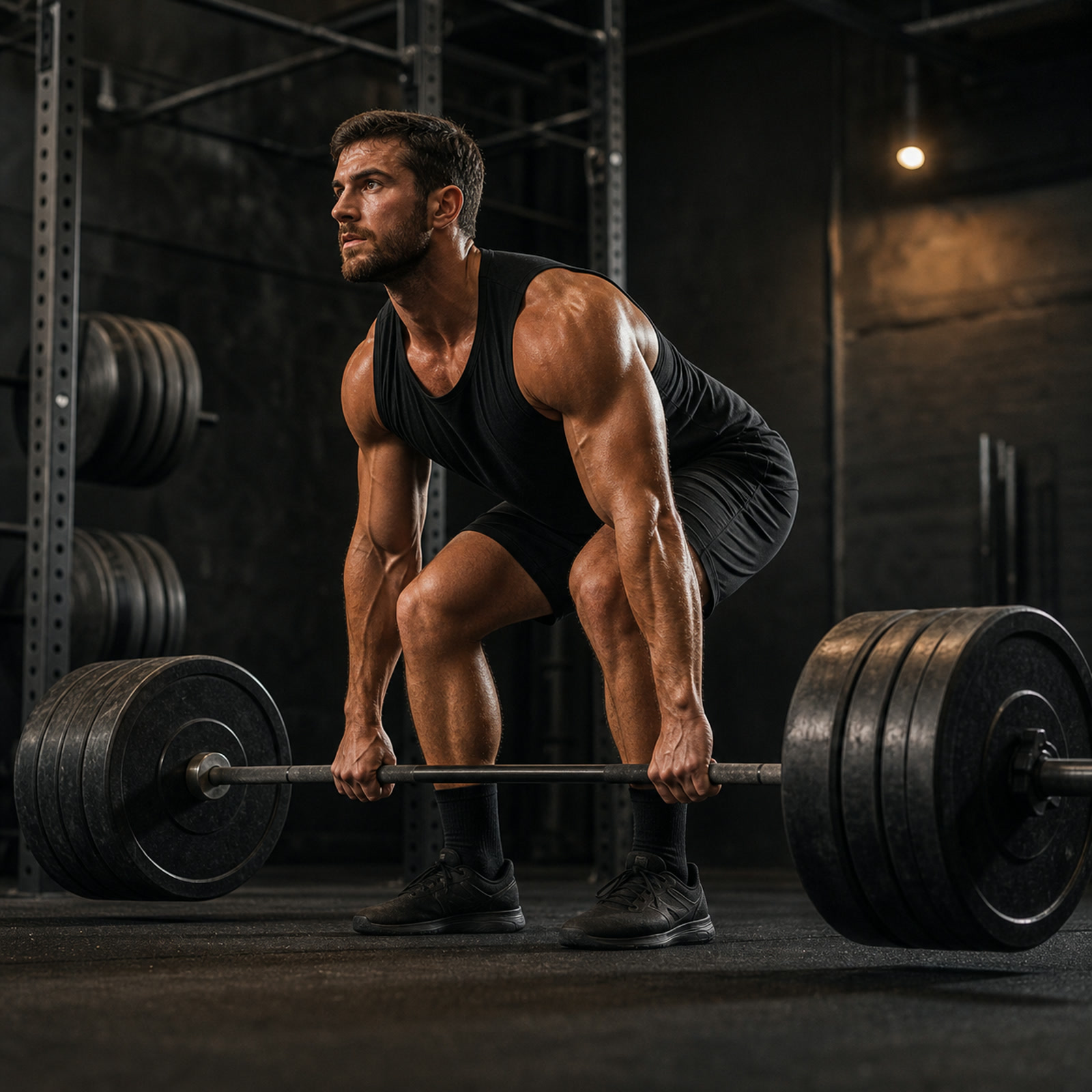
Bodyweight Squat
0% read · 1 min left
A free-standing squat using only bodyweight — the base lower-body pattern, training the quads and glutes and teaching the squat mechanics behind every harder variation.
Detail
Stand with feet about shoulder-width, toes slightly out. Push the hips back and bend the knees to lower until the thighs are at least parallel to the floor (or to comfortable full depth), keeping the chest up, heels down, and the knees tracking over the toes (knee-toe-relationship). Drive through the feet to stand. The quadriceps extend the knees while the gluteus-maximus and hamstrings extend the hips.
Because two-leg bodyweight squats become endurance-dominant for most trainees, progress by adding reps and tempo, then move to unilateral work (split-squat and the pistol-squat-progression) for strength overload. It is also the base for the explosive jump-squat. The loaded analogue is the squat.
Key facts
- Feet ~shoulder-width; descend to at least parallel; knees track over toes; heels down.
- Quads extend knees; glutes and hamstrings extend the hips.
- Two-leg version is endurance-biased — progress to unilateral squats for strength.
- Base for jump squats and the pistol progression.
Connections
- pistol-squat-progression — step 1.
- split-squat — the next unilateral step.
- squat — loaded analogue; jump-squat — plyometric version.
- quadriceps / gluteus-maximus — prime movers.
Educational content only — not medical advice. Always consult a qualified professional for individualized guidance, especially around injury, pregnancy, or medical conditions.