Fysiqal builds 12-week programs matched to your goals and equipment, adapts them to how you're actually recovering, and grades your form from video — one system that gets sharper every session you log.
One hard set. One bad night. Watch the plan respond.
Plan, train, recover, adapt — followed through one example athlete. Every number below is computed by the same engine the app runs; none of it is a real person's data.
01 — PlanExample athlete
12 weeks. 4 phases.
A 12-week block, built around you
Week 6 · Intensification. How hard is decided before you touch a bar.
See the receipt
Plan · the receipt
Your program is generated from the exercise graph in four phases — volume first, then intensity, a short peak, then a deload. Each phase carries its own set counts and effort targets, so “how hard” is defined before you ever touch a bar.
Week 6 of 12Example program
Accumulation
Intensification · Week 2 of 4
Realization
Deload
Accumulation4 wk · RPE 7–8Build work capacity, moderate intensity · high volume
12-week block: Accumulation 4 weeks at RPE 7–8, Intensification 4 weeks at RPE 8–9, Realization 3 weeks at RPE 8–9, Deload 1 week at RPE 6–7. This is week 6.
Today · Bench Press220 lb× 5RPE 8–93 sets · how hard is set before you start
02 — TrainExample athlete
220 lb × 5 @ RPE 9.5
Log what actually happened
The phase asks for RPE 8–9. The last set went past it — logged, not judged.
See the receipt
Train · the receipt
The last set of bench lands at RPE 9.5 — harder than this phase asks for. You log load, reps and how hard it felt; that is all the loop needs. Nothing extra to wear.
Bench Press
Target RPE 8–9
Example logged bench press sets
Set
Load × reps
RPE
1
220 lb × 5
8.5
2
220 lb × 5
9
3
220 lb × 5
9.5 (above target)
Last set at RPE 9.5 — above the phase target.
Bench PressExample
Target RPE 8–9Bar loaded · 220 lb
Set 1220 lb × 5RPE 8.5
Set 2220 lb × 5RPE 9
Set 3220 lb × 5RPE 9.5RPE 9.5 (above the target)
Last set 220 lb × 5 · RPE 9.5 — above the 8–9 target
03 — RecoverExample athlete
Readiness 38
Active recovery, between sessions
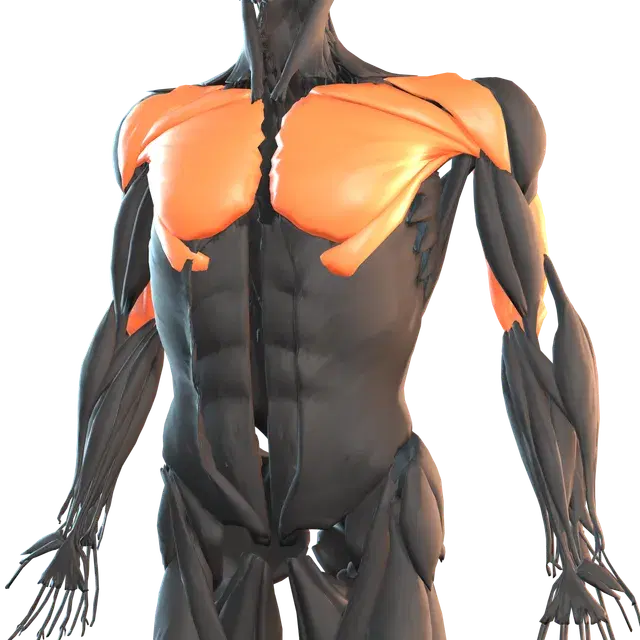
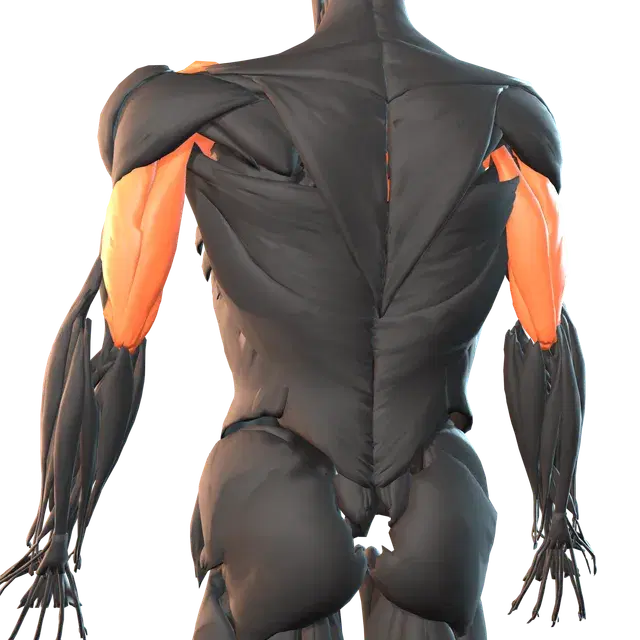
Mobility, rolling, breathwork — done. But the night was 5 hours of bad sleep, so chest, front delts and triceps still carry recovery debt.
See the receipt
Recover · the receipt
Recovery happens between sessions. The cooldown and the breathwork are real practices the app runs and logs; foam rolling and percussion are comfort — they can ease soreness for a while, they don't repair muscle — and the sauna is a lifestyle choice the app doesn't track. None of it moves the estimate: Fysiqal reads what each muscle is still recovering from (the volume and effort you logged, and the hours since), and sleep, the main driver, feeds whole-session readiness separately. The two are never double-counted.
The night afterExample
Sleep
5 h of 8 h
Sleep quality
1/5 · poor
Soreness
3/5
Energy
2/5
38
Readiness 38 · Compromised
Self-reported only — no wearable connected.
Muscle recovery · 14.5 h after benchExample
ChestElevated recovery debt
Shoulders (front delts)Elevated recovery debt
TricepsElevated recovery debt
Every other muscle: no recent load, nothing changed.
Whole-session readiness (sleep, soreness, energy) is a separate signal — the two are never double-counted. Muscle recovery is an estimate from logged volume, effort and time since — not a measurement of the muscle itself.
Between sessionsExample
Upper Body CooldownWellness · 5 min · loggedChild's pose with reach — opens the chest and shoulders that are still carrying debt
Wind-down · 4-7-8 BreathingMind-Body · 5 min · logged
Massage and foam rolling modestly ease perceived soreness — short-term comfort, not lasting tissue change. Sleep is the main driver of recovery; none of these rows changes the estimate.
Between sessions · 14.5 hExample · estimate
ChestElevated recovery debt
Front deltsElevated recovery debt
TricepsElevated recovery debt
Upper Body CooldownChild's pose with reach — opens the chest and shoulders that are still carrying debtWellness · 5 min · logged
Wind-down · 4-7-8 BreathingMind-Body · 5 min · logged
Sleep · the main driver5 hof an 8 h target
38Readiness · compromisedAn estimate from logged volume, effort and time since — not a measurement.
04 — AdaptExample athlete
−2 sets. Main lifts untouched.
A change you can read before it happens
Small trims apply on their own. Anything bigger waits for you — or your coach.
See the receipt
Adapt · the receipt
The small, bounded trim — one set, only where a muscle is still recovering — applies on its own. The bigger change is a proposal: why, how sure, what stays the same. It waits for you, or for your coach on a coached plan.
Today's session adjusted Waiting for you
Today only: two sets fewer on accessory work, main lifts unchanged, and cap effort at RPE 7.
Because
Today's readiness came in at 38 (compromised) — driven mainly by sleep quality and energy.
Sleep duration 63/100 (self-reported)
Sleep quality 0/100 (self-reported)
Freshness (soreness) 50/100 (self-reported)
Energy 25/100 (self-reported)
Confidence
Medium — Based on self-reported check-in signals only — no wearable data yet, so capped at medium.
Today's session
Example next session: planned sets, sets now, and sets if the change is accepted
Exercise
Plan
Now
If accepted
Back Squat
4
4
4
Incline Dumbbell Press−1 set: chest still recovering
3
2
2
Lateral Raise−1 set: shoulders still recovering
3
2
1
Cable Crunch
3
3
1
Sets shown; effort capped at RPE 7 if accepted. Main-lift stimulus is fully preserved — only accessory volume comes down today.
What stays exactly as it is
Your exercises and their order stay the same
Your program and next sessions are untouched
Tomorrow resets to the plan automatically
Accept Reject
In the app: accept it, keep only the changes you pick, or reject it. Accepting is reversible for 24 hours.
Training on your own
Readiness adjustment waits for you to approve.
Muscle readiness trim applies on its own within the plan’s limits; bigger changes wait for you.
On a coached plan
Readiness adjustment waits for your coach.
Muscle readiness trim waits for your coach. Your coach can choose to let small trims apply on their own.
Today's sessionExample
Back Squat4 sets untouched
Incline Dumbbell Presschest still recovering33 sets planned, now2 sets
Lateral Raiseshoulders still recovering33 sets planned, now2 sets
Cable Crunch3 sets untouched
−2sets applied on their own — small, bounded, only where a muscle is still recovering
Bigger change Readiness adjustment waits for you to approve.On a coached plan: waits for your coach.
FORM STUDIO
Film a set. Get a read you can check.
Form Studio counts your reps, grades each one against Fysiqal's own movement rubric — every common fault marked clean, minor or major — and finishes with the cues to apply on your next set. Only the reps it can clearly see get a score.
Squat and push-up sets are read rep by rep: at least two clear reps or no score — it tells you how to re-film instead of guessing.
A major fault can hold that lift’s load steady while you rebuild the pattern — as a suggestion, never a silent change.
Library demo clip, shown for illustration — in the app this is your own phone video.
AI-observed read · Squat set Example read
77
Solid3 of 3 reps read
Per-rep breakdown
Rep 184/100
No faults flagged for this rep.
Rep 276/100
Cutting depth — turning around above parallel when you could go lower with heels down and a neutral back.MinorTurned around higher than rep 1 — a little short of the depth you controlled on the first rep.
Rep 372/100
Cutting depth — turning around above parallel when you could go lower with heels down and a neutral back.MinorFastest descent of the set and the highest turnaround — well short of rep 1’s depth.
77
Solid~77/100 avg
Scored 3 of 3 repsAverage of the 3 clearly visible reps.
Evidence queue5 checked against the squat rubric
Excessive forward torso lean turning it into a good-morning.Clean
Cutting depth — turning around above parallel when you could go lower with heels down and a neutral back.Minor · reps 2, 3Turned around higher than rep 1 — a little short of the depth you controlled on the first rep.
Losing the brace and rounding the lower back at the bottom.Clean
Heels lifting off the floor at the bottom, shifting the weight onto the toes.Clean
Slamming into a hard, hyperextended lockout at the top instead of stopping at full extension.Clean
Apply next set
1Reach at least thighs-parallel; go deeper if your heels stay down and your back stays neutral — then drive up.
2Brace the trunk before you descend — big breath into the belt line.
Camera angle · The squat rubric suggests filming from the front. Front-on best shows knee valgus. Depth and torso lean are easier to judge from the side. This clip is side-on, so this read leaves out: Knees collapsing inward (valgus) on the drive out.
Technique coaching against a movement rubric, not a medical or injury assessment. A qualitative read from a vision model — not a clinically validated score.
Coached Example
On a coached plan, your coach checks this read.
Each finding can be agreed, modified or dismissed before it reaches your plan.
Cutting depth — turning around above parallel when you could go lower with heels down and a neutral backAI: Minor Agreed by your coach
ONE LOGGED SET
One session, everywhere.
The loop's hard bench set doesn't stay in your log. Your fuel, your recovery, the why, the how, your progress and your coach all pick it up — nothing to re-enter.
Set logged Example athlete
220 lb × 5
Bench Press · set 3 of 3
RPE 9.5target 8–9
Set 1220 lb × 5RPE 8.5
Set 2220 lb × 5RPE 9
Set 3220 lb × 5RPE 9.5
Nutrition
TODAY'S FUEL
Rest day2,473 kcal
Today2,857 kcal
Carbs 288 → 384 g · protein 148 g both days
Light session: Bench Press — carbs close to your baseline. Example: 180.8 lb, strength goal, 4 training days a week.