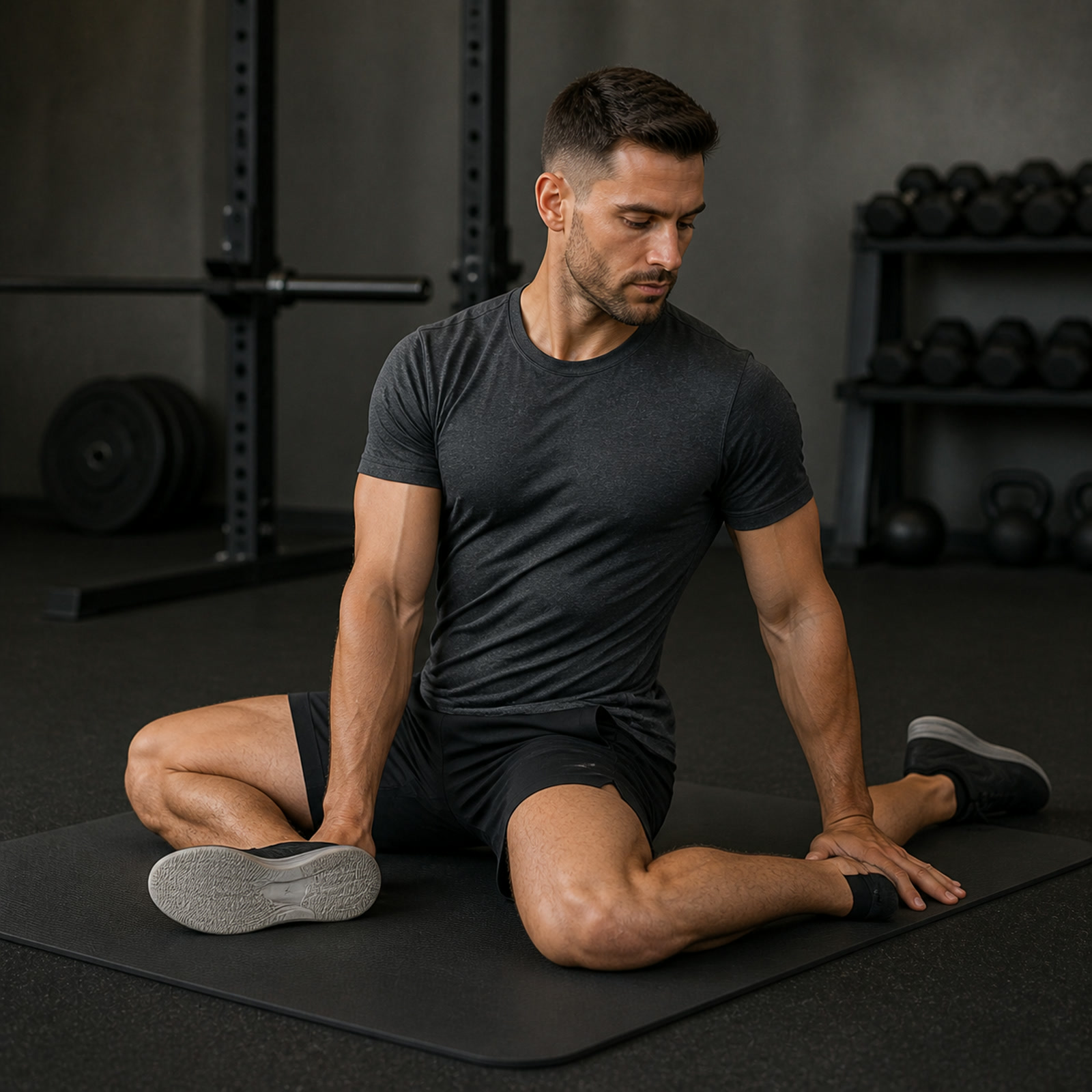
Neuromotor Fitness
0% read · 2 min left
The "fourth pillar" of fitness alongside cardio, strength, and flexibility — training balance, agility, coordination, and gait so the nervous system controls movement well, not just the muscles producing it.
Detail
Neuromotor fitness (also called functional fitness training) is the ACSM-recognized component of fitness that targets the nervous system's control of movement rather than energy systems or muscle force alone. ACSM added neuromotor exercise as a distinct recommended training component in its 2011 position stand and 2014 guidance, making it the fourth pillar alongside cardiorespiratory (cardiorespiratory-guidelines / *), resistance, and flexibility (flexibility-guidelines-acsm) training.
It encompasses:
- Balance — static and dynamic equilibrium (see balance-definition).
- Agility — rapid, accurate changes of body position and direction (overlaps reactive-agility).
- Coordination — smooth, accurate sequencing of movement (see coordination).
- Gait — the control of walking.
- Often grouped with proprioceptive training and multimodal activities such as tai chi (tai-chi-principles) and yoga (yoga-overview).
The principal benefits are improved physical function and reduced fall risk, with the strongest evidence in older adults (see fall-prevention-overview). ACSM recommends neuromotor exercise 2–3 days per week (see neuromotor-acsm-recommendation). Because it trains motor control (motor-control) rather than tissue capacity, neuromotor work is highly task-specific: improvement transfers best to tasks resembling those trained.
Key facts
- Neuromotor = the nervous-system-control pillar of fitness; ACSM's fourth recommended component (added 2011/2014).
- Components: balance, agility, coordination, gait (plus proprioceptive and multimodal activities like tai chi/yoga).
- Primary benefits: improved functional performance and reduced fall risk (strongest in older adults).
- ACSM recommendation: 2–3 days/week.
- Highly task-specific — train what you want to improve.
Connections
- balance-definition, coordination, reactive-agility — its sub-components.
- motor-control — what neuromotor training develops.
- neuromotor-acsm-recommendation — the dose.
- tai-chi-principles, yoga-overview — multimodal neuromotor activities.
- flexibility-guidelines-acsm — sibling fitness pillar.
Educational content only — not medical advice. Always consult a qualified professional for individualized guidance, especially around injury, pregnancy, or medical conditions.