Types of Warm-Up (Passive, General, Specific)
0% read · 2 min left
Warm-ups fall into three categories — passive (external heat), general (unrelated large-muscle movement), and specific (reduced-intensity versions of the target activity) — with a specific warm-up preferred when possible.
Detail
Warm-up routines are typically classified into three categories (Safety Aspects of Resistance Training, p. 452; and Types of Warm-up, p. 424):
- (i) Passive warm-up — raises body temperature by some external means such as heating pads and hot showers (also whirlpools). Often used by physical therapists; not practical for most adult fitness clients.
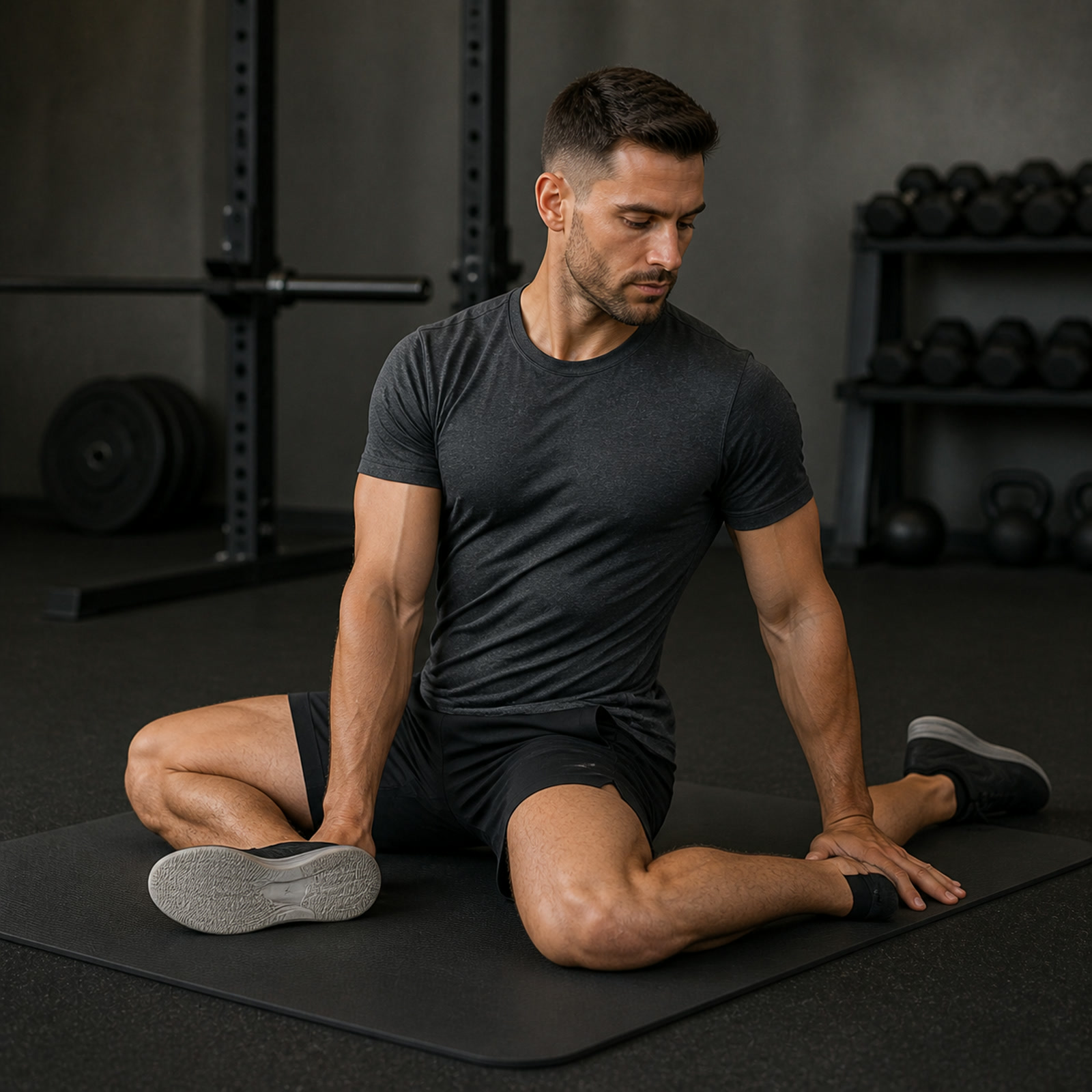
- (ii) General warm-up — probably the most commonly used technique. It employs various movements not directly related to the movement in the activity itself — light calisthenics, walking, cycling, jogging, or stepping (repetitive movement of large muscle groups using calisthenic-type exercises).
- (iii) Specific warm-up — includes movements that either mimic or are employed in the actual activity, performed at a reduced level of intensity (e.g., bench press at ~50% 1RM for 12–15 reps; a tennis player's footwork and easy hitting; a jogger's slow mile; an aerobic dancer's gentle versions of routine motions).
Which is best? All have their place. General and specific warm-ups are both seen in adult fitness programs; both increase muscle temperature and produce the physiological changes of a warm-up. A specific warm-up has the additional advantage of rehearsing the events to come and warming up the specific neuromuscular body parts used in the target activity, so it is advisable to use a specific warm-up whenever possible.
Key facts
- Three warm-up types: passive, general, specific.
- Passive: external heat (heating pads, hot showers, whirlpools); not practical for most fitness clients.
- General: large-muscle movements unrelated to the target activity (calisthenics, walking, cycling, jogging, stepping).
- Specific: reduced-intensity versions of the target activity (e.g., 50% 1RM × 12–15 reps).
- Specific warm-up preferred when possible (rehearsal + specific neuromuscular preparation).
Connections
- warm-up-aerobic-general — the general aerobic warm-up prescription.
- warm-up-specific — the specific warm-up prescription.
- warm-up-how-much — duration and intensity targets.
- warm-up-physiology — the physiological changes a warm-up produces.
Educational content only — not medical advice. Always consult a qualified professional for individualized guidance, especially around injury, pregnancy, or medical conditions.