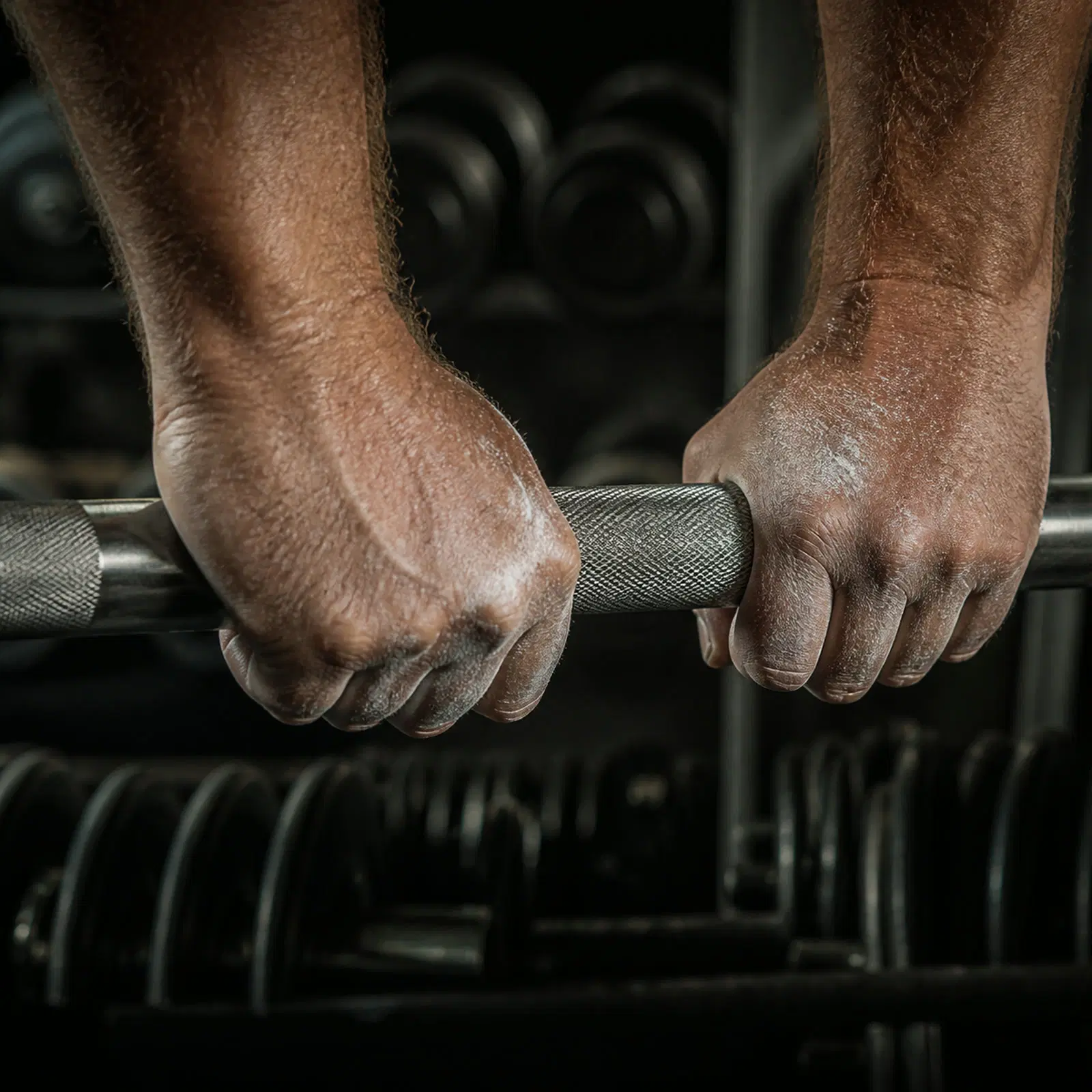
Ab Wheel
Sources and review status
Review pending — this text hasn’t been signed off by a reviewer yet.
See this lesson’s sources0% read · 1 min left
A small wheel with handles for rollouts — one of the most effective and cheapest tools for anti-extension core strength, demanding a braced, neutral spine throughout.
Detail
The ab wheel is a wheel through an axle with handles. The rollout (Ab Wheel Rollout) — rolling out to extension and pulling back — is a premier anti-extension core exercise: the abdominals work hard to keep the lumbar spine from arching as gravity tries to extend it (see Anti-Movement Core Training (Anti-Extension, Anti-Rotation, Anti-Lateral-Flexion), Rectus Abdominis).
Pros: very cheap and tiny; highly effective full-core loading that scales from kneeling partial rollouts to standing full rollouts.
Cons / caution: it is deceptively advanced. If the core can't resist the load, the lumbar spine hyperextends (sags), loading the low back like an uncontrolled sit-up pattern (see Iliopsoas, Lumbar Lordosis & Sit-Up Lower-Back Caution). Beginners must brace hard, keep the pelvis tucked slightly, and limit ROM (kneeling, partial range, or rolling toward a wall) before progressing. Those with low-back issues should be cautious.
Key facts
- Wheel + handles; the rollout is a top-tier anti-extension core drill.
- Trains the abs to resist lumbar extension (brace, neutral/slightly-tucked spine).
- Cheap and compact; scales kneeling-partial → standing-full.
- Caution: lumbar sag under load stresses the low back; advance ROM gradually.
Connections
- Ab Wheel Rollout — the movement.
- Hollow Body Hold — related braced anti-extension position.
- Anti-Movement Core Training (Anti-Extension, Anti-Rotation, Anti-Lateral-Flexion) — anti-extension is the training intent.
- Iliopsoas, Lumbar Lordosis & Sit-Up Lower-Back Caution — lumbar-sag hazard analogue.
- Rectus Abdominis — primary muscle worked.
Sources
Exercise guides
Keep this lesson, or ask how it applies to you.
Educational content only — not medical advice. Always consult a qualified professional for individualized guidance, especially around injury, pregnancy, or medical conditions.