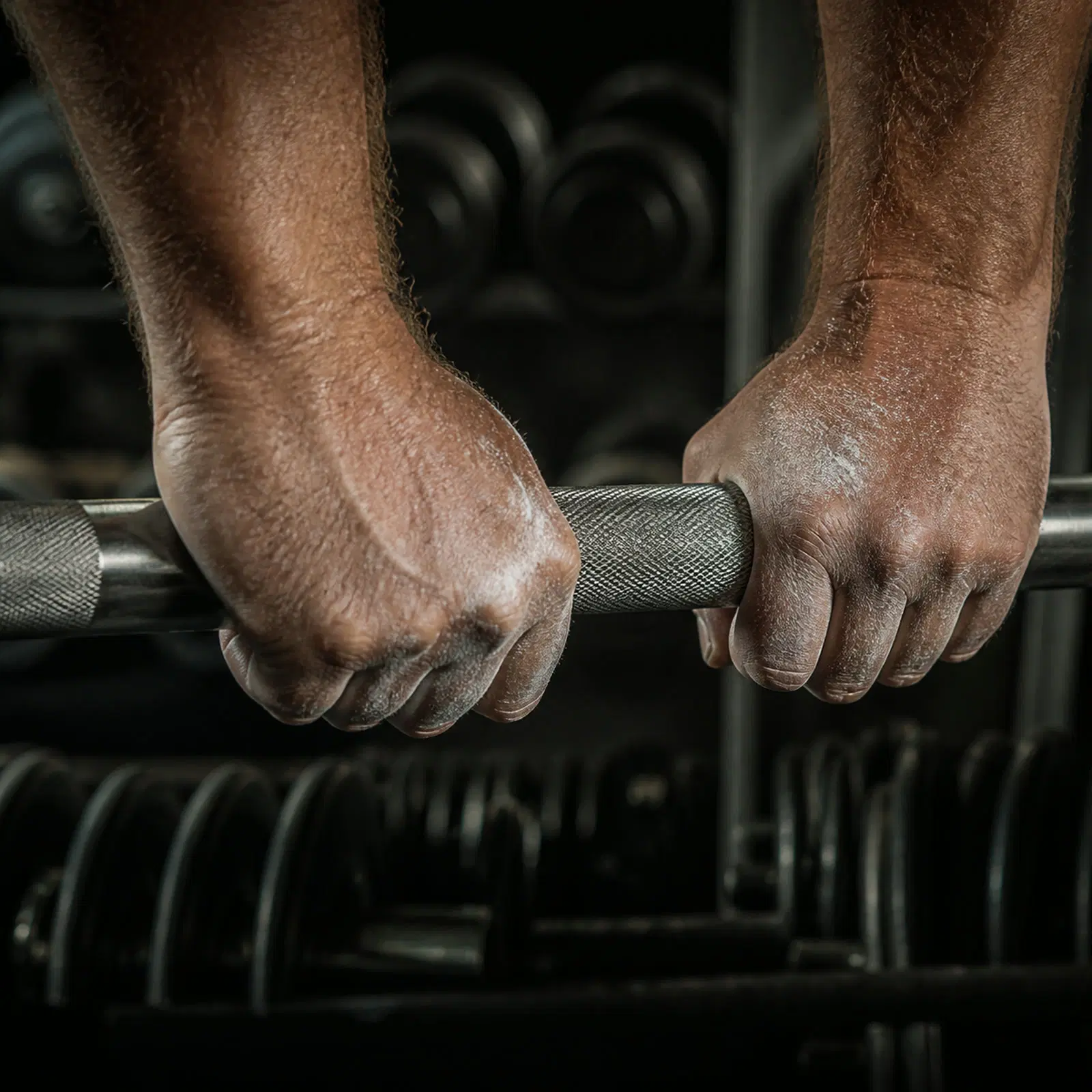
Pull-Up Bar
Sources and review status
Review pending — this text hasn’t been signed off by a reviewer yet.
See this lesson’s sources0% read · 1 min left
A horizontal bar to hang from — the simplest, highest-value piece of calisthenics gear, unlocking pull-ups, chin-ups, hangs, and hanging core work.
Detail
A pull-up bar enables the entire vertical-pulling family — Pull-Up Progression, chin-ups, dead hangs (Dead Hang), and hanging knee/leg raises (Hanging Knee Raise) — which are otherwise hard to train without weights or a cable.
Mounting types
- Doorway (tension/leverage) bar: cheapest, no install; the leverage type rests against the frame above the door (safer, higher rated) while pure tension-rod bars rely on friction and can slip — check the weight rating and frame integrity.
- Wall-/ceiling-mounted: bolted in; very secure and higher capacity; allows kipping and multiple grips; needs solid studs/joists.
- Free-standing tower / power rack bar: part of a rack or tower; no drilling; takes floor space.
Grip options: wide/narrow pronated, neutral, supinated (chin-up); multi-grip bars offer several at once.
Pairings: loop a Resistance Bands & Tubing over the bar for band-assisted pull-ups, or hang Gymnastic Rings from a high bar to expand the movement library. It is a top-tier Home Gym (Budget Tiers & What to Buy First) and small-space buy.
Key facts
- Unlocks pull-ups, chin-ups, dead hangs, hanging core work.
- Doorway: leverage type (safer, rests on frame) vs. tension rod (friction, can slip) — check rating.
- Wall/ceiling mount: most secure, highest capacity, supports kipping/multi-grip.
- Pairs with assistance bands and gymnastic rings.
Connections
- Pull-Up Progression — the skill it builds toward.
- Dead Hang / Hanging Knee Raise — hang-based work.
- Resistance Bands & Tubing — band-assisted pull-ups.
- Gymnastic Rings — hang from a high bar.
- Home Gym (Budget Tiers & What to Buy First) — high-value minimal-space buy.
Sources
Exercise guides
Keep this lesson, or ask how it applies to you.
Educational content only — not medical advice. Always consult a qualified professional for individualized guidance, especially around injury, pregnancy, or medical conditions.