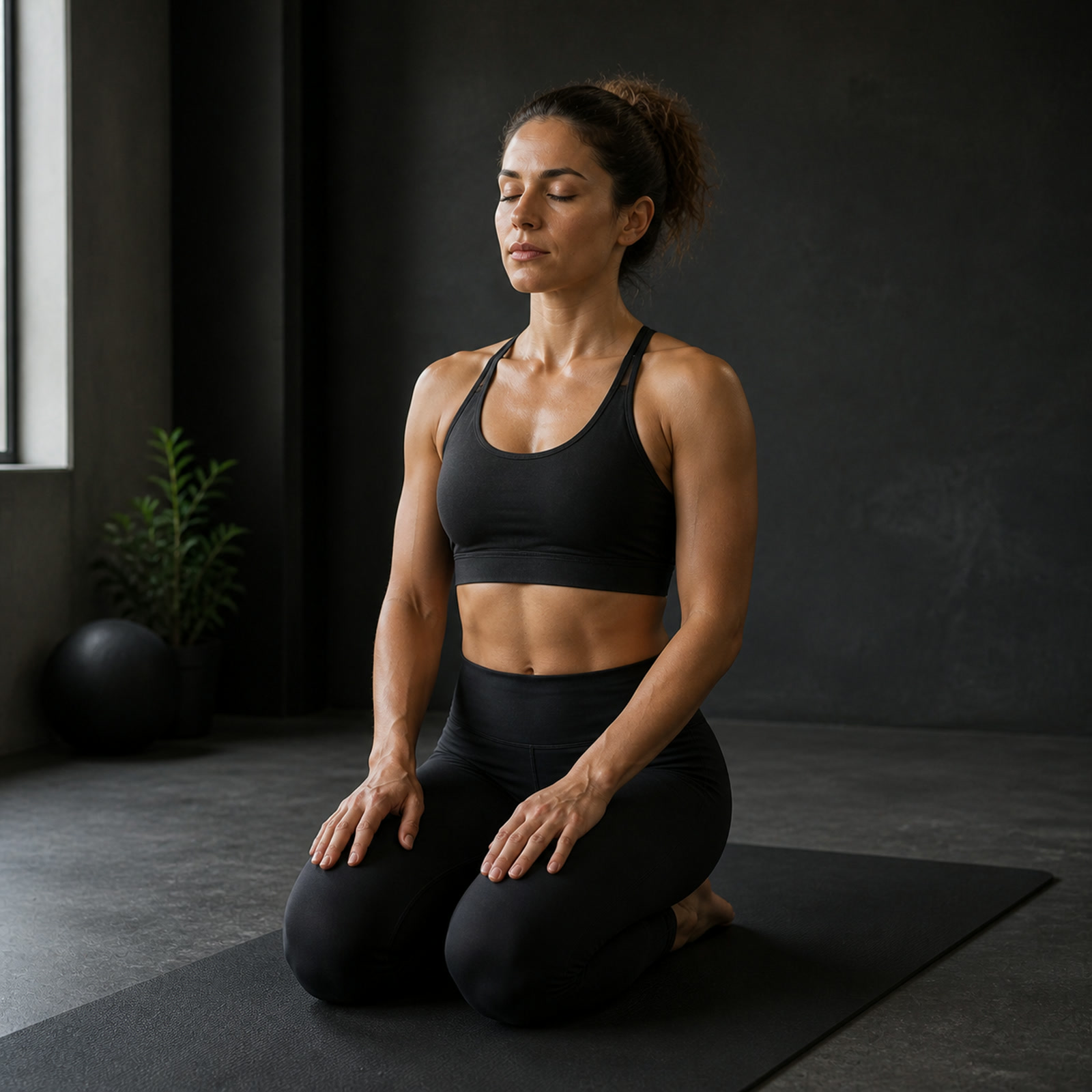
Box Breathing (4-4-4-4)
0% read · 1 min left
A simple equal-count pattern — inhale 4, hold 4, exhale 4, hold 4 — used to calm the nervous system and steady focus under stress.
Detail
Box (or "square") breathing cycles four equal phases, classically 4 seconds each: inhale for 4, hold for 4, exhale for 4, hold for 4, then repeat for several minutes. The full controlled breaths engage the diaphragm (diaphragmatic-breathing); shallow chest breathing does not produce the same effect. The count can be lengthened (e.g., 5-5-5-5) as comfort allows.
Used to down-regulate acute stress, slow the heart rate, and sharpen focus — popularized in high-pressure settings (e.g., tactical/athletic pre-performance routines). In head-to-head studies, box breathing reliably reduced acute anxiety and improved mood, though not significantly more than other slow-breathing protocols; the key variable appears to be the slowed respiratory rate rather than the specific square pattern. Skip or shorten the breath-holds if they cause lightheadedness or air hunger.
Key facts
- Pattern: inhale 4 — hold 4 — exhale 4 — hold 4 (seconds), repeat.
- Down-regulates acute stress, slows heart rate, steadies focus.
- As effective as, not clearly superior to, other slow-breathing methods.
- Slowed rate is the likely active ingredient, not the holds.
Connections
- diaphragmatic-breathing — the underlying mechanic.
- four-seven-eight-breathing — exhale-weighted alternative.
- breath-relaxation-vs-performance — when to use which.
- stress-management — stress-regulation tool.
Educational content only — not medical advice. Always consult a qualified professional for individualized guidance, especially around injury, pregnancy, or medical conditions.