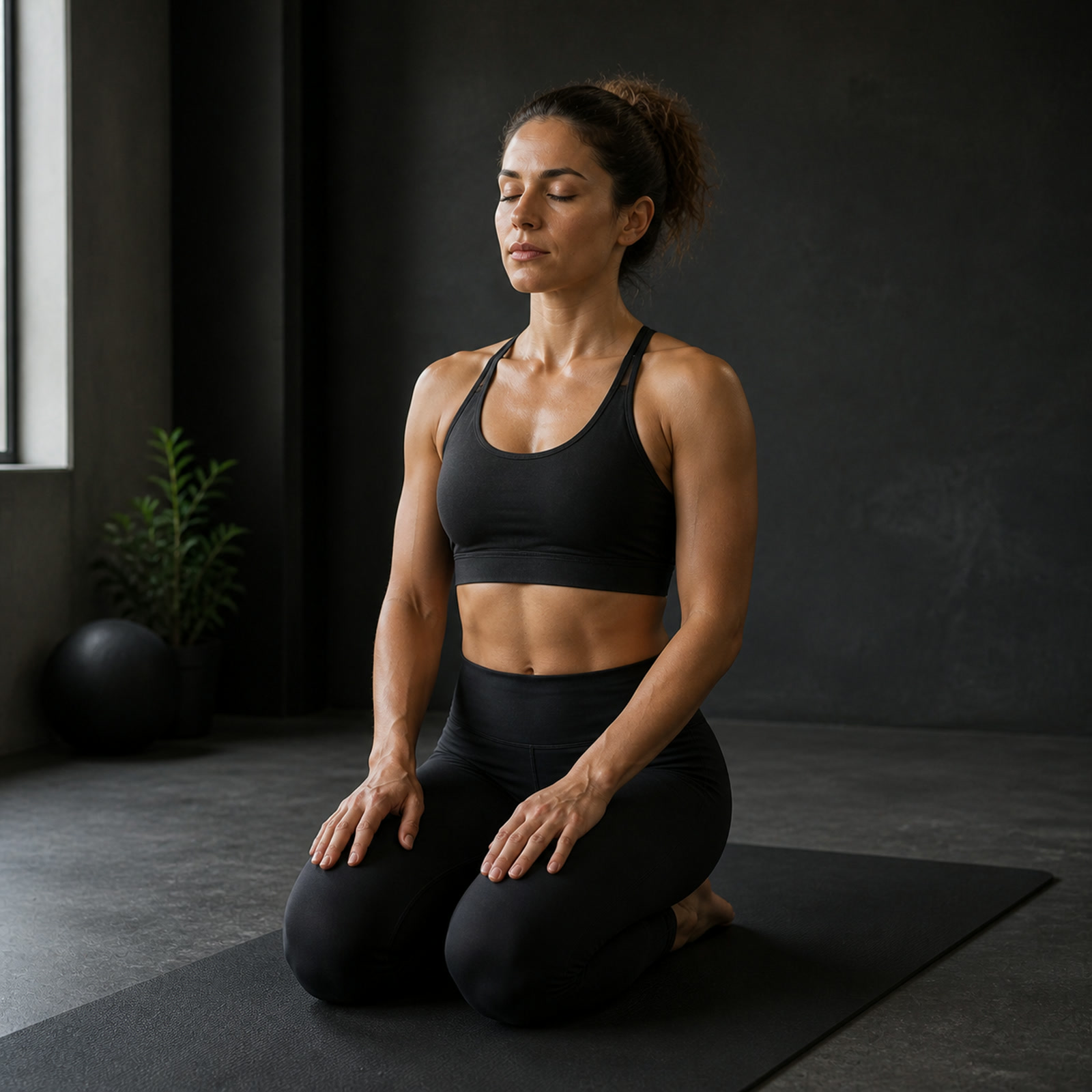
Diaphragmatic (Belly) Breathing
0% read · 1 min left
Slow breathing driven by the diaphragm (belly rises, chest stays quiet) that raises vagal tone, lowers cortisol, and shifts the body toward the parasympathetic "rest-and-digest" state.
Detail
Diaphragmatic breathing uses the diaphragm as the primary pump rather than the accessory chest/neck muscles. On the inhale the diaphragm descends and the abdomen rises; on a slow exhale it recoils. A common cue: one hand on the belly, one on the chest — the belly hand moves, the chest hand stays mostly still. It is the foundation skill underlying most breathwork techniques (box breathing, 4-7-8, paced/coherent breathing) and yogic pranayama (pranayama-overview).
Slow diaphragmatic breathing measurably improves vagal tone and heart-rate variability, increases parasympathetic activity, and reduces cortisol, anxiety, and stress; an 8-week program of slow diaphragmatic breathing improved sustained attention and negative mood and lowered cortisol versus control. The dominant active variable across slow-breathing methods appears to be a reduced respiratory rate (e.g., ~6 breaths/min) and a relatively longer exhale, rather than any specific pattern of holds.
Key facts
- Belly rises on the inhale; chest stays relatively quiet.
- Raises vagal tone/HRV and parasympathetic activity; lowers cortisol/anxiety.
- Active ingredient: slow rate (~6 breaths/min) + longer exhale, more than the specific pattern.
- Foundation skill for box breathing, 4-7-8, and pranayama.
Connections
- diaphragmatic-breathing — the primary muscle of breathing.
- box-breathing / four-seven-eight-breathing — patterned variants.
- stress-management — stress-regulation use.
- pranayama-overview — yogic breathing system.
Educational content only — not medical advice. Always consult a qualified professional for individualized guidance, especially around injury, pregnancy, or medical conditions.