Nutrition for Fat Loss
0% read · 2 min left
Fat loss requires a moderate calorie deficit with high protein, plenty of fiber and volume, and an approach you can sustain while training to keep muscle.
Detail
Fat loss comes down to a sustained caloric deficit (see calorie-targets), but how it's run determines whether you lose fat or fat plus muscle, and whether you can stick with it. Core principles:
- Moderate deficit: ~10–25% below TDEE (often ~500 kcal/day), targeting ~0.5–1% of body weight per week (see safe-deficit-rate). Faster isn't better — it costs muscle and adherence.
- High protein: prioritize protein (up toward 2.3–3.1 g/kg for trained lifters cutting) to preserve lean mass and maximize satiety (see protein-sparing-deficit).
- Resistance training: the non-negotiable signal that keeps muscle while fat is lost.
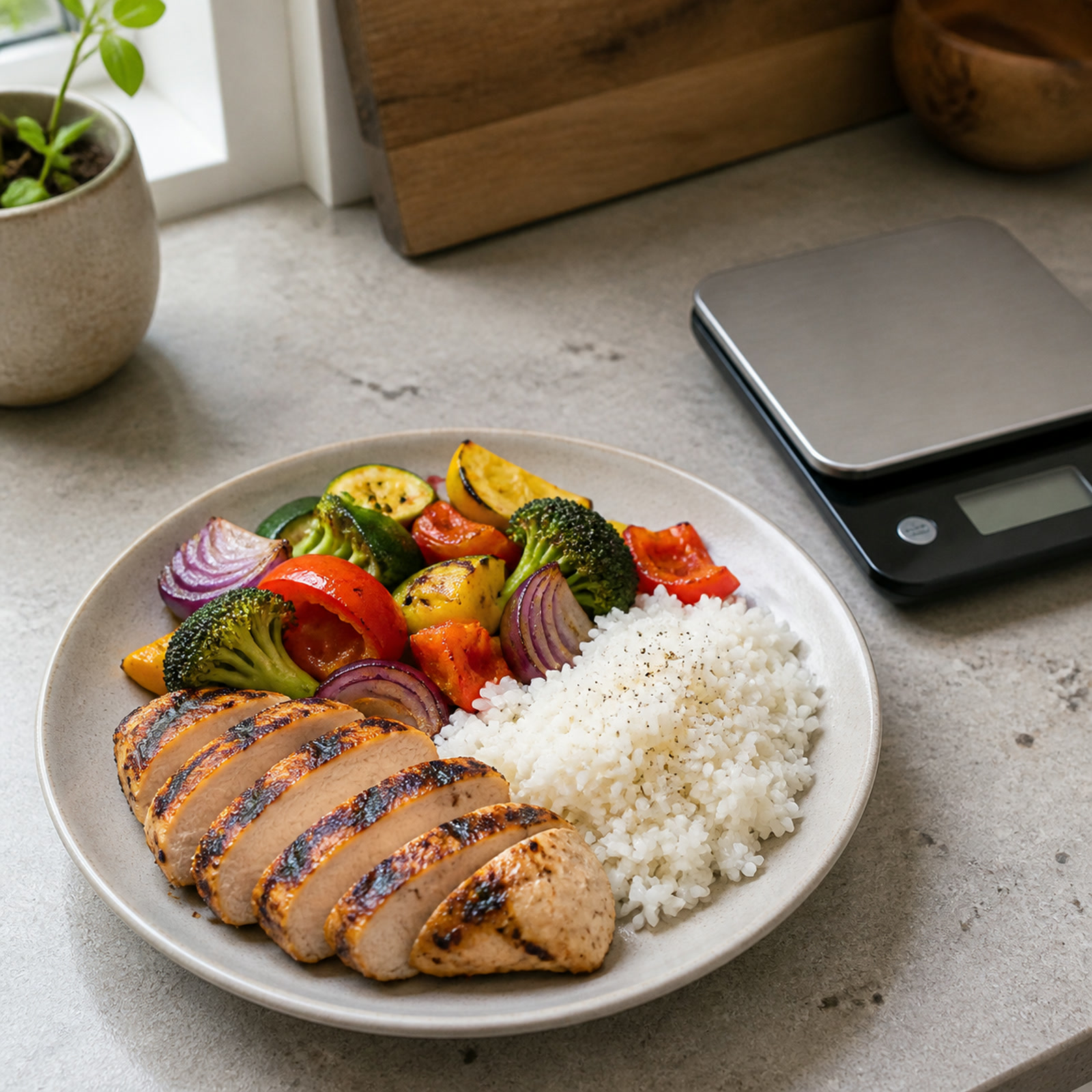
- Satiety and volume: build meals around fiber-rich, high-volume, low-energy-density foods (vegetables, fruit, legumes, lean protein — see fiber) so you feel full on fewer calories.
- Sustainability: choose a pattern you can maintain (see diet-adherence-principle); allow some flexibility to prevent rebound.
Practical tactics: track intake at least initially, keep liquid calories and added sugars low, manage hunger with protein/fiber/water, get adequate sleep (poor sleep raises hunger and risks muscle loss), and expect non-linear scale movement (water/glycogen and hormonal fluctuations) — judge progress over 2+ weeks. A structured fat-loss block is a "cut" (see cutting).
Key facts
- Sustained moderate deficit (~10–25% / ~500 kcal/day); ~0.5–1% body weight/week.
- High protein (up to ~2.3–3.1 g/kg trained) to spare muscle and boost satiety.
- Resistance training is essential to retain lean mass.
- Emphasize fiber-rich, high-volume, low-energy-density foods.
- Sustainability and sleep matter; judge progress over 2+ weeks.
Connections
- calorie-targets / safe-deficit-rate — sizing the deficit.
- protein-sparing-deficit — protecting muscle.
- fiber — satiety and volume.
- cutting — the structured fat-loss phase.
Educational content only — not medical advice. Always consult a qualified professional for individualized guidance, especially around injury, pregnancy, or medical conditions.