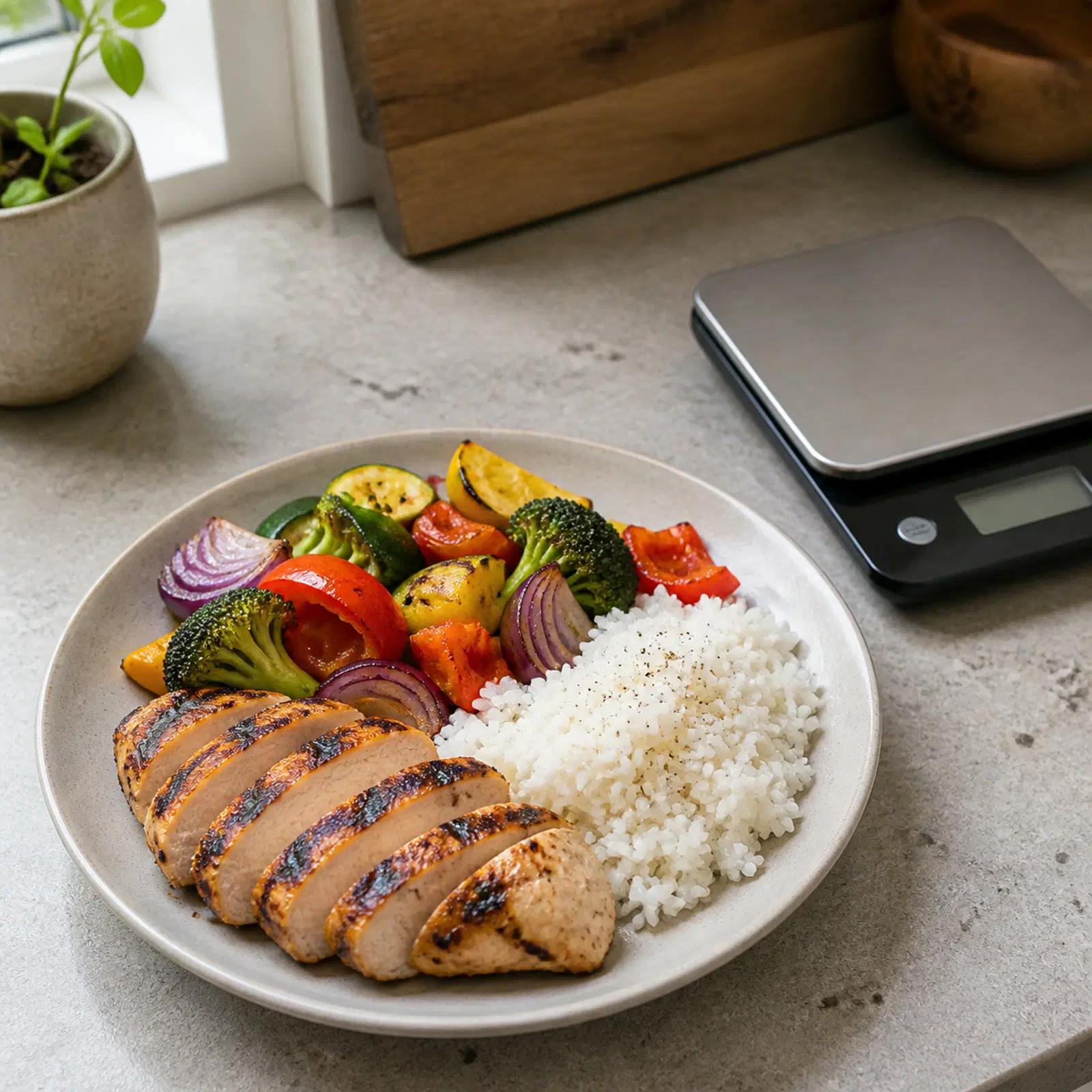
Nutrition for training is mostly energy balance and enough protein, done consistently. Get those right before timing, supplements or special diets.
What do you want to do?
Start here
4 lessons · ~11 min · in this order- 1Caloric Balance (Energy Balance)Caloric balance is the relationship between the calories you take in and the calories you burn; the energy-balance equation is Caloric Intake = Caloric Expenditure.Begin →
- 2Total Daily Energy Expenditure (TDEE)TDEE is all the energy you burn in a day — BMR plus activity, exercise, and the cost of digesting food — and it sets your calorie needs.2 min
- 3Protein — Functions, Quality, and RequirementsProtein supplies the amino acids that build and repair tissue; active people need roughly 1.4–2.0 g per kg of body weight daily, spread across meals.6 min
- 4Macronutrient Distribution GuidelinesThe source manual's split (12–15% protein, 60–65% carbohydrate, ~25% fat) is historical; the DRI ranges for adults are protein 10–35%, carbohydrate 45–65% and fat 20–35% of calories, and the 2025–2030 Dietary Guidelines give no split at all.2 min
More reading routes through Nutrition
Set your calories · Find your number
Fuel training days · Before, during, after
Cut without losing muscle · Deficit, protected
Every Nutrition topic
104 topics
- 3,500 kcal = 1 lb Adipose Tissue Rule2 minRule · About 3,500 kcal per pound of fat is a fair short-term estimate, but weight loss is not linear: expenditure falls as you lose weight, so a fixed 500-kcal daily deficit loses less than 1 lb a week over time.
- Accuracy of Skinfolds (Five Assumptions)1 minConcept · Skinfold results can be inaccurate from tester error and poor site location, and they rest on five traditional assumptions that may not hold.
- Activity Factors for Estimating TDEE3 minGuideline · Multiply BMR by an activity factor (1.2 sedentary up to ~1.9 extremely active) to get a starting estimate of total daily calorie needs, then correct it against your weight trend.
- Added Sugars3 minGuideline · Added sugars are sugars put into foods during processing; the current (2025–2030) federal guidelines recommend no amount of them and no more than 10 g in any one meal.
- Alcohol — Energy, Limits, and Effects on Training3 minConcept · Alcohol supplies 7 kcal/g of nutrient-poor energy and impairs recovery, sleep, and hydration; current federal guidance (2025–2030) says simply to drink less, dropping the prior fixed 2/1-drinks-per-day benchmark.
- American Fat Intake and Obesity Statistics4 minReference · Why high-fat foods are easy to overeat, with dated late-1990s U.S. snack and obesity figures; current CDC data put adult obesity at 40.3% (2021–2023).
- Antioxidants2 minConcept · Antioxidants neutralize free radicals; whole-food sources (fruits, vegetables) are beneficial, but high-dose supplements can blunt training adaptations and aren't recommended.
- Beta-Alanine2 minConcept · Beta-alanine (4–6 g/day for 2–4+ weeks) raises muscle carnosine to buffer acid, modestly improving high-intensity efforts of about 1–4 minutes.
- Body Composition (Lean Body Mass vs. Fat Mass)2 minConcept · Total body weight divides into lean body mass (all non-fat tissue) and fat mass; some fat is essential for health.
- Body Recomposition2 minConcept · "Recomp" is gaining muscle and losing fat at the same time — most achievable for beginners, returnees, and higher-body-fat individuals with high protein and training.
- Bulking (Muscle-Gain Phase)2 minConcept · A "bulk" is a deliberate muscle-gain phase run in an energy surplus with high protein and progressive training; a modest "lean bulk" minimizes fat gain.
- Caffeine as an Ergogenic Aid2 minConcept · Caffeine reliably boosts performance at 3–6 mg/kg taken ~60 minutes before exercise, with the most consistent benefit in endurance.
- Calcium2 minConcept · Calcium builds and maintains bone and enables muscle and nerve function; adults need 1,000 mg/day (1,200 mg for women 50+ and men 70+).
- Caloric Balance (Energy Balance)1 minConcept · Caloric balance is the relationship between the calories you take in and the calories you burn; the energy-balance equation is Caloric Intake = Caloric Expenditure.
- Carbohydrate Loading2 minGuideline · Carbohydrate loading maximizes muscle glycogen before long endurance events by eating high-carb (10–12 g/kg/day) for a day or two while tapering training.
- Carbohydrate Timing for Endurance2 minGuideline · For long sessions, top off glycogen beforehand, take in 30–90 g of carbohydrate per hour during, and refuel aggressively afterward.
- Carbohydrates — Types, Glycemic Index, and Requirements3 minConcept · Carbohydrates are the body's primary exercise fuel, supplying 4 kcal/g; needs scale with training volume from about 3 to 10+ g per kg of body weight per day.
- Changing Ideas About Food, Fat and Fitness1 minConcept · The diet and weight-loss industry has convinced most people that food restriction is the path to slimness, but lasting change requires rethinking food, fat, and fitness.
- Creatine Monohydrate2 minConcept · Creatine monohydrate is the most effective, best-researched, and safe supplement for increasing high-intensity exercise capacity and lean body mass.
- Cutting (Fat-Loss Phase)3 minConcept · A "cut" is a deliberate fat-loss phase run in a moderate deficit with high protein and maintained training, to reveal muscle built during a gaining phase.
- Daily Fluid Needs and Hydration Targets2 minGuideline · Total daily water needs are roughly 3.7 L (men) and 2.7 L (women) from all sources; thirst and pale-yellow urine are good everyday guides.
- Dehydration and Exercise Performance2 minConcept · Losing more than about 2% of body weight as fluid measurably degrades endurance, raises cardiovascular and heat strain, and impairs focus.
- DHEA Supplement2 minConcept · DHEA is marketed for many benefits but has not been shown to build muscle or cut fat in young healthy adults, is banned for athletes, and carries real side-effect and long-term risks.
- Dietary Fats — Saturated, Unsaturated, and Trans3 minConcept · Fat is the most energy-dense macronutrient (9 kcal/g); favor unsaturated fats, keep saturated fat under 10% of calories, and avoid industrial trans fat.
- Dietary Fiber and Gut Health2 minConcept · Fiber is indigestible plant carbohydrate that aids digestion, satiety, blood-sugar control, and heart health; adults should aim for about 14 g per 1,000 kcal.
- Dietary Guidelines for Americans — Overview5 minExplainer · The 2025–2030 Dietary Guidelines say "eat real food": prioritize protein (1.2–1.6 g/kg/day), dairy, vegetables, fruits, healthy fats and whole grains; keep saturated fat ≤10% of calories and sodium <2,300 mg/day; recommend no amount of added sugars (no more than 10 g in a meal); and drink less alcohol.
- Eating Out and Restaurant Strategies2 minGuideline · Restaurant meals tend to be large, calorie-dense, and salty; a few simple habits let you eat out without derailing goals.
- Electrolytes — Sodium, Potassium, and Fluid Balance3 minConcept · Electrolytes (sodium, potassium, chloride, magnesium) carry electrical charge to regulate fluid balance, nerve, and muscle function; sweat loses mostly sodium.
- Endurance Fueling2 minGuideline · Endurance performance depends on carbohydrate availability — fuel high daily, take in 30–90 g of carbs per hour during long efforts, and hydrate strategically.
- Ergogenic Supplements (Androstenedione, CLA, PS, HMB)3 minConcept · Research on newer ergogenic supplements (androstenedione, conjugated linoleic acid, phosphatidylserine, HMB) is more relevant to elite athletes than to typical fitness enthusiasts.
- Essential Amino Acids, Leucine, and BCAAs2 minConcept · The 9 essential amino acids — especially leucine — drive muscle protein synthesis; whole protein beats isolated BCAAs when total protein is adequate.
- Essential Body Fat2 minConcept · Essential fat — the minimum needed for health — is 3% to 5% of body weight in adult males and 11% to 14% in adult females.
- Estimating BMR — Mifflin-St Jeor and Harris-Benedict2 minGuideline · Basal metabolic rate is the energy your body burns at rest; the Mifflin-St Jeor equation is the most accurate common estimate.
- Exchange List Diet1 minMethod · A flexible meal-planning system, originally developed for diabetics, that groups foods by nutritional composition and allots a number of "exchanges" per group each day.
- Exercise and Calories3 minConcept · The full "Exercise and Calories" treatment of how caloric intake, expenditure, and exercise interact to control body weight.
- Exercise-Associated Hyponatremia3 minConcept · Hyponatremia is dangerously low blood sodium, usually caused by drinking too much plain fluid during long events; prevent it by not overdrinking.
- Factors Affecting Caloric Intake1 minConcept · Total caloric intake comes from food and drink, and many cultural, emotional, and physiological factors influence how much a person eats.
- Fat Deposition Patterns and Sex Differences1 minConcept · Patterns of fat deposition are genetically unique; estrogen drives fat to women's thighs, buttocks, and breasts, while men store fat in the back, lower abdomen, and at the iliac crest.
- Fatness and Fitness1 minConcept · The goal of a weight-loss program should be a real change in body composition (fat loss), achieved through a sustained negative energy balance, not the meaningless initial water-weight drop.
- Flexible Dieting (IIFYM)2 minConcept · "If It Fits Your Macros" — hit daily calorie and macronutrient targets from foods you choose, allowing flexibility rather than banning foods.
- Food Is a Friend1 minConcept · Lifelong weight control depends on building lifelong healthful eating habits and learning to live with food rather than treating it as a problem.
- Glycemic Index and Glycemic Load2 minConcept · Glycemic index ranks how fast a carbohydrate raises blood glucose; glycemic load adjusts for portion — useful context, but whole-diet quality matters more.
- Glycogen — Stored Carbohydrate Fuel2 minConcept · Glycogen is the body's stored carbohydrate, held in muscle and liver; it powers higher-intensity exercise and its depletion is a major cause of endurance fatigue.
- High-Protein Diets1 minConcept · High-protein, low-carbohydrate diets tend to be high in fat, impair glycogen storage, and can dehydrate the body and stress the kidneys over the long term.
- Hydration and Fluid Replacement4 minConcept · Water is the most essential nutrient; proper hydration prevents dehydration, and sports drinks help only for prolonged exercise of an hour or more.
- Hydration Strategy During Exercise4 minGuideline · Start exercise well hydrated, drink to keep fluid loss under ~2% of body weight without overdrinking, add sodium when sweat losses are large, and replace ~125–150% of the weight lost afterward.
- Intermittent Fasting3 minConcept · Eating within restricted time windows can aid fat loss mainly by cutting total calories; it offers convenience for some but no proven metabolic edge when calories match.
- Iron2 minConcept · Iron carries oxygen in hemoglobin; deficiency is the most common in the world and impairs endurance, with women, athletes, and vegetarians most at risk.
- Kilocalorie (kcal)1 minDefinition · A kilocalorie is the amount of heat needed to raise the temperature of 1 kilogram of water by 1°C; 1 kcal = 1,000 cal.
- Low Energy Availability and RED-S2 minConcept · Chronically eating too little for one's training load harms hormones, bone, and performance — the syndrome called RED-S (formerly the Female Athlete Triad).
- Low- vs. High-Intensity Fat-Burning Myth2 minConcept · Low-intensity exercise burns a higher percentage of calories from fat, but higher-intensity exercise burns more total calories and more total grams of fat — and you lose weight by burning more than you take in.
- Low-Carbohydrate and Ketogenic Diets2 minConcept · Restricting carbohydrates (very strictly in keto) can aid weight loss and blood-sugar control, mainly by reducing calories — not through metabolic magic.
- Macronutrient Distribution Guidelines2 minGuideline · The source manual's split (12–15% protein, 60–65% carbohydrate, ~25% fat) is historical; the DRI ranges for adults are protein 10–35%, carbohydrate 45–65% and fat 20–35% of calories, and the 2025–2030 Dietary Guidelines give no split at all.
- Macronutrients as Energy Sources1 minConcept · Carbohydrates, fats, and proteins are the energy-containing macronutrients whose energy is expressed in kcal and metabolized to fuel the body.
- Meal Planning and Prep2 minGuideline · Planning and batch-cooking meals ahead removes daily decisions, controls portions, and is one of the strongest levers for dietary adherence.
- Minerals — Overview (Magnesium, Zinc, and the Remaining Trace Minerals)5 minConcept · Minerals are inorganic micronutrients; major minerals (calcium, magnesium, potassium, sodium, phosphorus, chloride) are needed in larger amounts, trace minerals (iron, zinc, copper, selenium, iodine, manganese, chromium) in tiny amounts.
- Negative Caloric Balance (Caloric Deficit)6 minApplied lesson · You lose body fat only when you burn more energy than you eat: a caloric deficit. Combine eating less with being more active, keep lifting and eat plenty of protein so the loss is mostly fat. Expect weight loss to slow over time even if you keep the same deficit.
- Nutrient Timing — Pre, Intra, and Post-Workout2 minConcept · When you eat matters less than total daily intake, but sensible peri-workout nutrition supports performance and recovery — especially for endurance and twice-daily training.
- Nutrition for Fat Loss4 minGuideline · Fat loss requires a moderate calorie deficit with high protein, plenty of fiber and volume, and an approach you can sustain while training to keep muscle.
- Nutrition for Muscle Gain6 minApplied lesson · Eat about 1.6 g of protein per kg of body weight a day (up to ~2.2 if you want a margin), run a small calorie surplus that gains roughly 0.25–0.5% of body weight a week, and keep training progressively. Bigger surpluses mostly add fat.
- Obesity as a Public Health Problem2 minConcept · Obesity affects a large share of the population and is tied to many diseases; a 1985 survey found 45% of females and 27% of males were trying to lose weight.
- Obesity Thresholds (Body-Fat Percentage)1 minConcept · Men are obese above 25% body fat and women above 32% body fat.
- Omega-3 and Omega-6 Essential Fatty Acids3 minConcept · Omega-3 and omega-6 are polyunsaturated fats the body cannot make; most people get plenty of omega-6 but too little long-chain omega-3 (EPA/DHA) from fish.
- Overweight vs. Overfat (and the Metropolitan Life Tables)1 minConcept · "Overweight" is defined against standard weight tables, but the percentage of weight that is fat ("overfat") is a far more meaningful measure of health.
- Plant-Based, Vegetarian, and Vegan Diets3 minConcept · For adults, well-planned vegetarian and vegan diets can be nutritionally adequate and good for heart and metabolic health, but they need attention to B12, iron, zinc, calcium, vitamin D, iodine, omega-3, and protein variety.
- Portion Estimation3 minGuideline · Hand-based portions and the plate method let you control intake without weighing every meal — a palm of protein, a fist of carbs, a thumb of fats.
- Positive Caloric Balance1 minConcept · When caloric intake exceeds caloric expenditure, the surplus is stored as adipose tissue and body weight increases.
- Pre-Workout Nutrition2 minGuideline · Eat a carb-and-protein meal 1–4 hours before training, keeping it lighter and lower in fat/fiber the closer you are to starting.
- Processed and Ultra-Processed Foods2 minConcept · "Processing" spans a spectrum; the concern is ultra-processed foods, which are calorie-dense, easy to overeat, and crowd out nutrient-dense whole foods.
- Protein — Functions, Quality, and Requirements6 minApplied lesson · Protein supplies the amino acids that build and repair tissue; active people need roughly 1.4–2.0 g per kg of body weight daily, spread across meals.
- Protein Distribution Across the Day3 minGuideline · Hit your daily protein total first. Spreading it into roughly even doses (~0.25–0.4 g/kg, about 20–40 g) across ~4 meals is a sensible default, but there's no ~30 g per-meal ceiling: larger meals keep working, just for longer.
- Protein Powder and Whey2 minConcept · Protein powders are a convenient, high-quality way to hit protein targets — not magic; whey is fast-digesting and leucine-rich, but whole-food protein works just as well.
- Protein Supplementation and Requirements5 minConcept · Active people training for strength or hypertrophy benefit from meaningfully more protein than sedentary people -- the ISSN puts most exercisers at 1.4-2.0 g/kg/day and resistance-trained people in a calorie deficit at 2.3-3.1 g/kg/day, above the 1.4-1.8 g/kg ceiling once assumed.
- Protein-Sparing in a Caloric Deficit3 minGuideline · In a calorie deficit, higher protein (about 1.9–3.2 g/kg of body weight in lean, trained people) plus resistance training preserves muscle so weight lost comes mostly from fat.
- Psychological Effects of Deprivation1 minConcept · Dieting often breeds an obsession with food and weight, and the sense of deprivation and failure can fuel the very stress-eating it was meant to stop.
- Reading Nutrition Labels2 minGuideline · Start with serving size, then read calories, the "limit" nutrients (saturated fat, sodium, added sugars), and the ingredient list to judge a food.
- Recovery Nutrition2 minGuideline · Recovery nutrition restores glycogen, repairs muscle, and rehydrates — the "3 R's": Refuel (carbs), Rebuild (protein), Rehydrate (fluids + sodium).
- Reducing Dietary Fat and Taking Weight Off2 minGuideline · Lose weight by burning more calories (exercise) and taking in fewer — and cutting dietary fat is an effective way to reduce calories.
- Regional Fat Distribution and Fat Cells2 minConcept · Where fat sits matters — abdominal fat raises cardiovascular and Type II diabetes risk — and the number and size of fat cells govern fatness.
- Rethinking Weight Control1 minConcept · Weight control is still worthwhile for health, but success comes from changing clients' ideas about food, fat, and fitness — not from another diet.
- Safe Rate of Caloric Deficit and Weight Loss5 minExplainer · For adults with obesity, clinical guidelines use a deficit of about 500–1,000 kcal a day, which gives roughly 1–2 lb (0.5–0.9 kg) a week. If you lift and want to keep muscle, use a rate instead: about 0.5–1% of body weight a week, slower if you're already lean.
- Setting Calorie Targets for Fat Loss, Maintenance, and Gain8 minApplied lesson · Estimate maintenance, then pick a rate rather than a number: lose about 0.5–1% of body weight per week, or gain about 0.25–0.5% per week. Start near maintenance ±500 kcal, then let your 2–3 week weight trend tell you whether to adjust.
- Skinfold (Fatfold) Measurement2 minMethod · Because roughly half of body fat lies just beneath the skin, measuring subcutaneous fatfolds lets you predict total body fat.
- Sodium and Blood Pressure2 minGuideline · Sodium is an essential electrolyte, but typical intakes far exceed the <2,300 mg/day guideline, raising blood pressure — mostly from processed and restaurant foods.
- Sports and Energy Bars2 minConcept · Sports bars are a convenient emergency energy source but are calorie-dense, often low in quality protein and fiber, and should not replace whole foods.
- Sports Drinks vs Water2 minGuideline · Water covers most workouts under an hour; sports drinks earn their carbohydrate and sodium only in prolonged, intense, or hot-weather exercise.
- Sports Nutrition Overview1 minConcept · Fitness professionals are routinely asked about sports drinks, protein supplements, sports bars, and high-protein diets — four topics the source treats to separate fact from fiction.
- Spot Reduction (Myth)3 minConcept · Exercising a body area does not reliably preferentially burn fat there; fat is lost from all stores in a genetically determined pattern, generally first from where it was last deposited — the evidence is overwhelming but, per a small 2023 RCT, not 100% closed.
- Storage Fat (Adipose Tissue)1 minConcept · Storage fat is the fat held in adipose tissue beneath the skin and around organs — the fat we generally do not want to accumulate.
- Supplements — A Skeptical Note on Ineffective and Risky Products2 minPrinciple · Only a short list of supplements is genuinely proven; most are unnecessary, many are ineffective, and some are unsafe or contaminated — food first, then a few evidence-based extras.
- The "Anabolic Window" — Evidence vs Hype2 minConcept · The post-workout "window" to eat protein is hours wide, not minutes; total daily protein and distribution matter far more than rushing a shake.
- The Best Diet Is the One You Adhere To2 minPrinciple · Across popular diets, long-term results track adherence far more than the specific approach — sustainability beats theoretical perfection.
- The DASH Diet2 minConcept · Dietary Approaches to Stop Hypertension — a pattern proven to lower blood pressure by cutting sodium and boosting potassium, calcium, and magnesium.
- The Mediterranean Diet3 minConcept · A plant-forward pattern rich in olive oil, fish, vegetables, and whole grains, with strong evidence for cardiovascular health.
- The Problem With Diets1 minConcept · People who "go on a diet" eventually go off it and regain the weight, and dieting may actually worsen obesity over time.
- Total Daily Energy Expenditure (TDEE)2 minGuideline · TDEE is all the energy you burn in a day — BMR plus activity, exercise, and the cost of digesting food — and it sets your calorie needs.
- Urine-Color Hydration Guide1 minGuideline · Pale, lemonade-colored urine signals good hydration; dark yellow or amber means drink more — a quick, practical self-check.
- Vitamin B123 minConcept · B12 (cobalamin) is needed for red blood cells and nerves, comes almost only from animal foods, and must be supplemented by vegans; the adult RDA is 2.4 mcg/day.
- Vitamin D3 minConcept · Vitamin D supports calcium absorption and bone, muscle, and immune function; the RDA is 600 IU (800 IU after 70). True deficiency is less common than lab reports often suggest, and routine testing is not advised for healthy people.
- Vitamins — Fat-Soluble vs Water-Soluble Overview3 minConcept · Vitamins are micronutrients needed in small amounts; the fat-soluble ones (A, D, E, K) store in the body, while water-soluble ones (B-complex, C) are not stored and needed regularly.
- Weight Control — Fact or Fiction3 minConcept · A set of common weight-control claims rated true or false, anchored on the principle that weight control is a matter of energy balance.
- Weight Cycling (Yo-Yo Dieting)3 minConcept · Repeatedly losing and regaining weight ("yo-yo" dieting) undoes the health gains of the loss, but reviews find no consistent evidence that the cycling itself damages metabolism or makes each later attempt harder.
- Weight Training in a Weight-Loss Program3 minConcept · Lifting weights helps a weight-loss program by building muscle that raises resting metabolic rate, though aerobic exercise burns more calories per minute.
- Who Is at Risk of Micronutrient Deficiency3 minGuideline · Most well-fed people meet micronutrient needs from food, but defined groups — vegans, older adults, pregnant people, dieters, and some athletes — warrant targeted attention.
Explore connections
How Nutrition links to other categories — line thickness is link density in the graph, not an editorial rating.