Tight Hamstrings as a Cause of Back Problems
Sources and review status
Review pending — this text hasn’t been signed off by a reviewer yet.
Historical reference: its only source is the original reference manual, and some of it may be out of date. Not used for AI answers until re-sourced.
See this lesson’s sources0% read · 1 min left
Tight hamstrings are a recognized cause of back problems — one reason flexibility work emphasizes the low-back and hamstring area.
Detail
Tight hamstrings are also a cause of back problems. Because the hamstrings cross the hip and influence pelvic position, a loss of hamstring flexibility contributes to low-back dysfunction. For this reason a flexibility prescription places a major emphasis on the low-back and hamstrings area, given the high prevalence of low-back pain syndrome in the population.
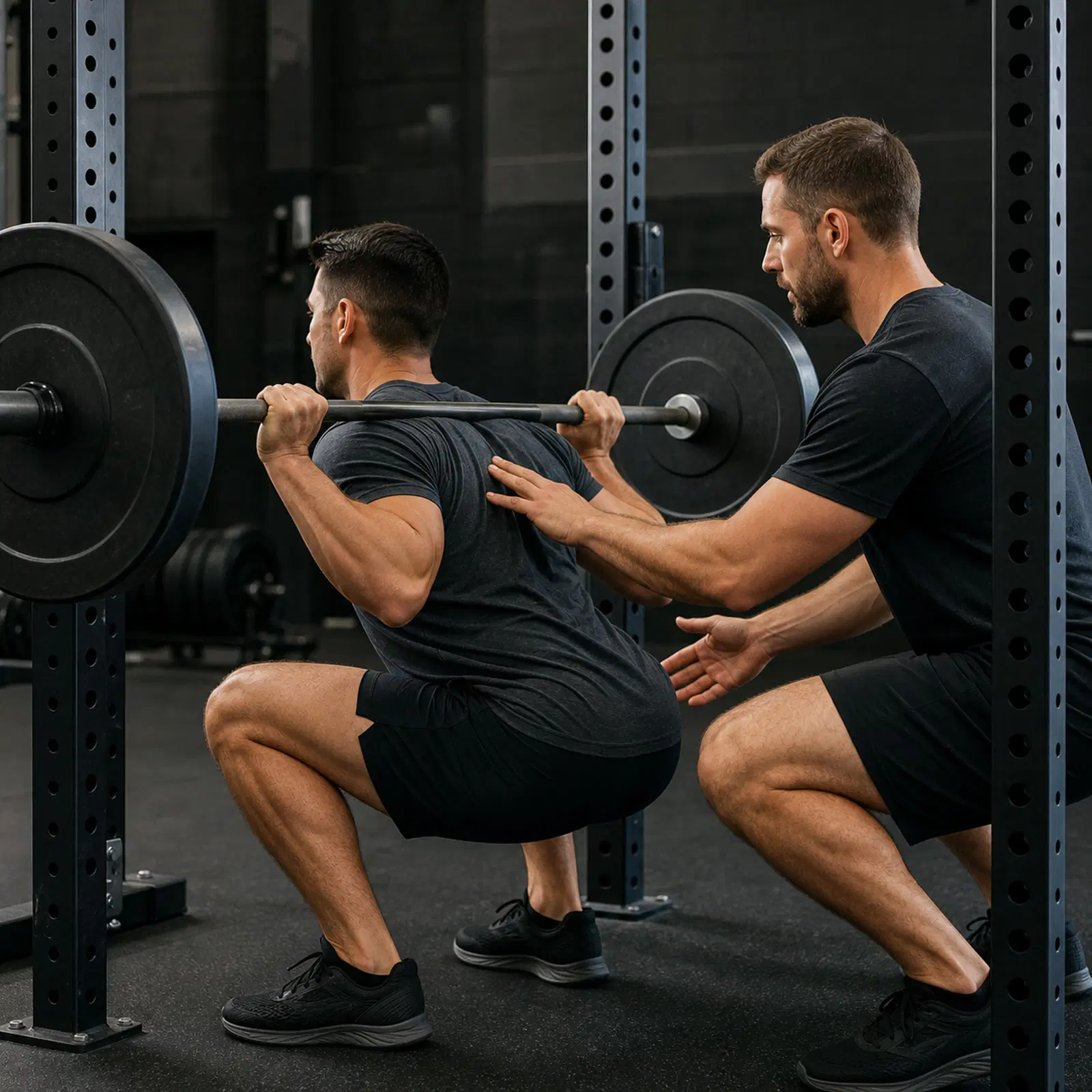
Tight hamstrings (and a tight Achilles tendon) also restrict the range of motion for the eccentric movements in the squat and leg press exercises, which has technique and safety implications.
Key facts
- Tight hamstrings are a cause of back problems.
- Flexibility programs emphasize the low-back and hamstrings area due to high low-back-pain prevalence.
- Tight hamstrings (and Achilles tendon) restrict eccentric ROM in the squat and leg press.
Connections
- Causes of Back (Erector Spinae) Disorders — loss of flexibility as a back-disorder cause.
- Back Pain Prevalence (80–90% of Population) — 80–90% lifetime back-pain prevalence.
- Hamstrings — the muscle group involved.
- Benefits and Outcomes of Flexibility Exercise — flexibility reduces injury and improves function.
- Warm-Up's Injury-Reduction Role — warming up before stretching the back/hamstrings.
Sources
Topics like this depend on your health and history. A qualified coach or clinician can apply it to you safely.
Educational content only — not medical advice. Always consult a qualified professional for individualized guidance, especially around injury, pregnancy, or medical conditions.