Free Weights vs. Resistance Machines
0% read · 2 min left
Neither is definitively superior; choice depends on testing specificity, technique requirements, safety, time, and equipment availability.
Detail
There is no definitive answer to this frequently asked question. One problem when comparing strength/power gains from training with free weights vs. resistance machines is the specificity of testing. If an individual trains with resistance machines and is evaluated with free weights (or a different machine), little or no gain in strength/power may be apparent. However, if strength/power is evaluated with the same equipment used for training, a very large gain may be evident. So whether a gain is observed depends on the testing criterion. Changes in body composition and motor performance (running, jumping) from training with free weights and various machines are comparable for the most part; thus the decision to use free weights must be made subjectively.
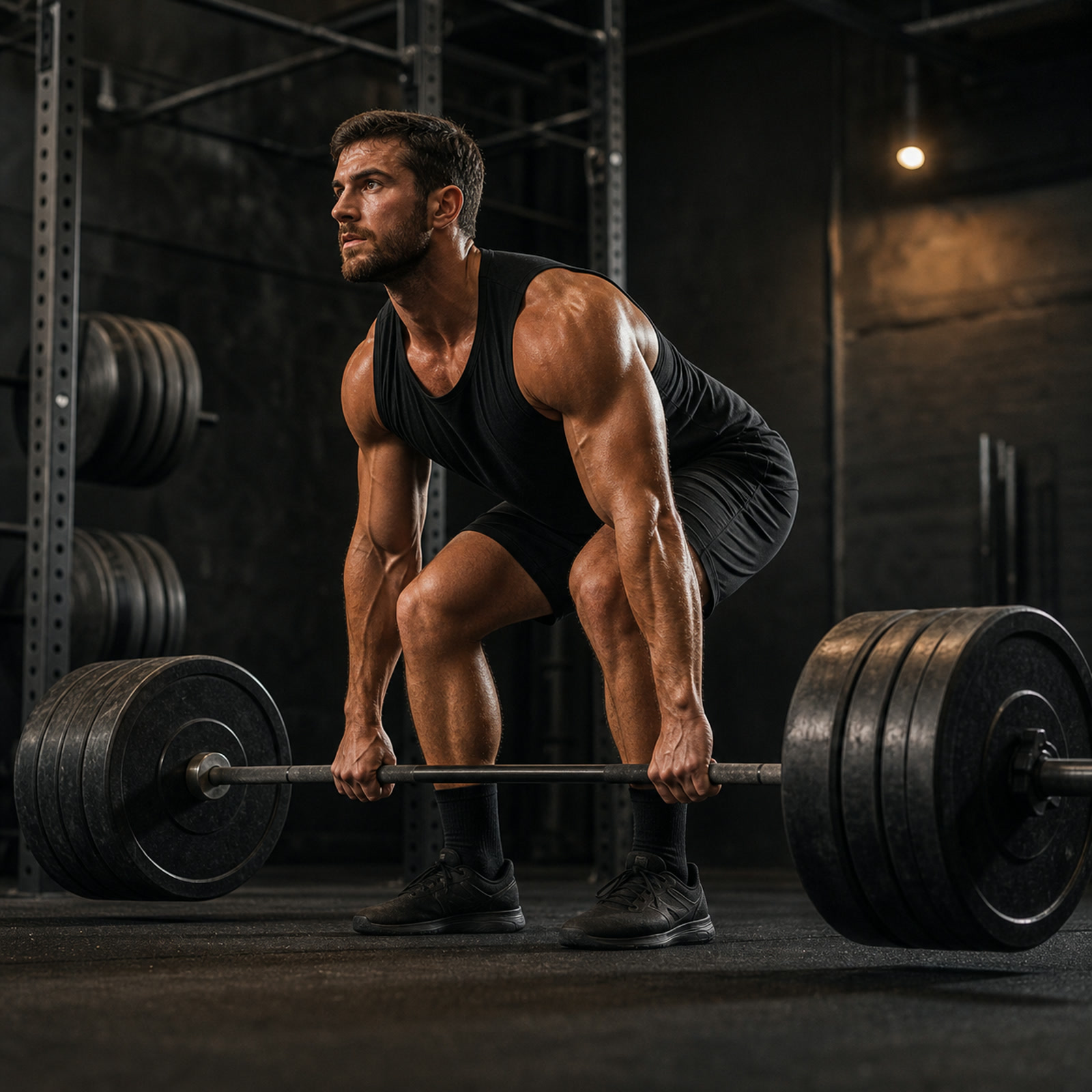
The use of free weights requires more sophisticated lifting technique than machines, especially for multiple-joint free-weight exercises (squats, snatches). Some individuals choose machines because they do not wish to spend the time learning proper free-weight technique, or because no qualified person is available to teach them.
Free weights allow movement in all three planes, whereas machines allow movement in only one plane. Advocates of free weights believe using them is more like performing an actual sport; therefore, for athletes, free weights are considered by some to be a better choice.
Advocates of resistance machines believe machines are safer, although free weights have been used in many programs without accidents (including programs for children). For the most part, machines do not require spotters, whereas free weights may require spotters during some exercises to ensure safety. Because resistance on most machines can be changed quickly, a training session may be completed faster than with free weights — an advantage for a professional with limited time. However, perhaps the most common reason for the decision is based on what equipment is most readily available to the trainee.
Key facts
- Measured gains depend on testing specificity (same vs. different equipment).
- Body-composition and motor-performance changes are comparable between modes.
- Confirmed current (2023 systematic review/meta-analysis, ~1,000 participants): no overall difference in strength, hypertrophy, or jump performance between modes at equal volume, but each mode's strength gains are specific to its own testing modality — the exact "specificity of testing" mechanism this module already describes.
- Free weights require more sophisticated technique (esp. multi-joint: squats, snatches).
- Free weights move in 3 planes; machines in 1 plane.
- Machines generally need no spotters and allow faster sessions; many cite safety.
- Equipment availability is often the deciding factor.
Connections
- specificity — testing/training specificity explains divergent measured gains.
- safe-lifting-mechanics — free-weight technique and spotting bear on safety.
- dcer — both modes are forms of dynamic constant external resistance.
Educational content only — not medical advice. Always consult a qualified professional for individualized guidance, especially around injury, pregnancy, or medical conditions.