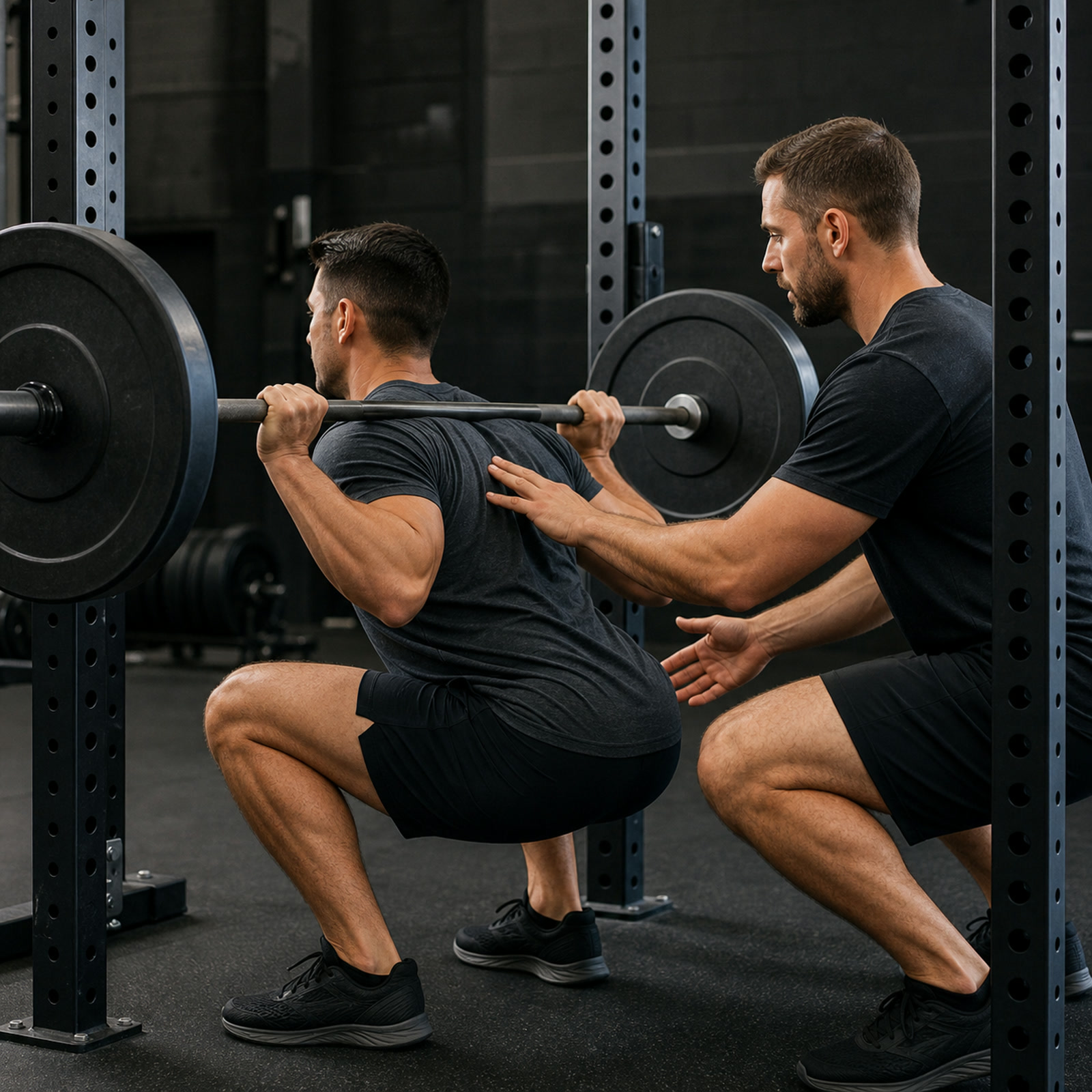
Safe Lifting Mechanics
0% read · 1 min left
Four rules for lifting heavy objects in the weight room and at home — keep the back's natural curves, lift with the legs, hold loads close, and avoid twisting/jerking.
Detail
When lifting heavy objects in the weight room and at home, there are four important points to remember:
a. Maintain the back in its natural curves b. Use your legs c. Hold objects close to you d. Avoid twisting and jerking movements
These mechanics protect the spine by preserving its normal anterior-posterior curves and by recruiting the powerful muscles of the legs rather than overloading the back's supporting structures. Faulty body mechanics is itself a recognized cause of back disorders, so lifting correctly is a primary injury-prevention measure.
Key facts
- 4 rules: (a) maintain natural back curves, (b) use your legs, (c) hold objects close, (d) avoid twisting and jerking.
- Applies both in the weight room and at home.
Connections
- spine-positioning — hold the spine in semi-isometric contraction in an "S" shape, never a "C".
- back-disorders-causes — faulty body mechanics is a cause of back disorders.
- back-pain-prevalence — 80–90% of the population gets back pain.
- spinal-column — the four anterior-posterior curves being protected.
- erector-spinae — the spinal extensors loaded during lifting.
- weightlifting-belt-safety-concerns — belt support for heavy spinal-loading lifts.
Educational content only — not medical advice. Always consult a qualified professional for individualized guidance, especially around injury, pregnancy, or medical conditions.