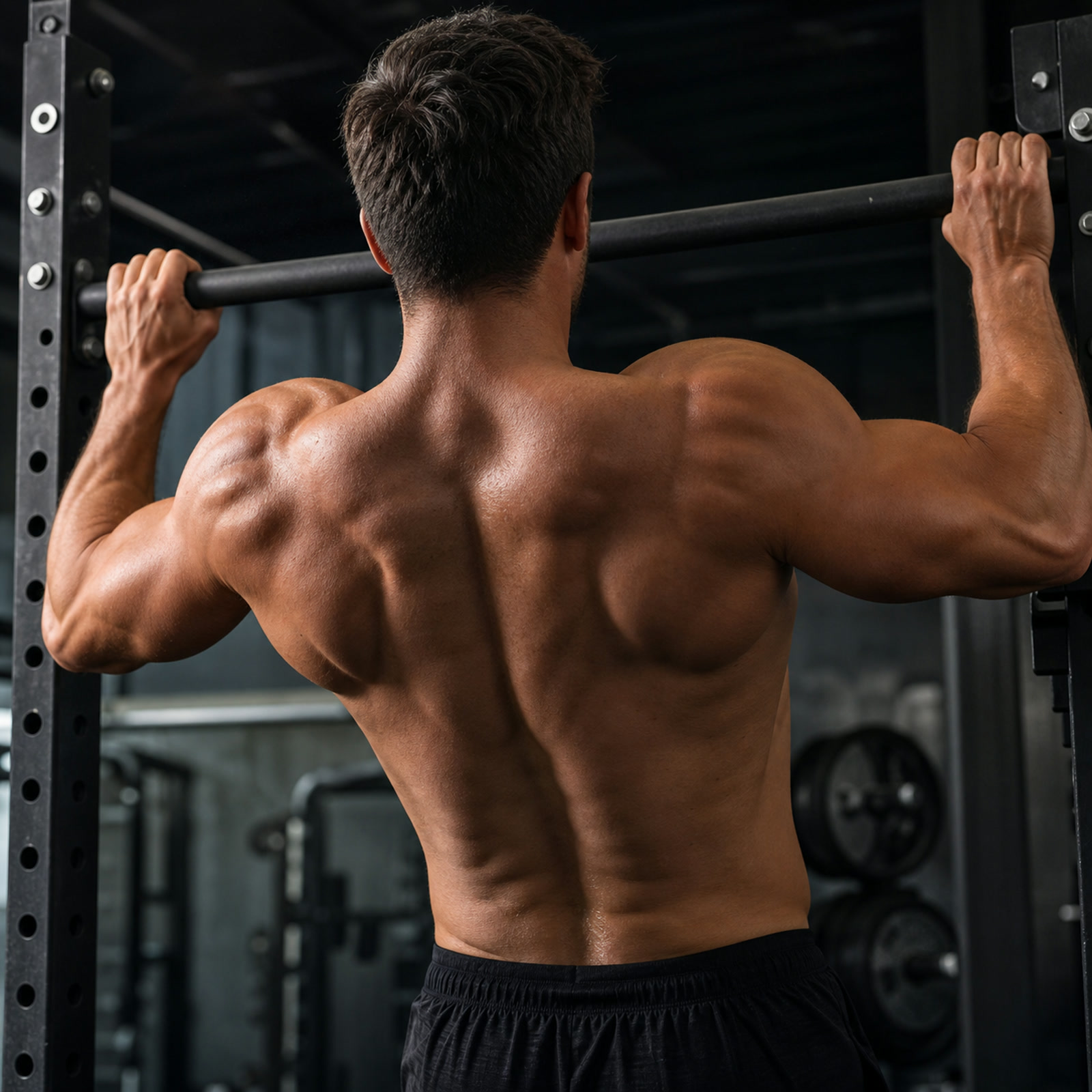
Levator Scapulae
0% read · 1 min left
A neck-to-scapula strap muscle that elevates the scapula alongside the upper trapezius — the muscle most often blamed for a stiff, tight neck-shoulder junction.
Detail
Levator scapulae runs from the transverse processes of the first four cervical vertebrae down to the superior angle of the scapula. With the scapula fixed, it assists neck lateral flexion and rotation to the same side; with the neck fixed, it elevates and downwardly rotates the scapula, working as a direct synergist to the upper trapezius in shrugging movements. It's a common site of tension and trigger points from stress-related shoulder-hunching and desk posture, which is why it shows up more often in mobility/stretching contexts than as a direct hypertrophy target.
Key facts
- Origin: transverse processes of C1–C4. Insertion: superior angle of the scapula.
- Function: scapular elevation and downward rotation; assists ipsilateral neck lateral flexion/rotation.
- Direct synergist of the upper trapezius in shrugs and any loaded-carry scapular-elevation task.
- A frequent site of tension/trigger points tied to stress and forward-head posture.
Connections
- elevation — the scapular movement it produces.
- trapezius — its constant synergist in shrugging and carrying.
- scapular-movement — the broader category of motion it belongs to.
Educational content only — not medical advice. Always consult a qualified professional for individualized guidance, especially around injury, pregnancy, or medical conditions.