Fysiqal
Anatomy
Anatomy
Scapular Movement
Evidence-grounded — sourced from Fysiqal's fitness knowledge graph· 1 min read
movement-terminologyscapulashoulder-girdle
0% read · 1 min left
In one line
The scapula moves through elevation/depression, adduction (retraction)/abduction (protraction), and upward/downward rotation.
Detail
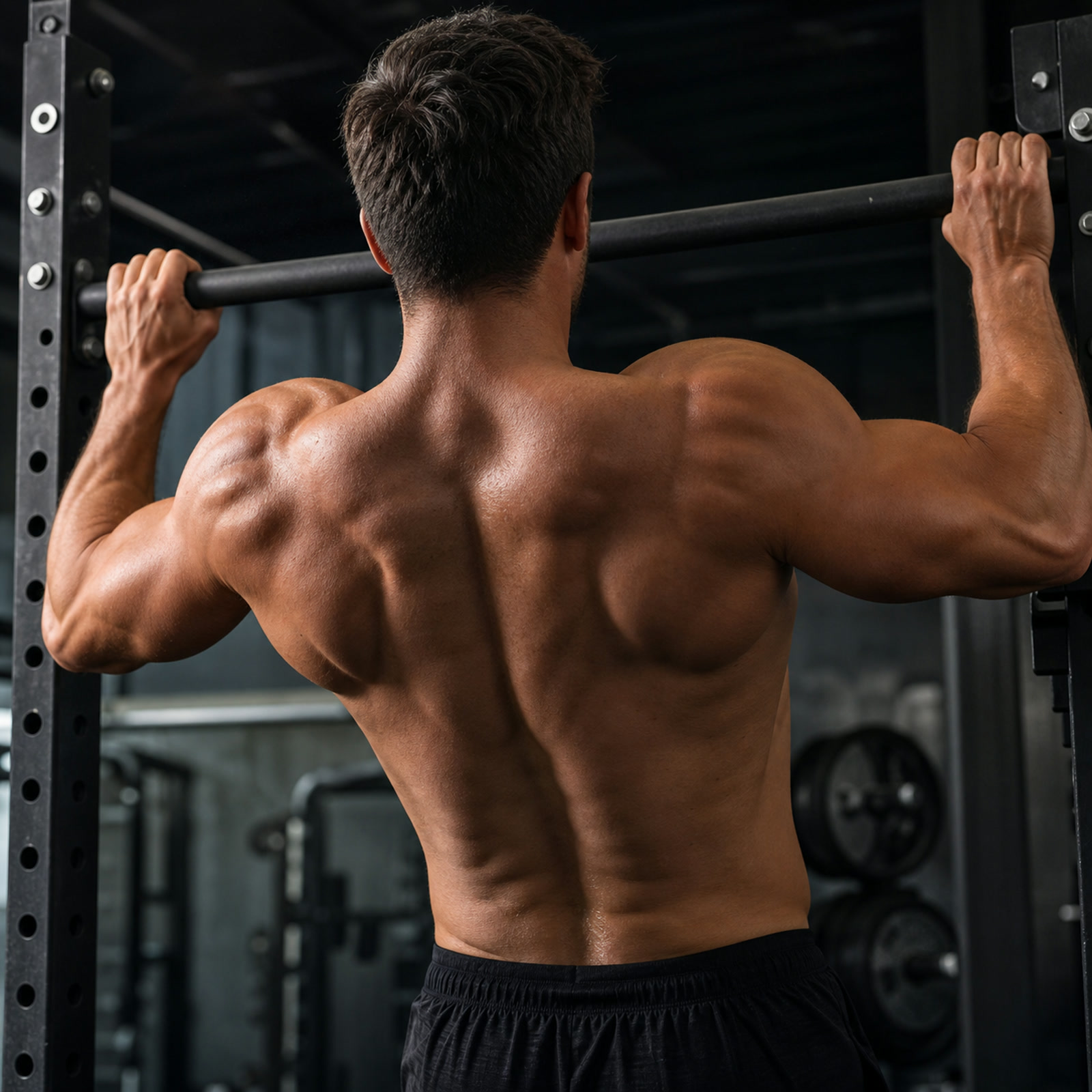
The scapula has three pairs of movements: elevation and depression; adduction (retraction) and abduction (protraction); and upward rotation and downward rotation. Scapular adduction is used in pectoral and latissimus dorsi training to increase the force angle (2-joint muscle effect). A source note states the scapulas move about half as much as the shoulder. The scapular movement diagram is attributed to Harter (1991).
Key facts
- Three scapular movement pairs: elevation/depression; adduction (retraction)/abduction (protraction); upward/downward rotation.
- Scapular adduction increases force angle in chest and lat exercises.
- Source note: scapulas move about half as much as the shoulder.
Connections
- elevation — scapular elevation.
- depression — scapular depression.
- trapezius — moves the scapula in all three pairs.
- shoulder-joint-rom — distinct from glenohumeral motion.
SourceReference manual
p.460p.696
Cited authorities in source: Harter (1991).
Educational content only — not medical advice. Always consult a qualified professional for individualized guidance, especially around injury, pregnancy, or medical conditions.
Explore related topics
Atlas Connections
Abduction
Movement of a body part away from the midline (axis) of the trunk.Adduction
Movement of a body part toward the midline (axis) of the trunk.DepressionClosely related
Downward movement returning to the normal position from elevation.ElevationClosely related
Upward movement, as in shrugging the shoulder girdles.Shoulder / Arm Range of Motion
Arm flexion 135°, shoulder adduction 50°, shoulder hyperextension 45°, shoulder abduction 90–180°.Trapezius
A muscle that functions as three different muscles — upper, middle, and lower traps — moving the scapula.