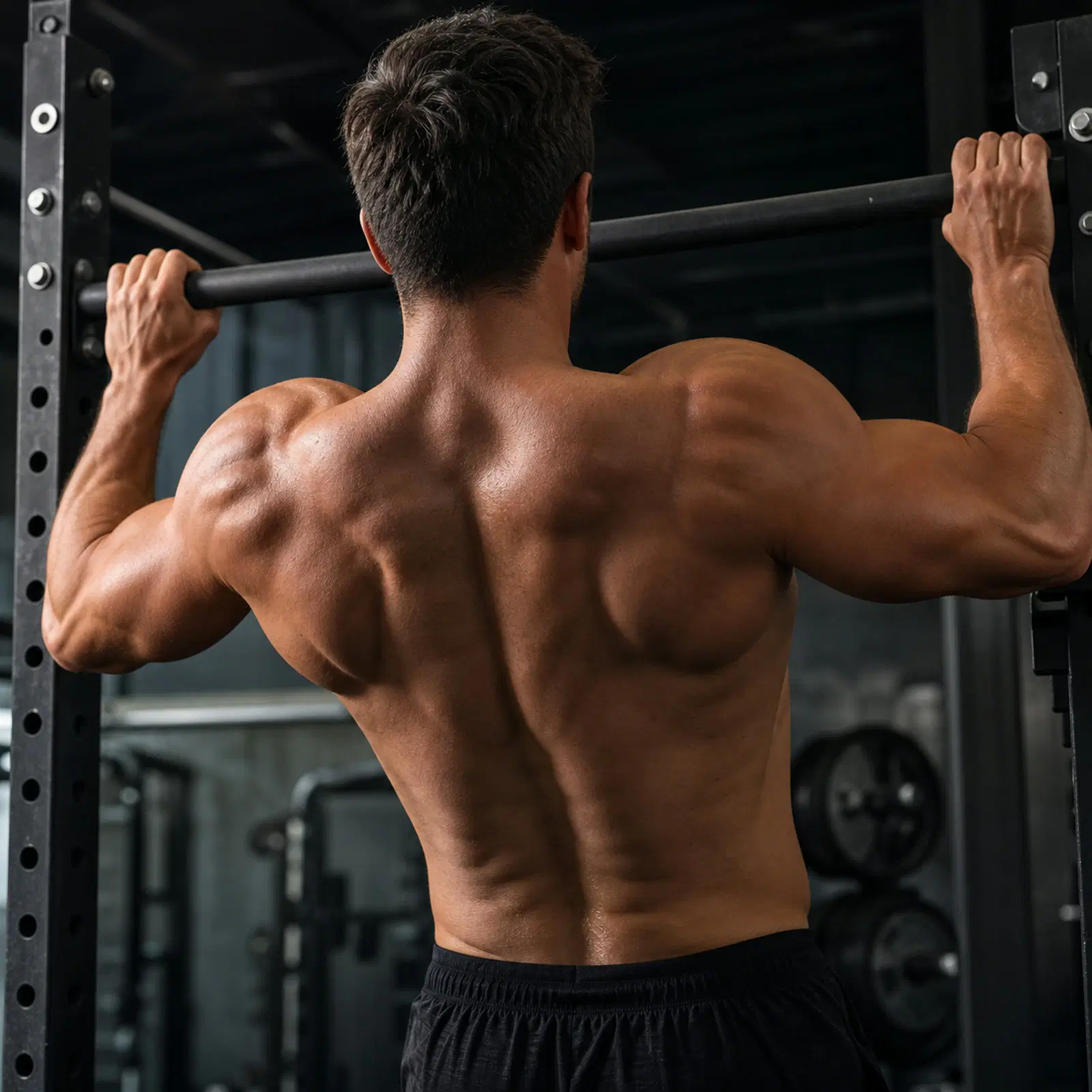
Trapezius
Sources and review status
Review pending — this text hasn’t been signed off by a reviewer yet.
Historical reference: its only source is the original reference manual, and some of it may be out of date. Not used for AI answers until re-sourced.
See this lesson’s sources0% read · 1 min left
A muscle that functions as three different muscles — upper, middle, and lower traps — moving the scapula.
Detail
The trapezius functions as 3 different muscles (Ellison, 1991):
- Upper Traps: elevate and adduct (retract) the scapula (diagonal fibers).
- Middle Traps: adduct the scapula (horizontal fibers).
- Lower Traps: adduct and depress the scapula (diagonal fibers).
Exercises: shoulder shrugs (upper traps); upright rows (upper, middle & lower traps); seated row (pronated grip with shoulder width and wider). The surrounding muscles shown in the diagram include the levator scapulae, rhomboid minor, rhomboid major, and serratus anterior.
Key facts
- Functions as 3 muscles: upper, middle, lower traps.
- Upper traps: elevate and adduct (retract) the scapula.
- Middle traps: adduct the scapula.
- Lower traps: adduct and depress the scapula.
- Exercises: shrugs (upper), upright rows (all three), seated row (pronated, shoulder width and wider).
Connections
- Scapular Movement — the scapular motions it produces.
- Elevation / Depression — upper traps elevate, lower traps depress.
- Adduction — scapular adduction (retraction).
- Shoulder Shrugs / Upright Rows / Seated Rows — training exercises.
Sources
Exercise guides
Keep this lesson, or ask how it applies to you.
Educational content only — not medical advice. Always consult a qualified professional for individualized guidance, especially around injury, pregnancy, or medical conditions.