Pilates (Overview)
Sources and review status
Review pending — this text hasn’t been signed off by a reviewer yet.
See this lesson’s sources0% read · 1 min left
A low-impact movement system built on core ("powerhouse") control, precise alignment, and breath, shown to improve core strength, flexibility, and low-back pain.
Detail
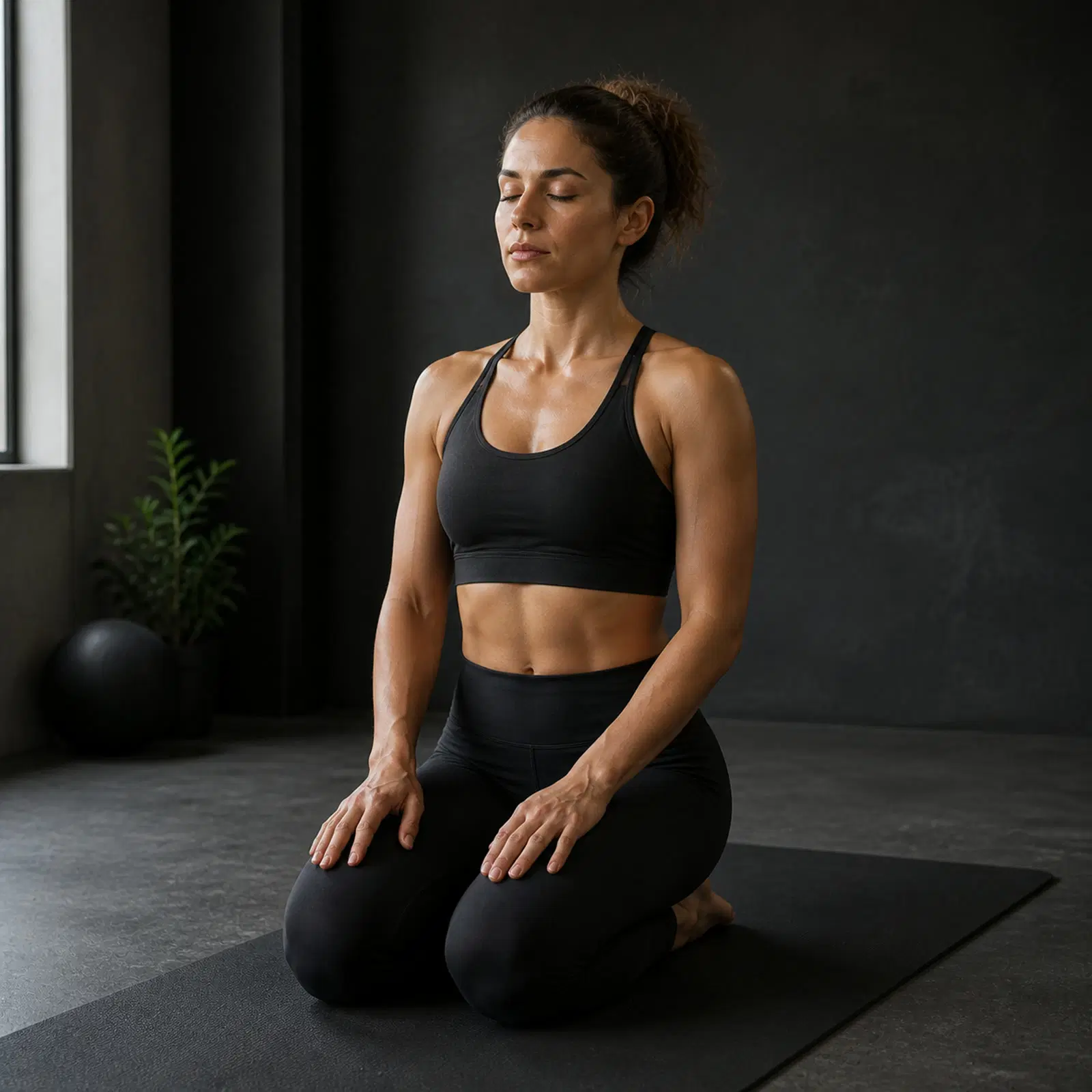
Pilates is a body-conditioning method developed by Joseph Pilates in the early 20th century, emphasizing controlled, precise movement initiated from the trunk. Practice occurs on a mat (bodyweight + small props) or on spring-resistance apparatus such as the reformer (Pilates — Mat vs Reformer). Movements are governed by a set of principles (Pilates — The Principles (Centering, Concentration, Control, Precision, Breath, Flow)) and centered on the "powerhouse" — the deep trunk musculature (Pilates — The "Powerhouse" (Core Focus)).
Evidence supports Pilates for improving core/abdominal strength, trunk muscular endurance, flexibility/range of motion, dynamic balance, and proprioception; systematic reviews report reduced pain and disability in chronic non-specific low back pain, and reformer training elicits high core-muscle activation on EMG. It is low-impact and widely used for rehabilitation, posture, and general conditioning across ability levels.
Key facts
- Two formats: mat (bodyweight + props) and apparatus (reformer, Cadillac, chair).
- Centered on the "powerhouse" (deep trunk) and governed by ~6 principles.
- Evidence: improved core strength, flexibility, balance; reduced chronic low-back pain/disability.
- Low-impact; suitable for rehab and general populations.
Connections
- Pilates — The Principles (Centering, Concentration, Control, Precision, Breath, Flow) — the governing principles.
- Pilates — The "Powerhouse" (Core Focus) — the core focus.
- Pilates — Mat vs Reformer — the two formats.
- Low-Back Pain — clinical application.
Sources
Keep this lesson, or ask how it applies to you.
Educational content only — not medical advice. Always consult a qualified professional for individualized guidance, especially around injury, pregnancy, or medical conditions.