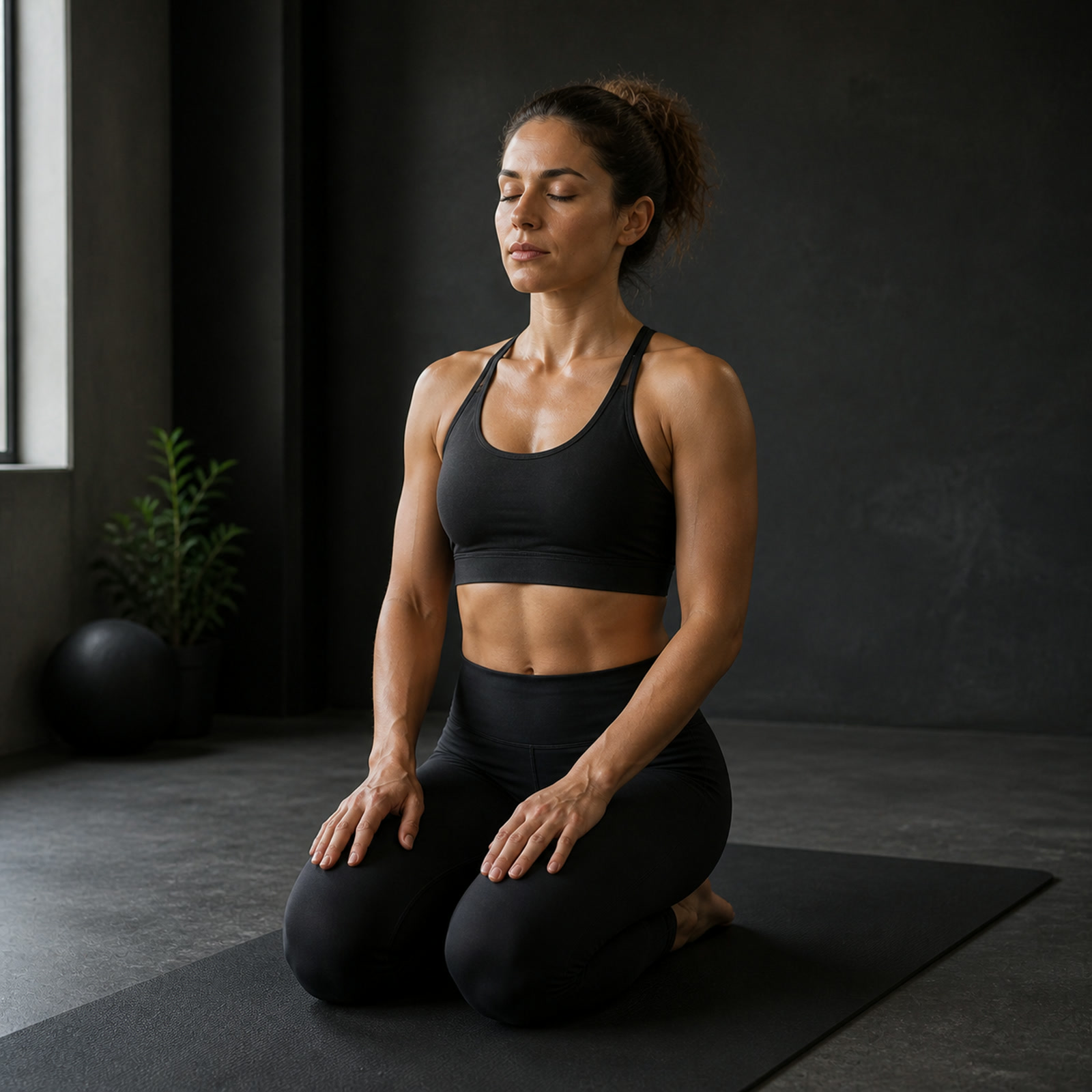
Pranayama (Yogic Breathing) Overview
0% read · 1 min left
The yogic system of breath-regulation techniques — slow, paced, and patterned nasal breathing used to steady the mind and modulate arousal alongside asana practice.
Detail
Pranayama is yoga's formal practice of controlling the breath. Common techniques include:
- Ujjayi ("ocean breath"). A gentle throat constriction creates a soft audible breath; paces and steadies flow practice (ujjayi-breath).
- Nadi shodhana (alternate-nostril breathing). Alternating nostril inhales/exhales; used to calm and balance.
- Diaphragmatic/three-part breath (dirga). Full, slow belly-to-chest breathing (diaphragmatic-breathing).
- Bhramari, kapalabhati, etc. Humming and rapid-breath techniques with varying arousal effects.
Most relaxation-oriented pranayama is slow, nasal (nasal-breathing), and diaphragmatic — the same physiological levers (reduced rate, longer exhale) that raise vagal tone and reduce stress in the breathwork literature. Frame benefits in those evidence-based terms (autonomic regulation, stress reduction) rather than as manipulation of a metaphysical "prana." Avoid breath-holding strain in those with cardiovascular or blood-pressure concerns.
Key facts
- Pranayama = yogic breath regulation; mostly slow, nasal, diaphragmatic.
- Key techniques: ujjayi, nadi shodhana, dirga, bhramari, kapalabhati.
- Calming techniques share the rate/exhale levers seen in breathwork research.
- Caution with breath-holds in cardiovascular/BP conditions.
Connections
- ujjayi-breath — the breath used in flow.
- diaphragmatic-breathing / nasal-breathing — shared mechanics.
- yoga-overview — the parent discipline.
- stress-management — applied outcome.
Educational content only — not medical advice. Always consult a qualified professional for individualized guidance, especially around injury, pregnancy, or medical conditions.