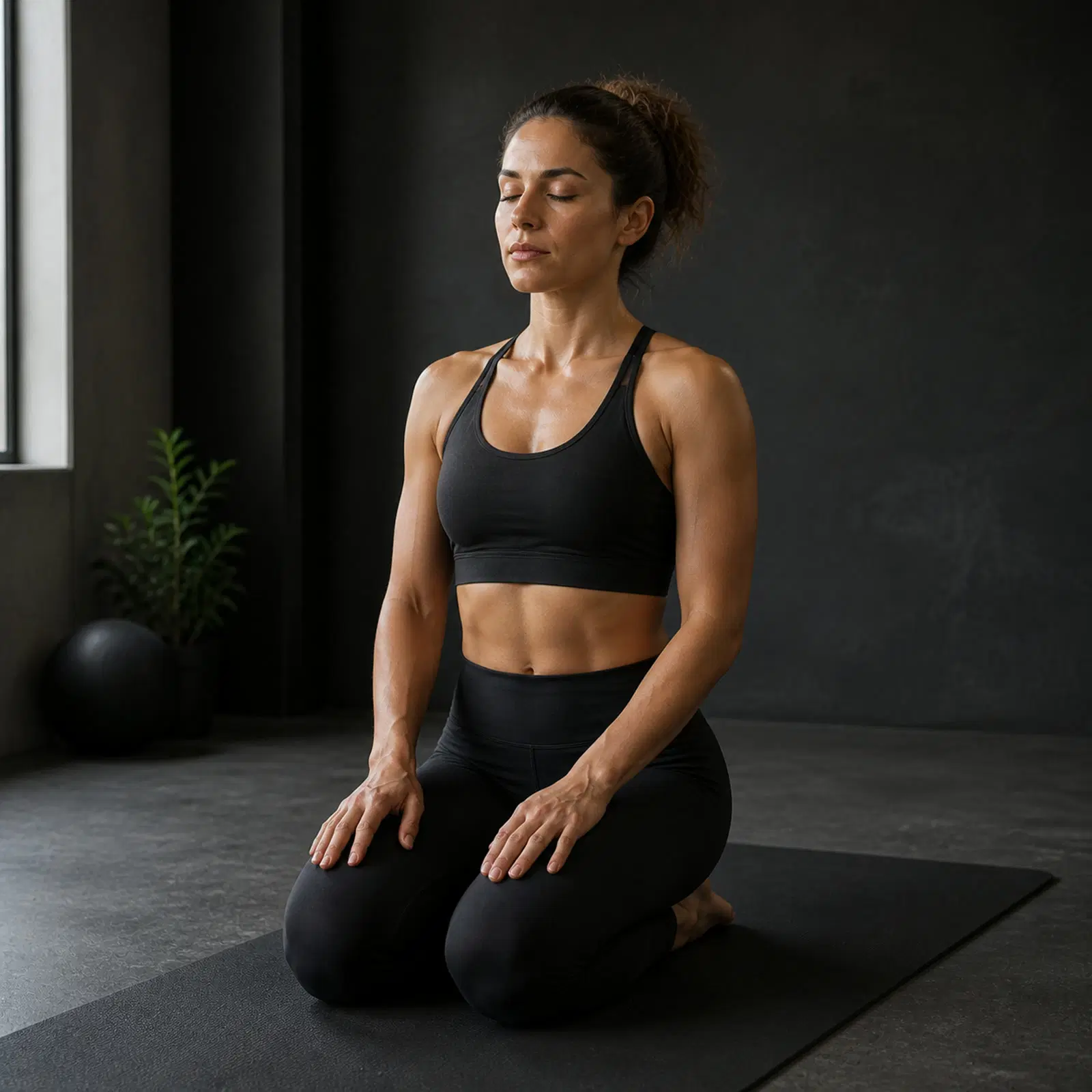
Yoga (Overview)
Sources and review status
Review pending — this text hasn’t been signed off by a reviewer yet.
See this lesson’s sources0% read · 2 min left
A mind-body discipline combining physical postures (asanas), breath control, and attentional focus that measurably improves flexibility, balance, strength, and stress regulation.
Detail
Yoga is a movement and breathing practice originating in ancient India. In a modern fitness context it is delivered primarily as posture practice (asana) coordinated with breathing (pranayama) and a focused, present-moment attentional state. A typical session blends static held postures, dynamic transitions, and a final relaxation.
Across controlled studies, regular yoga improves balance, lower-body and overall flexibility, muscular strength, and self-reported well-being; reviews and meta-analyses report reduced stress, anxiety, and depressive symptoms in both healthy and clinical populations, and it is commonly used as adjunct care for chronic low back pain. Effect sizes vary by style, dose, and population. Frame benefits as evidence-based physical and psychological outcomes rather than mystical claims.
The practice scales from gentle restorative work for deconditioned or older adults to vigorous, strength-demanding power flows for trained athletes. Style selection (see Yoga Styles (Hatha, Vinyasa, Iyengar, Yin, Power, Restorative)) determines intensity, pace, and emphasis.
Key facts
- Three core components: postures (asana), breath control (pranayama), and focused attention.
- Evidence-supported outcomes: improved flexibility, balance, muscle strength, and reduced stress/anxiety/depressive symptoms.
- Used as adjunct for chronic low back pain.
- Intensity ranges from restorative (very low) to power yoga (vigorous).
Connections
- Yoga — Core Principles — the foundational concepts of practice.
- Yoga Styles (Hatha, Vinyasa, Iyengar, Yin, Power, Restorative) — Hatha, Vinyasa, Iyengar, Yin, power, restorative.
- Pranayama (Yogic Breathing) Overview — the breathing component.
- Benefits and Outcomes of Flexibility Exercise — flexibility is a primary adaptation.
- Fall Prevention for Older Adults (Overview) — balance gains support fall prevention.
- Stress-Management Techniques — stress regulation outcomes.
Sources
Keep this lesson, or ask how it applies to you.
Educational content only — not medical advice. Always consult a qualified professional for individualized guidance, especially around injury, pregnancy, or medical conditions.