Pelvic-Floor Considerations in Exercise
0% read · 2 min left
The pelvic-floor muscles work with the deep core to manage intraabdominal pressure; training them (and coordinating breathing/bracing) supports continence and safe loading, especially around pregnancy and for impact/heavy lifting.
Detail
The pelvic floor is a sling of muscles spanning the base of the pelvis that supports the pelvic organs, contributes to continence (bladder/bowel), and works synergistically with the diaphragm, transversus abdominis, and multifidus to regulate intraabdominal pressure during effort — part of the deep-core system (see core-stability-vs-strength).
Why it matters for exercise:
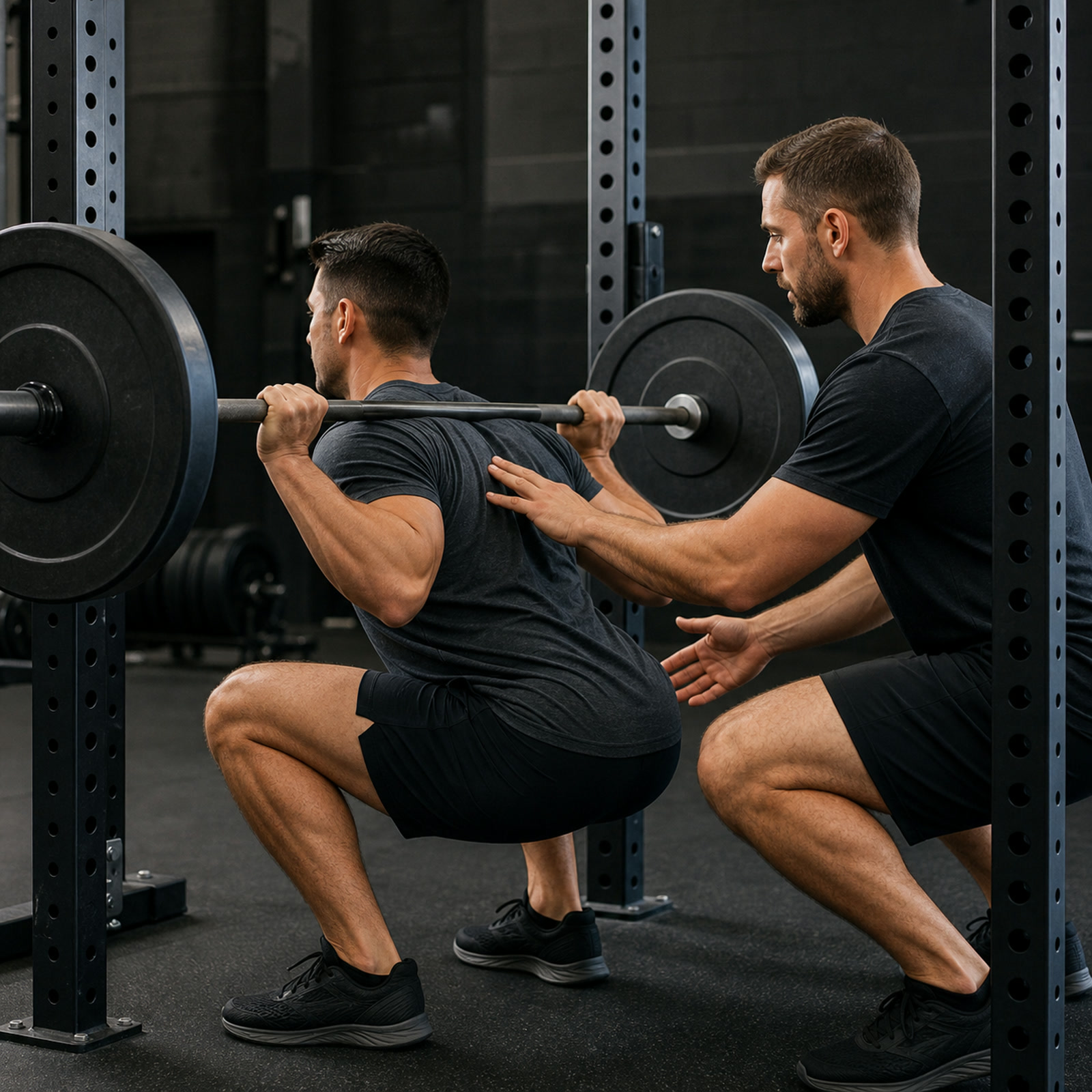
- Heavy lifting, impact (running, jumping), and high-pressure efforts load the pelvic floor; if it cannot manage the pressure, symptoms like stress urinary incontinence or pelvic heaviness can appear.
- Pregnancy and delivery stress the pelvic floor; targeted training before and after is protective.
Pelvic-floor muscle training (PFMT / "Kegels"):
- Evidence supports PFMT for preventing and treating stress urinary incontinence, including in pregnancy/postpartum.
- Coordinate contraction and relaxation (a chronically over-tight pelvic floor can also cause problems — relaxation matters as much as strength).
- Integrate with breathing: typically exhale/engage during the hardest part of a lift; avoid breath-holding strategies that overload the floor when symptomatic.
For lifters/runners: if leaking, heaviness, or bulging occurs with load or impact, regress intensity and consider assessment by a pelvic-health physiotherapist; these symptoms are common but not something to simply push through.
Non-medical-advice disclaimer
Educational only. Pelvic-floor symptoms (incontinence, prolapse sensation, pain) warrant assessment by a clinician or pelvic-health physiotherapist.
Key facts
- Pelvic floor co-manages intraabdominal pressure with diaphragm/TA/multifidus.
- PFMT helps prevent/treat stress urinary incontinence (incl. peripartum).
- Train both contraction AND relaxation; coordinate with breathing.
- Leaking/heaviness/bulging with load or impact → regress and seek pelvic-health assessment.
Connections
- pregnancy / postpartum — key windows for pelvic-floor care.
- diastasis-recti — co-managed deep-core issue.
- core-stability-vs-strength — the deep-core system context.
- bracing — pressure management in lifting.
Educational content only — not medical advice. Always consult a qualified professional for individualized guidance, especially around injury, pregnancy, or medical conditions.