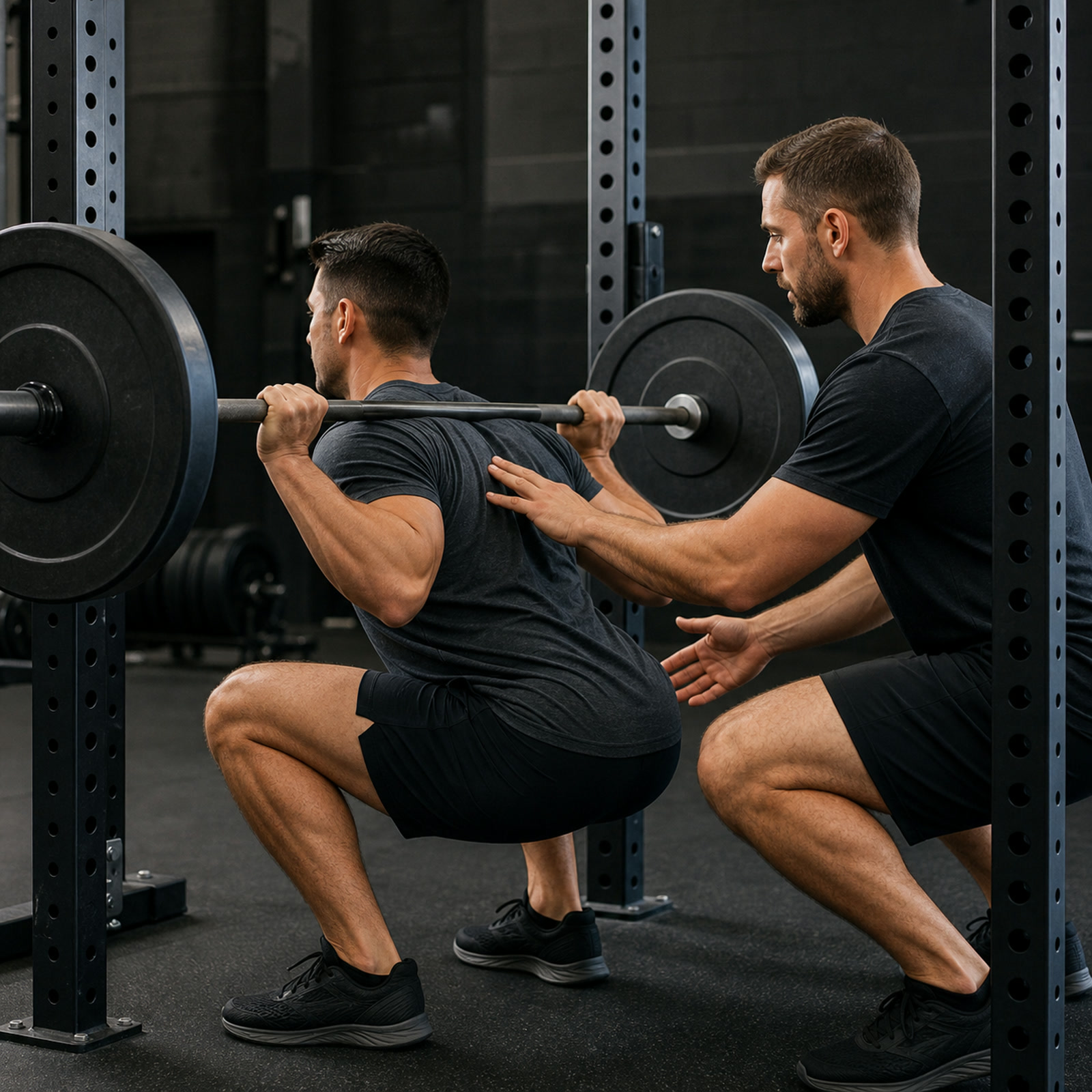
Breathing Technique & the Valsalva Effect
0% read · 1 min left
Never hold your breath while lifting — breath-holding during heavy exertion produces a Valsalva effect that spikes blood pressure and cuts blood flow to the heart, causing fainting.
Detail
The general breathing pattern is to inhale at the beginning of the eccentric action and exhale during the last third of the eccentric action. (When exercising at maximum exertion, as in powerlifting, it is not uncommon for lifters to exhale only after completing the movement.) Breath-holding during heavy exertion can produce a Valsalva effect, which causes a dramatic rise in blood pressure and decreased blood flow to the heart (causing fainting).
Among the points for safe, effective, efficient resistance training: never hold your breath while strength training, since holding your breath can raise your blood pressure to an unsafe level.
Key facts
- Inhale at the start of the eccentric action; exhale during the last third of the eccentric action.
- Never hold your breath while lifting.
- Breath-holding causes a Valsalva effect: dramatic blood-pressure rise, decreased blood flow to the heart, and fainting.
Connections
- weightlifting-belt-safety-concerns — belts also raise intra-abdominal/intrathoracic pressure; breathe between reps.
- proper-form — breathing is part of safe technique.
- erector-spinae — spinal-erector loading during heavy lifts.
- resistance-training-safety-guidelines — the "never hold your breath" guideline this module explains.
Educational content only — not medical advice. Always consult a qualified professional for individualized guidance, especially around injury, pregnancy, or medical conditions.