Weightlifting Belt — Proper Use & Safety Concerns
0% read · 2 min left
A weight belt raises intra-abdominal pressure to support the lumbar spine during heavy/near-maximal lifts, but it can elevate blood pressure, impede venous return, and weaken the body's own trunk musculature if overused.
Detail
A weightlifting belt supports the lower-back region: by increasing intra-abdominal pressure (IAP), it significantly decreases the compressive forces on the lumbar discs and helps prevent excessive arching during overhead lifts. The deep abdominal muscles and diaphragm create a pressurized "fluid ball" that supports the spinal column, reducing the force required by the erector spinae and the compressive force on the discs (Harman, 1994).
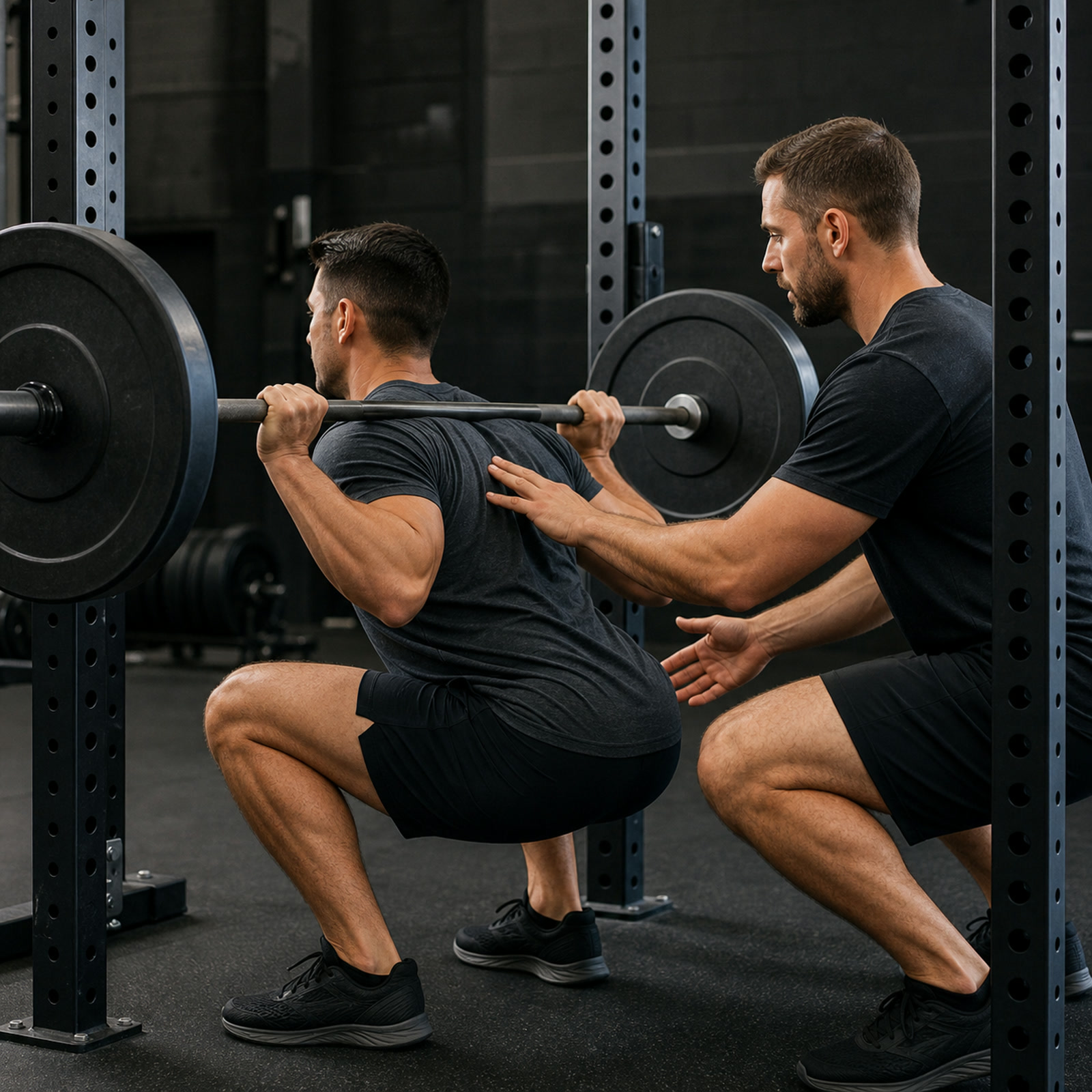
Proper use: wear the belt during maximal or near-maximal lifts — suggested for loads at or above 80% of 1 RM — and for exercises in which the spinal erectors work against high resistance (squat, deadlift) or where the spine may hyperextend (military press); also for heavy standing barbell curls and during the last few reps of a set to failure when fatigue compromises form.
Safety concerns: high IAP and intrathoracic pressure during a lift may impede blood flow back to the heart, so remind users to breathe between every repetition and to loosen the belt between sets. Blood pressure and heart rate may be elevated significantly while wearing a tight belt. Individuals with a recent injury or history of lower-back pain should receive specific instructions on appropriate belt use. Potential abuse: a correctly worn belt may limit the strengthening of the body's own abdominal and lower-back supporting musculature (EMG activity of the rectus abdominis, external oblique, and erector spinae is reduced when a belt is worn). Recommendation: for exercises not stressing the lower back, do not wear a belt at all.
Key facts
- Belt increases IAP and decreases compressive forces on the lumbar discs.
- Use during maximal/near-maximal lifts; suggested for loads ≥ 80% of 1 RM.
- Protects the back mainly in squat, deadlift, military press, heavy standing curls, and failure reps.
- High IAP/intrathoracic pressure may impede venous return — breathe every rep; loosen the belt between sets.
- A belt may reduce EMG activity of the rectus abdominis, external oblique, and erector spinae, weakening native support.
- For lifts not stressing the lower back, do not wear a belt.
Connections
- safe-lifting-mechanics — belt support complements safe lifting technique.
- breathing-valsalva — breathe between reps; belts raise pressure.
- erector-spinae — spinal erectors offloaded by the belt.
- spinal-column — lumbar discs protected.
- spine-positioning — belt helps prevent excessive arching.
- weightlifting-belt — the equipment entry: types, bracing mechanics, when to reach for one.
- back-squat / deadlift — the primary lifts this proper-use guidance applies to.
Educational content only — not medical advice. Always consult a qualified professional for individualized guidance, especially around injury, pregnancy, or medical conditions.