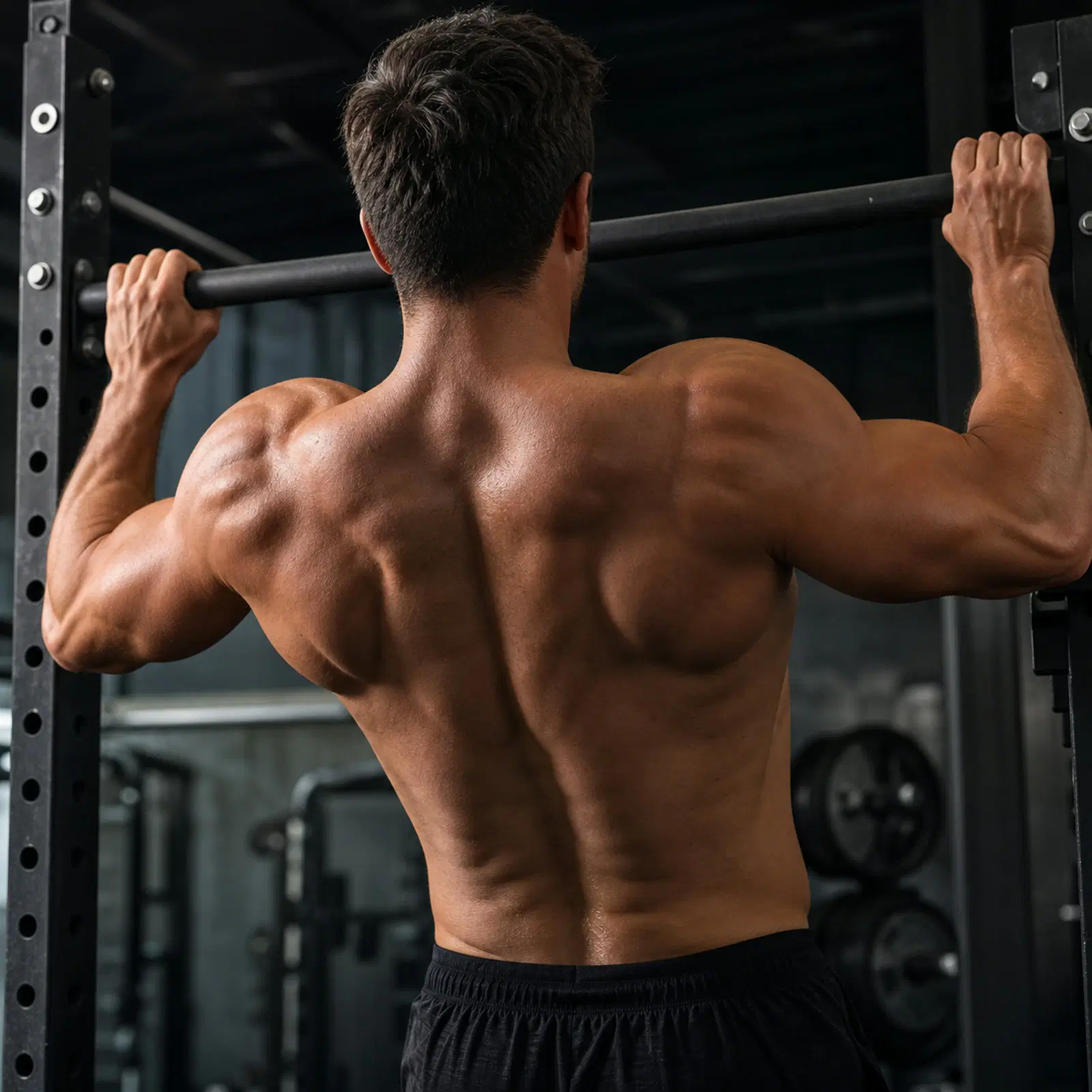
Erector Spinae (Sacrospinalis)
Sources and review status
Review pending — this text hasn’t been signed off by a reviewer yet.
Historical reference: its only source is the original reference manual, and some of it may be out of date. Not used for AI answers until re-sourced.
See this lesson’s sources0% read · 1 min left
Three muscle-group columns (iliocostalis, longissimus, spinalis) running skull-to-sacrum that extend, laterally flex, and rotate the vertebral column.
Detail
The erector spinae (also called sacrospinalis) consists of 3 major muscle groups: the iliocostalis group (most lateral), the longissimus group, and the spinalis group (most medial). The muscle runs almost the entire length of the back from skull to sacrum — so it is incorrect to call the erector spinae merely the "lower back" muscles. Acting on one side of the body at a time, each of these muscles moves the vertebral column laterally. The iliocostalis is the best rotator of the vertebral column.
Detailed components:
- Iliocostalis Group (most lateral): iliocostalis cervicis, iliocostalis thoracis, iliocostalis lumborum.
- Longissimus Group: longissimus capitis, longissimus cervicis, longissimus thoracis, longissimus lumborum.
- Spinalis Group (most medial): spinalis cervicis, spinalis thoracis.
Functions: (1) extension (hyperextension) — exercise: back extension; (2) lateral flexion (with the quadratus lumborum and obliques) — exercise: side bends; (3) torso rotation (with external and internal obliques) — exercise: rotary torso. Four deeper muscle groups lie under the erector spinae: semispinalis, multifidus, rotatores, and interspinales & intertransversarii.
Key facts
- 3 columns: iliocostalis (most lateral), longissimus, spinalis (most medial).
- Runs skull to sacrum — NOT just a "lower back" muscle.
- Unilateral action: moves the vertebral column laterally; iliocostalis is the best rotator.
- Functions: extension/hyperextension, lateral flexion, torso rotation.
- 4 deep groups beneath it: semispinalis, multifidus, rotatores, interspinales & intertransversarii.
Connections
- Spinal Column (Vertebral Column) — the structure it extends.
- Quadratus Lumborum — co-produces lateral flexion.
- Extension — spinal extension/hyperextension.
- Antigravity Musculature — trunk antigravity muscle.
- Back Extensions / Deadlifts (bent knee) — training exercises.
Sources
Exercise guides
Keep this lesson, or ask how it applies to you.
Educational content only — not medical advice. Always consult a qualified professional for individualized guidance, especially around injury, pregnancy, or medical conditions.