Free Weights vs. Machines — Safety Considerations
0% read · 1 min left
Advocates consider machines safer than free weights and usually spotter-free, while free weights demand more sophisticated technique — but free weights have a long accident-free track record.
Detail
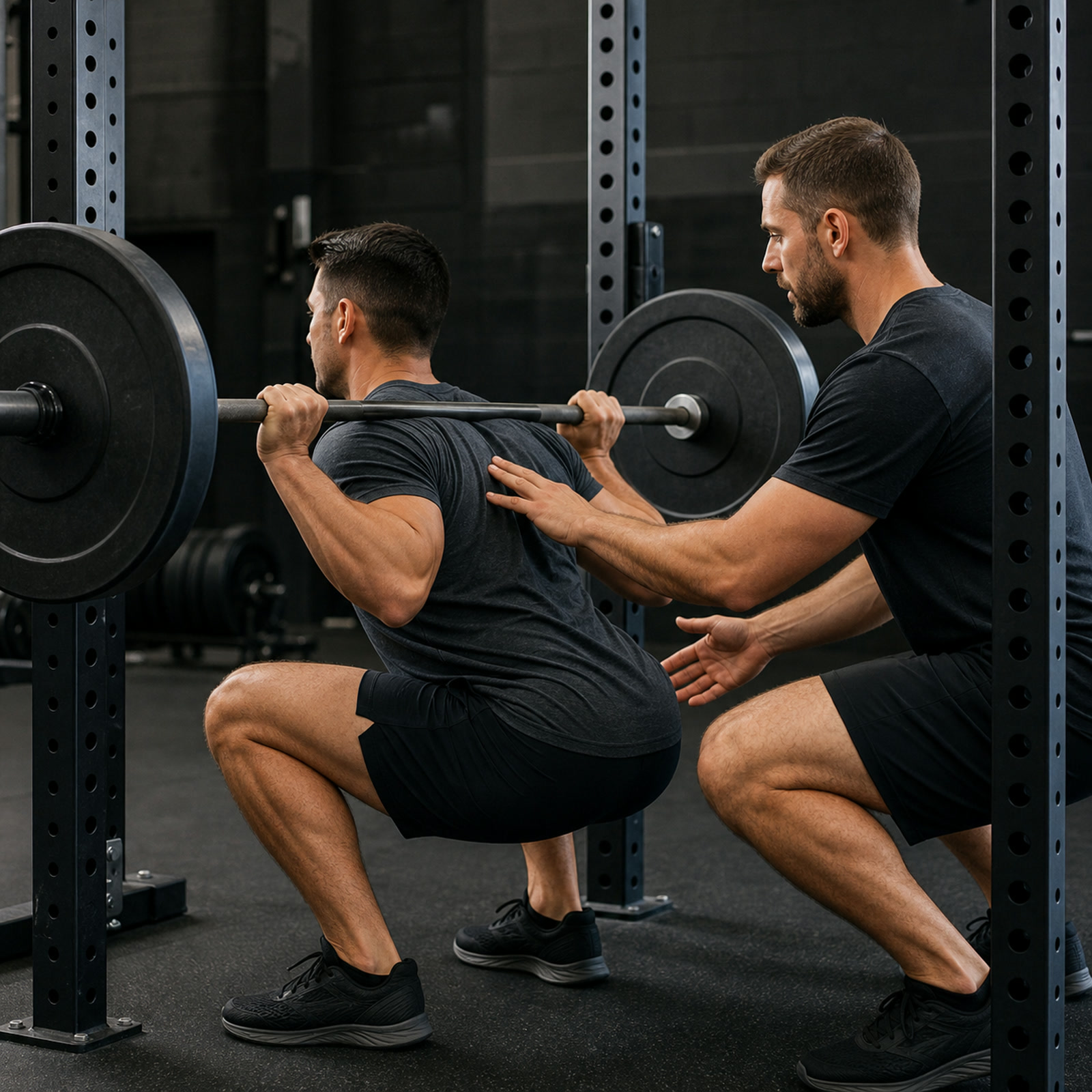
On the safety dimension of the free-weights-vs-machines question: advocates of resistance machines believe machines are safer to use than free weights, although free weights have been used in many programs without accidents (including programs for children). For the most part, machines do not require spotters, whereas the use of free weights may require spotters during some exercises to ensure the lifter's safety.
The use of free weights requires more sophisticated lifting technique than machines — especially for multiple-joint, free-weight exercises (squats, snatches). Some individuals choose machines because they do not wish to spend the time learning proper free-weight technique, or because no qualified person is available to teach them. Free weights allow movement in all three planes, whereas machines allow movement in only one plane.
Key facts
- Machines are considered safer and usually do not require spotters.
- Free weights may require spotters on some exercises.
- Free weights demand more sophisticated technique, especially multi-joint lifts (squats, snatches).
- Free weights have been used without accidents in many programs (including for children).
Connections
- spotting — free weights may need spotters; machines usually don't.
- proper-form — free weights demand more technique.
- free-weights-vs-machines — full comparison of the two modes.
- exercise-selection — choosing structural vs. machine substitutes.
Educational content only — not medical advice. Always consult a qualified professional for individualized guidance, especially around injury, pregnancy, or medical conditions.