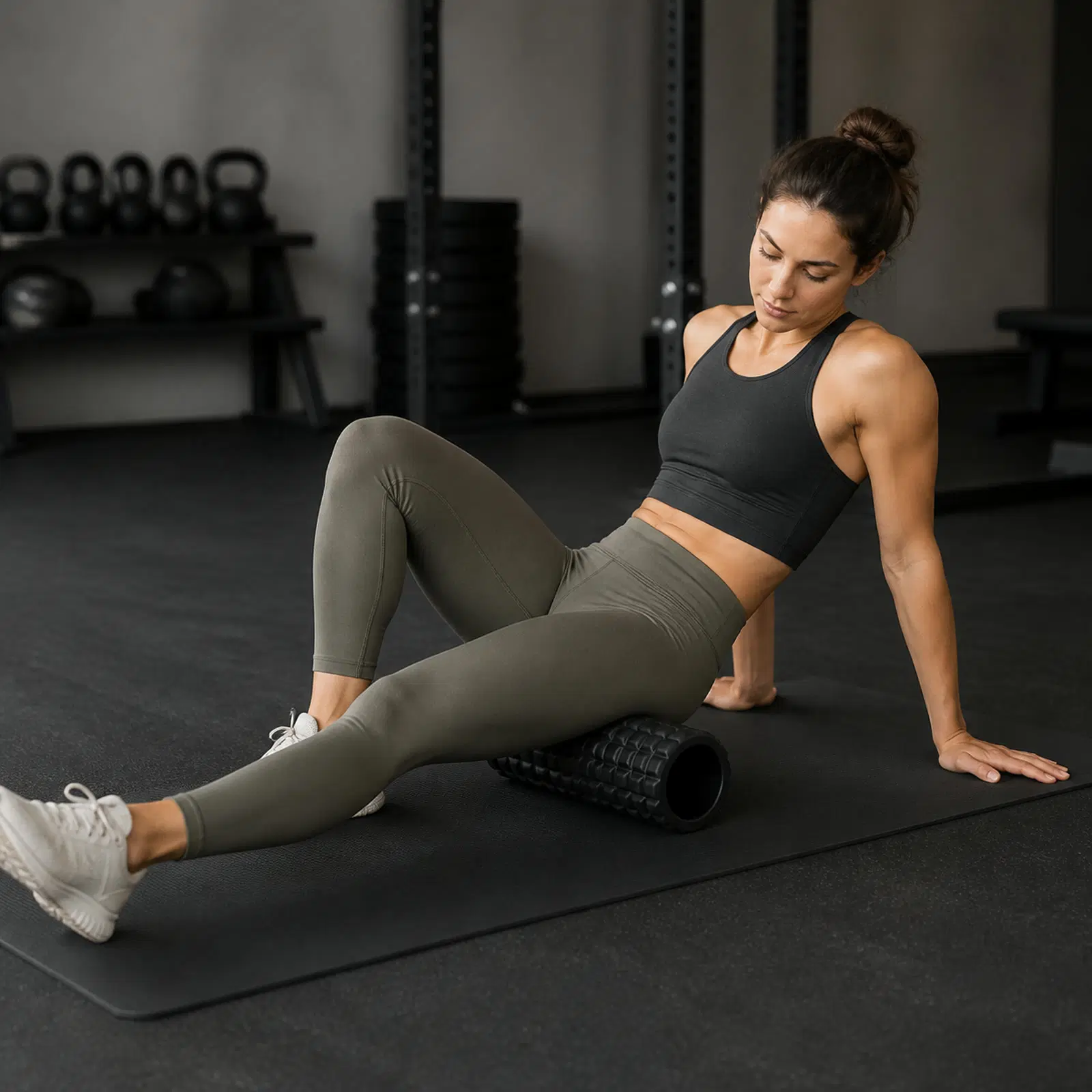
Massage for Recovery
Sources and review status
Review pending — this text hasn’t been signed off by a reviewer yet.
See this lesson’s sources0% read · 1 min left
Sports/recovery massage reliably reduces the feeling of soreness and aids relaxation, but it does little to speed measurable tissue repair or restore performance — a comfort and stress-relief tool more than a performance one.
Detail
Massage (manual soft-tissue work by a therapist) is one of the better-studied recovery modalities. The evidence is reasonably consistent and modest:
- Reduces perceived soreness/DOMS: massage after exercise lowers the subjective sensation of muscle soreness compared with no treatment (see Muscle Soreness — Acute vs. DOMS).
- Aids relaxation and stress: it lowers perceived stress and tension and can feel restorative — a real, if non-physical-performance, benefit (link Stress-Management Techniques).
- Limited effect on function: massage does not reliably restore strength, power, or performance faster, and proposed mechanisms like "flushing lactate" are largely myth — it may slightly reduce local blood flow during application.
- Possible inflammation/recovery signaling: some research suggests massage modulates inflammatory signaling in muscle, but practical performance effects remain small.
Bottom line: massage is a legitimate tool for feeling better, easing soreness, and relaxation, and athletes who value it can use it freely — just don't expect it to be the difference-maker in adaptation. It sits in the comfort/perception tier of Recovery Modalities — Overview & Evidence.
Key facts
- Reliably ↓ perceived soreness/DOMS and aids relaxation.
- Does not reliably speed tissue repair or restore performance.
- "Flushes lactate" is a myth; main value is comfort/stress relief.
Connections
- Muscle Soreness — Acute vs. DOMS — DOMS, the target sensation.
- Foam Rolling & Self-Myofascial Release (SMR) — self-administered analog.
- Stress-Management Techniques — relaxation benefit.
- Recovery Modalities — Overview & Evidence — its place in the tier.
Sources
Keep this lesson, or ask how it applies to you.
Educational content only — not medical advice. Always consult a qualified professional for individualized guidance, especially around injury, pregnancy, or medical conditions.