Fysiqal
Wellness
Wellness
Recovery Modalities — Overview & Evidence
Evidence-grounded — sourced from Fysiqal's fitness knowledge graph· 2 min read
recoverymodalitiesevidencemassagecold-water-immersionsaunacompressionfoam-rolling
0% read · 2 min left
In one line
A tier of add-on recovery tools (massage, foam rolling, compression, cold-water immersion, sauna, contrast) — most modestly reduce perceived soreness/fatigue, few clearly speed real repair, and some (post-lift cold) can blunt adaptation. Foundations beat gadgets.
Detail
"Recovery modalities" are interventions layered on top of the foundations (sleep, nutrition, rest). Marketing far outpaces evidence here, so this domain rates each one honestly.
A fair summary of where the evidence sits:
| Modality | What the evidence supports | Caveats |
|---|---|---|
| Sleep / nutrition / hydration | The real drivers of recovery | Not a "modality" — the foundation |
| Massage | ↓ perceived soreness/DOMS; relaxation; modest | Doesn't restore function much; effects small |
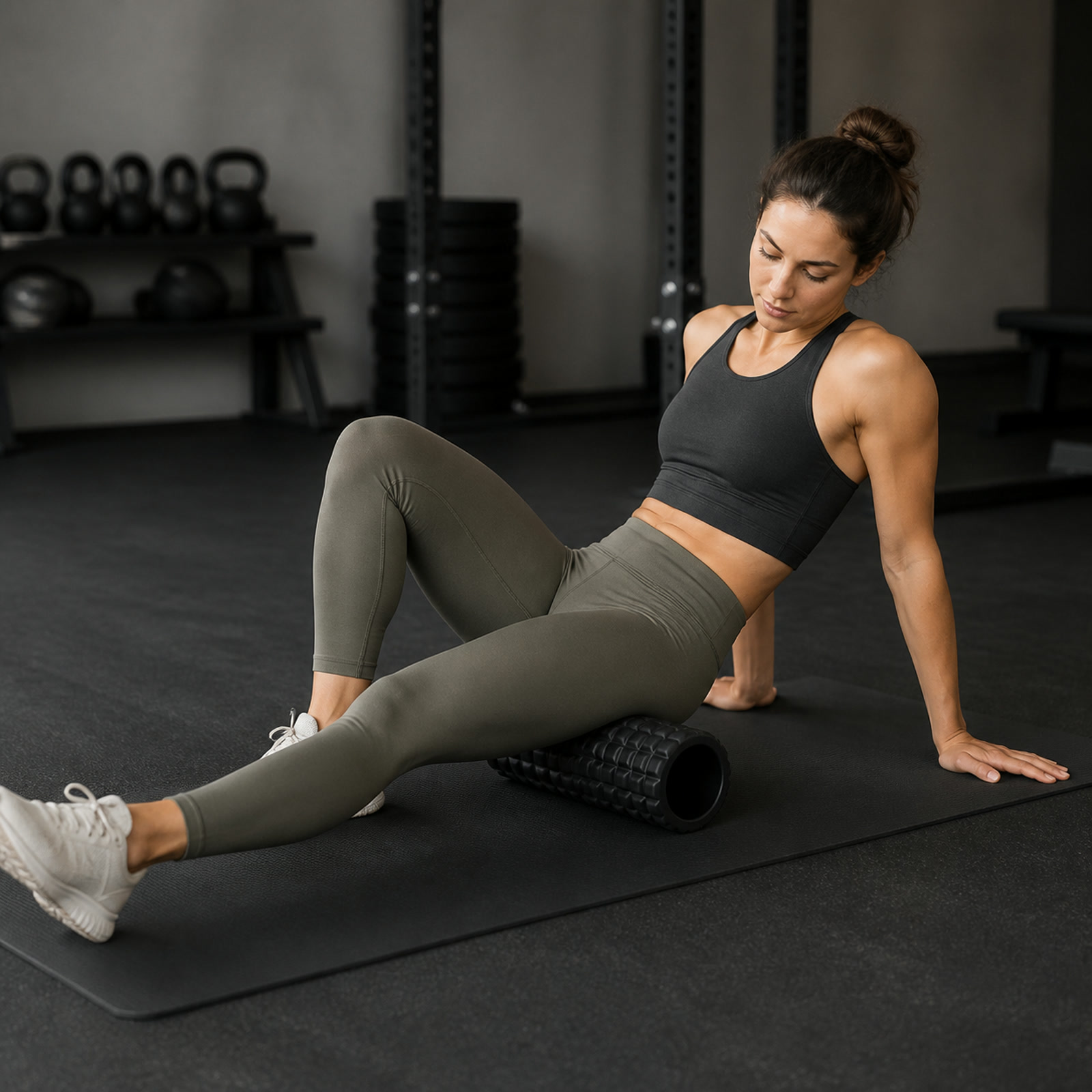
| Foam rolling / SMR | Short-term ↑ ROM; ↓ perceived soreness | No lasting tissue change; mostly comfort |
| Compression garments | Small ↓ in soreness/perceived fatigue | Performance-recovery effects modest/mixed |
| Cold-water immersion / ice baths | ↓ soreness & perceived fatigue; helps power recovery | Blunts hypertrophy/strength adaptation when used post-lift chronically |
| Heat / sauna | Relaxation; possible cardiovascular/recovery benefits | Evidence for accelerating muscle recovery is weak |
| Contrast (hot/cold) | ↓ perceived soreness similar to CWI | Not clearly better than either alone |
Recurring themes:
- Perception vs. reality: most modalities reliably make you feel better (less sore, less fatigued) without strongly accelerating measured repair (see muscle-soreness).
- Adaptation trade-off: routine cold-water immersion right after resistance training can reduce hypertrophy and strength gains — avoid it post-lift if growth/strength is the goal (see cold-water-immersion).
- Foundations first: none of these substitute for sleep-why-it-matters, adequate energy/protein, and rest.
Each modality has its own detailed module below.
Key facts
- Most modalities reduce perceived soreness/fatigue more than they speed real repair.
- Post-lift cold-water immersion can blunt hypertrophy/strength gains — avoid when growth is the goal.
- Foundations (sleep, nutrition, rest) outrank all modalities.
Connections
- massage-recovery / foam-rolling-smr / compression-garments
- cold-water-immersion / heat-sauna / contrast-therapy
- muscle-soreness — the DOMS target modalities address.
- recovery-overview — modalities as the lowest tier.
SourceCurrent guideline bodies
Grounded in: meta-analyses on CWI and hypertrophy (Piñero et al. 2024, EJSS / PMC11235606);
Educational content only — not medical advice. Always consult a qualified professional for individualized guidance, especially around injury, pregnancy, or medical conditions.
Explore related topics
Atlas Connections
Muscle Soreness — Acute vs. DOMS
Soreness comes in two forms — acute pain felt during/right after exercise, and delayed-onset (DOMS) appearing 12–48 hours later.Cold-Water Immersion & Ice BathsClosely related
Sitting in cold water (~10–15 °C) after exercise reduces soreness and perceived fatigue and can help power recover — but doing it routinely right after lifting blunts long-term muscle and strength gains, so time it to your goal.Compression Garments for RecoveryClosely related
Compression tights/sleeves give a small reduction in soreness and perceived fatigue after hard exercise — low-risk and convenient, with modest, mixed evidence for actually speeding recovery.Contrast Therapy (Hot/Cold)
Alternating hot and cold (e.g., sauna/hot bath then cold plunge, in repeated cycles) reduces perceived soreness about as well as cold-water immersion alone — convenient if you enjoy it, but not clearly superior to either temperature on its own.Foam Rolling & Self-Myofascial Release (SMR)Closely related
Rolling a muscle over a foam roller or ball briefly improves range of motion and reduces the feeling of soreness without lasting tissue change — useful in warm-ups and for comfort, not a true "release" of fascia.Heat & Sauna for RecoveryClosely related
Sauna and heat exposure are relaxing and have some cardiovascular and heat-adaptation benefits, but evidence that they meaningfully speed muscle recovery is weak — and unlike cold, heat doesn't blunt training adaptation.Massage for RecoveryClosely related
Sports/recovery massage reliably reduces the feeling of soreness and aids relaxation, but it does little to speed measurable tissue repair or restore performance — a comfort and stress-relief tool more than a performance one.Recovery — Overview
Recovery is the process between training sessions where the body repairs, refuels, and adapts; training only produces results when matched by enough recovery — and the foundations (sleep, nutrition, time) matter far more than gadgets.Why Sleep Matters for Fitness
Sleep is the single most powerful recovery tool there is — it drives muscle repair, hormone balance, motor learning, appetite control, and next-day performance, and no supplement or modality compensates for chronic shortfall.