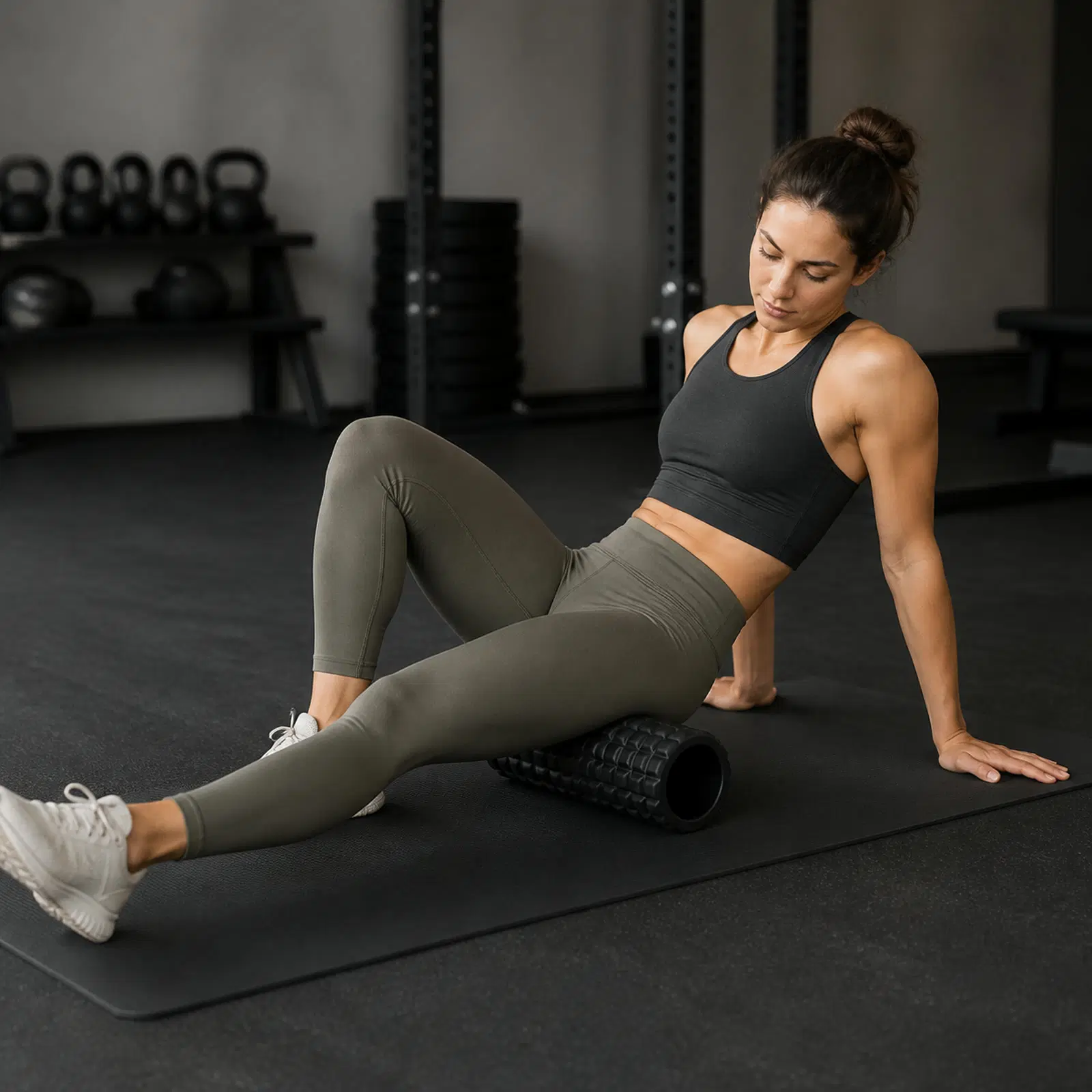
Recovery, sleep and habits decide how much of your training you keep. Treat them as part of the plan, not extras.
What do you want to do?
Start here
4 lessons · ~15 min · in this order- 1Recovery — OverviewTraining is the stimulus; you adapt while you recover. Get the basics right first (sleep, enough food and protein, sensible scheduling, manageable life stress). Recovery gadgets mostly change how you feel, and one (regular ice baths after lifting) can cost you gains.Begin →
- 2Why Sleep Matters for FitnessAdults need 7 or more hours of sleep on a regular basis. Short sleep lowers next-day performance, blunts muscle building, and makes a diet take more muscle and less fat. No supplement or recovery tool makes up for it.6 min
- 3Warning Signs of Under-RecoveryThe early flags that recovery is losing to training stress — stalled or declining performance, persistent fatigue and soreness, poor sleep, low mood/motivation, elevated resting heart rate, and more frequent illness.2 min
- 4Habit Formation (Cue–Routine–Reward)Habits are automatic behaviors triggered by context; build exercise habits by attaching a clear cue, keeping the routine easy, and pairing it with a reward — repeating it in a stable context until it runs on autopilot.2 min
More reading routes through Wellness
Build the sleep habit · Fix the biggest lever
Read your own recovery · Know before you overtrain
Make it stick · Behavior, not willpower
Every Wellness topic
55 topics
- Active vs Passive Recovery2 minConcept · Passive recovery is complete rest; active recovery is light, low-intensity movement (easy walk, spin, mobility) that promotes blood flow — useful within a session and on rest days, though neither dramatically speeds tissue repair.
- Acute vs Chronic Stress2 minConcept · Acute stress is the short, adaptive "fight-or-flight" response that resolves; chronic stress is prolonged activation with no off-switch, which wears the body down and competes directly with training recovery.
- Alcohol & Fitness3 minConcept · Alcohol works against nearly every fitness goal — it fragments sleep and suppresses REM, blunts muscle protein synthesis, dehydrates, adds empty calories, and impairs next-day performance — so it's one of the higher-impact lifestyle levers.
- Allostatic Load2 minConcept · The cumulative "wear and tear" on the body from repeated or chronic stress responses — the price of staying activated too long, showing up across hormones, cardiovascular, metabolic, and immune systems.
- Body Image and a Healthy Relationship with Fitness2 minConcept · How a person perceives and feels about their body shapes their motivation, adherence, and wellbeing — and a fitness app should support a healthy, behavior-focused relationship rather than appearance-only goals.
- Caffeine & Sleep2 minConcept · Caffeine blocks the sleepiness signal (adenosine) and has a long half-life, so afternoon/evening doses can quietly shorten and fragment sleep even when you fall asleep fine.
- Circadian Rhythm2 minConcept · The roughly 24-hour internal clock that times sleep, hormones, body temperature, and alertness — set mainly by light, and best supported with consistent sleep timing and morning daylight.
- Cold-Water Immersion & Ice Baths2 minConcept · Sitting in cold water (~10–15 °C) after exercise reduces soreness and perceived fatigue and can help power recover — but doing it routinely right after lifting blunts long-term muscle and strength gains, so time it to your goal.
- Compression Garments for Recovery1 minConcept · Compression tights/sleeves give a small reduction in soreness and perceived fatigue after hard exercise — low-risk and convenient, with modest, mixed evidence for actually speeding recovery.
- Contrast Therapy (Hot/Cold)2 minConcept · Alternating hot and cold (e.g., sauna/hot bath then cold plunge, in repeated cycles) reduces perceived soreness about as well as cold-water immersion alone — convenient if you enjoy it, but not clearly superior to either temperature on its own.
- Cortisol Basics3 minConcept · Cortisol is the main stress/"wake-up" hormone — useful and necessary in short bursts (mobilizing energy, following a daily rhythm), but chronically elevated levels from unmanaged stress or under-recovery promote tissue breakdown and impair recovery.
- Daily Hydration (Wellness)2 minConcept · Staying adequately hydrated day-to-day supports energy, cognition, digestion, temperature regulation, and recovery; most people meet needs by drinking to thirst plus fluids from food — color of urine is a handy gauge.
- Deloads from a Recovery View2 minConcept · A planned lighter week, with reduced volume and effort, that manages accumulated physical and mental fatigue. It's a recovery tool, not a growth booster: trials show a lighter week costs little, while a full week off cost trained lifters some strength.
- Effects of Poor Sleep on Training2 minConcept · Short or fragmented sleep lowers strength, endurance, accuracy, and reaction time, makes the same workload feel harder, dulls decision-making, raises injury risk, and impairs recovery between sessions.
- Exercise as a Stressor and as Stress Relief2 minConcept · Exercise is a paradox — it's a physical stressor (acutely raising cortisol and fatigue) yet one of the best stress-relievers there is, because the body adapts to the controlled dose and the activity discharges tension and lifts mood.
- Foam Rolling & Self-Myofascial Release (SMR)2 minConcept · Rolling a muscle over a foam roller or ball briefly improves range of motion and reduces the feeling of soreness without lasting tissue change — useful in warm-ups and for comfort, not a true "release" of fascia.
- Goal-Setting (SMART)2 minConcept · Well-formed goals are Specific, Measurable, Achievable, Relevant, and Time-bound — and pairing outcome goals ("lose 5 kg") with process goals ("train 3x/week") makes them far more likely to stick.
- Habit Formation (Cue–Routine–Reward)2 minConcept · Habits are automatic behaviors triggered by context; build exercise habits by attaching a clear cue, keeping the routine easy, and pairing it with a reward — repeating it in a stable context until it runs on autopilot.
- Heat & Sauna for Recovery2 minConcept · Sauna and heat exposure are relaxing and have some cardiovascular and heat-adaptation benefits, but evidence that they meaningfully speed muscle recovery is weak — and unlike cold, heat doesn't blunt training adaptation.
- Identity-Based Habits2 minConcept · The most durable behavior change comes from shifting identity — becoming "a person who trains" rather than someone chasing a goal — because actions then flow from self-image and each session is a vote for who you are.
- Lapse vs Relapse2 minConcept · A lapse is a single slip (one missed week, one off period); a relapse is a full return to the old pattern. Treating slips as normal and recoverable — "never miss twice" — is what separates people who stick with exercise from those who quit.
- Massage for Recovery1 minConcept · Sports/recovery massage reliably reduces the feeling of soreness and aids relaxation, but it does little to speed measurable tissue repair or restore performance — a comfort and stress-relief tool more than a performance one.
- Mental-Health Benefits of Exercise2 minConcept · Regular physical activity reliably improves mood and reduces symptoms of depression and anxiety, sharpens cognition, and boosts wellbeing and sleep — through both immediate effects and longer-term brain and stress-system changes.
- Mindfulness for Fitness & Wellbeing2 minConcept · Mindfulness — paying attention to the present without judgment — lowers stress and improves wellbeing, and applied to training it sharpens body awareness, the mind-muscle connection, eating habits, and recovery.
- Monitoring Recovery (RHR, HRV, Mood, Performance)2 minConcept · Track a few simple markers — morning resting heart rate, HRV, sleep, mood/soreness, and performance — against your own baseline to gauge readiness and decide when to push or back off.
- Motivation — Intrinsic vs Extrinsic2 minConcept · Extrinsic motivation (rewards, looks, others' approval) is great for getting started; intrinsic motivation (enjoyment, mastery, feeling good) is what sustains exercise long-term — so the goal is to shift from one to the other.
- Napping2 minConcept · A short 10–30 minute nap restores alertness and can boost afternoon performance without grogginess; longer naps (~90 min) complete a full cycle but risk sleep inertia and may disrupt night sleep.
- NEAT & Daily Movement2 minConcept · NEAT — Non-Exercise Activity Thermogenesis — is all the calories you burn from movement that isn't formal exercise (walking, fidgeting, chores, standing); it's a large, highly variable slice of daily energy expenditure and a powerful, underrated lever for body composition.
- Overcoming Barriers to Exercise2 minConcept · The common reasons people skip exercise — no time, fatigue, cost, lack of confidence, no support — are predictable and solvable with planning, friction-reduction, and matching the plan to real life.
- Overtraining vs Overreaching2 minConcept · A spectrum of too much training with too little recovery — from functional overreaching (a brief dip that rebounds into gains) through non-functional overreaching to overtraining syndrome (severe, prolonged underperformance taking months to resolve).
- Recommended Sleep Duration (Adults 7–9 h)2 minConcept · Adults need at least 7 hours per night for health (CDC/AASM); 7–9 hours is the common target, and physically active people and athletes often sit at the upper end or higher.
- Recovery — Overview5 minApplied lesson · Training is the stimulus; you adapt while you recover. Get the basics right first (sleep, enough food and protein, sensible scheduling, manageable life stress). Recovery gadgets mostly change how you feel, and one (regular ice baths after lifting) can cost you gains.
- Recovery Between Sessions2 minConcept · The time and inputs needed before training the same target again — generally ~48 h for a hard-trained muscle group — so that you start the next session recovered enough to perform and adapt.
- Recovery Modalities — Overview & Evidence2 minConcept · A tier of add-on recovery tools (massage, foam rolling, compression, cold-water immersion, sauna, contrast) — most modestly reduce perceived soreness/fatigue, few clearly speed real repair, and some (post-lift cold) can blunt adaptation. Foundations beat gadgets.
- Rest Days2 minConcept · Scheduled days without training (or with only light activity) that let the body complete repair and adaptation; built into the week, they prevent fatigue accumulation and support, not interrupt, progress.
- Screen Time, Light & Recovery2 minConcept · Heavy and late screen use undercuts fitness on three fronts — it displaces movement (sitting), delays sleep through light and arousal, and can raise stress — so managing it, especially before bed, protects recovery.
- Sedentary Behavior & Sitting Risk3 minConcept · Prolonged sitting is an independent health risk — linked to higher cardiovascular, metabolic, and all-cause mortality — and while exercise helps, the strongest message is to sit less and break up sitting throughout the day.
- Self-Determination Theory (Autonomy, Competence, Relatedness)2 minConcept · People stick with exercise when three basic psychological needs are met — autonomy (it's my choice), competence (I'm getting good at it), and relatedness (I belong/connect) — which is what turns extrinsic motivation into lasting intrinsic motivation.
- Self-Efficacy2 minConcept · Your belief in your own ability to succeed at a specific behavior — one of the strongest predictors of starting and sticking with exercise; it's built through small wins, models, encouragement, and managing how effort feels.
- Signs of Dehydration2 minConcept · Thirst, dark urine, headache, fatigue, dizziness, and reduced performance are the everyday flags of dehydration; urine color is the simplest practical check.
- Sleep Architecture (Stages & Cycles)2 minConcept · A night of sleep cycles through light NREM, deep slow-wave NREM, and REM about every 90 minutes; deep sleep dominates early cycles (physical repair) and REM dominates later ones (memory/emotion).
- Sleep Debt2 minConcept · The cumulative shortfall from sleeping less than you need; it builds night after night, degrades performance and recovery, and can only be partly and slowly repaid — not erased in a single weekend lie-in.
- Sleep Hygiene2 minConcept · The behaviors and environment that protect sleep quality — consistent timing, a dark/cool/quiet room, limiting caffeine/alcohol/late screens, and a wind-down routine.
- Sleep Position and Shoulder Health6 minConcept · Sleeping repeatedly on one side — especially on an already-sore shoulder — is linked to shoulder pain and impingement symptoms in several studies, with a real pressure-based mechanism behind it, but the evidence is mixed (the single largest cohort study found no significant link) and no study connects it to training performance or overhead-press-specific injury.
- Sleep, Hormones & Muscle Growth2 minConcept · Deep sleep drives the body's biggest growth-hormone pulse and supports protein synthesis; skimping on sleep lowers testosterone, raises cortisol, and tilts the body toward muscle breakdown.
- Smoking & Fitness2 minConcept · Smoking impairs oxygen delivery, lung function, cardiovascular health, and tissue healing/recovery — directly limiting endurance and adaptation — and quitting yields rapid, large fitness and health gains.
- Social Support & Accountability2 minConcept · Training with others, having someone to answer to, and belonging to a community substantially improve exercise adherence — relatedness is a core psychological need, and accountability turns intentions into action.
- Stages of Change (Transtheoretical Model)2 minConcept · A model that frames behavior change as movement through five stages — precontemplation, contemplation, preparation, action, maintenance — so support can be matched to where someone actually is, not where you wish they were.
- Steps Targets3 minConcept · More daily steps lower mortality risk, with most of the benefit accruing by about 7,000–9,000 steps/day; the famous "10,000 steps" is a marketing figure, not a science-based threshold — any increase from a low baseline helps a lot.
- Stress & Recovery Interaction2 minConcept · Life stress and training stress draw on one shared recovery budget — high work, relationship, financial, or sleep stress slows training recovery, so when life is hard, training should usually get lighter.
- Stress-Management Techniques2 minConcept · Evidence-supported ways to lower chronic stress load — slow breathing, mindfulness/meditation, physical activity, good sleep, social connection, time in nature, and structuring/reframing stressors — most of which also improve recovery.
- Warning Signs of Under-Recovery2 minConcept · The early flags that recovery is losing to training stress — stalled or declining performance, persistent fatigue and soreness, poor sleep, low mood/motivation, elevated resting heart rate, and more frequent illness.
- Wellness Domain — Overview2 minConcept · Wellness is the "everything around the workout" that determines whether training actually produces results — sleep, recovery, stress, daily movement, hydration, and the behaviors that keep you consistent.
- Why Sleep Matters for Fitness6 minApplied lesson · Adults need 7 or more hours of sleep on a regular basis. Short sleep lowers next-day performance, blunts muscle building, and makes a diet take more muscle and less fat. No supplement or recovery tool makes up for it.
- Work–Life–Exercise Balance2 minConcept · Sustainable fitness fits into a real life with work, family, and rest — built on a realistic schedule, efficient sessions, flexible minimums, and protecting sleep, rather than an all-or-nothing ideal that collapses under a busy week.
Explore connections
How Wellness links to other categories — line thickness is link density in the graph, not an editorial rating.