Fysiqal
Anatomy
Anatomy
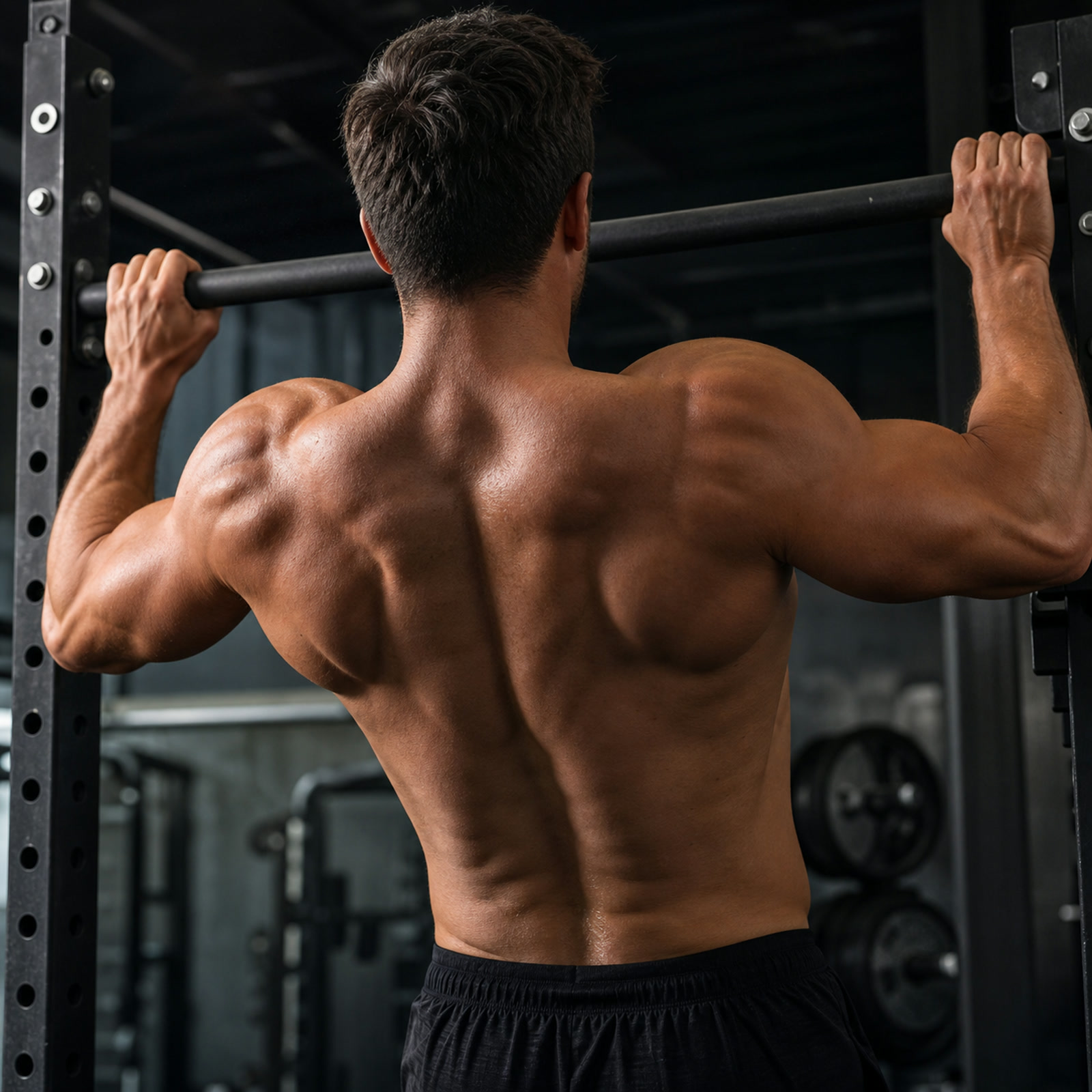
The 12 Major Muscle Groups
Evidence-grounded — sourced from Fysiqal's fitness knowledge graph· 1 min read
muscle-groupmuscle-balancereference
0% read · 1 min left
In one line
For balanced development and reduced injury risk, strengthen the 12 major muscle groups (plus obliques and adductors/abductors).
Detail
For balanced muscle development and to reduce the risk of injuries, it is essential to strengthen the 12 major muscle groups:
| 1. Trapezius | 5. Erector Spinae | 9. Quadriceps |
| 2. Deltoids | 6. Triceps | 10. Glutes / Hip |
| 3. Pectorals | 7. Biceps | 11. Calves |
| 4. Latissimus Dorsi | 8. Abdominals | 12. Hamstrings |
If possible, it is also advisable to train the obliques and the adductors/abductors. Training some muscles while excluding others typically produces poorer overall results and may lead to muscle injuries.
Key facts
- 12 major muscle groups: trapezius, deltoids, pectorals, latissimus dorsi, erector spinae, triceps, biceps, abdominals, quadriceps, glutes/hip, calves, hamstrings.
- Also recommended: obliques and adductors/abductors.
Connections
- muscle-balance — the principle this list supports.
- trapezius, deltoids, pectoralis-major, latissimus-dorsi, erector-spinae, triceps, biceps-brachii, abdominals, quadriceps, gluteus-maximus, calves-overview, hamstrings — the individual groups.
SourceReference manual
p.388p.516
Cited authorities in source: Fleck & Kraemer (1997).
Educational content only — not medical advice. Always consult a qualified professional for individualized guidance, especially around injury, pregnancy, or medical conditions.
Explore related topics
The 12 Major Muscle Groups
Abdominals (Midsecti…Biceps BrachiiCalves (Gastrocnemiu…DeltoidsErector Spinae (Sacr…Gluteus MaximusHamstringsLatissimus DorsiPectoralis MajorQuadricepsTrapeziusTriceps Brachii+1 more related topic in the full list below
Atlas Connections
Abdominals (Midsection)
Four muscles — rectus abdominis, external oblique, internal oblique, transverse abdominis — that flex, rotate, and laterally flex the trunk and compress the abdomen.Biceps Brachii
The strongest flexor of the elbow joint (long and short heads); flexes the elbow, supinates the forearm, and weakly flexes the shoulder; a 2-joint muscle (ROM 135°).Calves (Gastrocnemius and Soleus)
The calf comprises the gastrocnemius (crosses knee and ankle) and the soleus (crosses only the ankle); both plantar-flex the foot.Deltoids
The three-headed shoulder muscle — anterior, medial, and posterior deltoid — each with distinct actions.Erector Spinae (Sacrospinalis)
Three muscle-group columns (iliocostalis, longissimus, spinalis) running skull-to-sacrum that extend, laterally flex, and rotate the vertebral column.Gluteus Maximus
The strongest, largest muscle in the body; the primary hip extensor and a lateral rotator of the femur.Hamstrings
Three 2-joint muscles — biceps femoris, semitendinosus, semimembranosus — that flex the knee (primary) and extend the hip (secondary); knee-flexion ROM 125°.Latissimus Dorsi
A 2-joint back muscle; its strongest action is adduction (drawing the arm to the side from side-horizontal, rotating inward), with extension second.Pectoralis Major
The chest muscle (clavicular and sternal portions); its primary action is horizontal adduction (flexion) of the arm — a powerful action.Quadriceps
The four knee extensors — rectus femoris, vastus medialis, vastus lateralis, vastus intermedius (rectus femoris also flexes the hip); knee ROM 90°.Trapezius
A muscle that functions as three different muscles — upper, middle, and lower traps — moving the scapula.Triceps Brachii
The three-headed elbow extensor (long, medial, lateral heads); the long head also assists shoulder extension.Principle of Muscle Balance
Train all major muscle groups — and both sides of every joint — because a disproportionately strong muscle predisposes its weaker antagonist to injury.