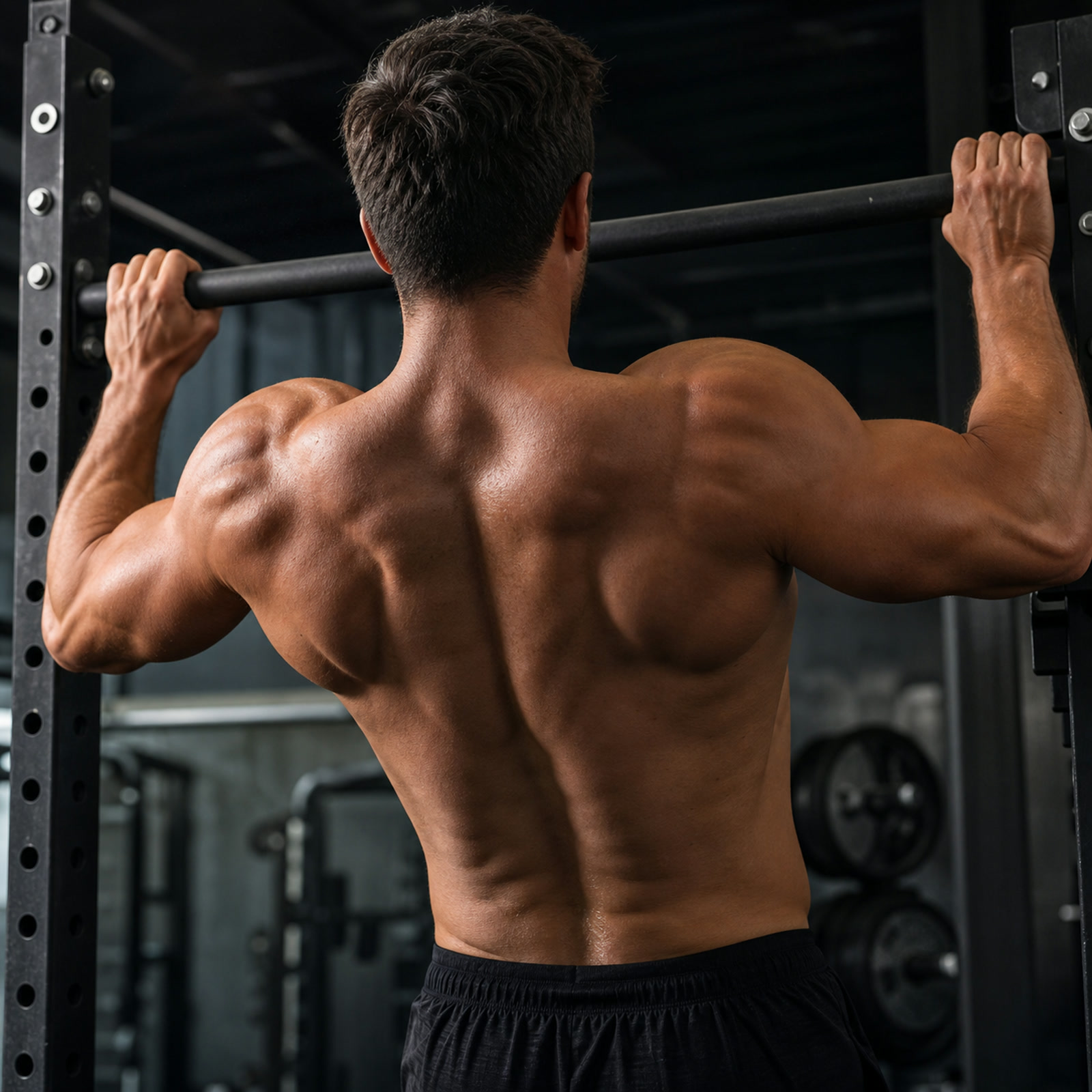
Biceps Brachii
0% read · 1 min left
The strongest flexor of the elbow joint (long and short heads); flexes the elbow, supinates the forearm, and weakly flexes the shoulder; a 2-joint muscle (ROM 135°).
Detail
The biceps brachii is the strongest flexor of the elbow joint (Ellison, 1991). Functions: (1) flexion, (2) supination (forearm), and (3) weak flexion of the shoulder joint (long head). It has a long head and a short head. The incline emphasizes the outer (lateral) head; others emphasize the inner (medial / short) head. It is a 2-joint muscle with a ROM of 135 degrees: it performs a stabilizing action at the shoulder joint while movement occurs at the elbow joint. Grip the barbell at "carrying angle" width. Dumbbells are excellent for the supination movement and remove the need to worry about the carrying angle. A straight bar (rather than an EZ bar) places more emphasis on the biceps. A source note states the biceps is the fastest-contracting muscle in the body. During elbow flexion, the biceps brachii, brachialis, and brachioradialis contract while the triceps is reciprocally innervated to relax.
Key facts
- Strongest flexor of the elbow joint; long head and short head.
- Functions: flexion; forearm supination; weak shoulder flexion (long head).
- 2-joint muscle, ROM 135° — stabilizes the shoulder, moves the elbow.
- Incline emphasizes the outer (lateral/long) head; others the inner (medial/short) head.
- Grip barbell at "carrying angle" width; dumbbells best for supination.
Connections
- brachialis — pure elbow flexor alongside it.
- brachioradialis — forearm flexor alongside it.
- elbow-joint-rom — 135° ROM.
- supination — one of its actions.
- carrying-angle — grip width consideration.
- barbell-curl / dumbbell-curl — training exercises.
Educational content only — not medical advice. Always consult a qualified professional for individualized guidance, especially around injury, pregnancy, or medical conditions.