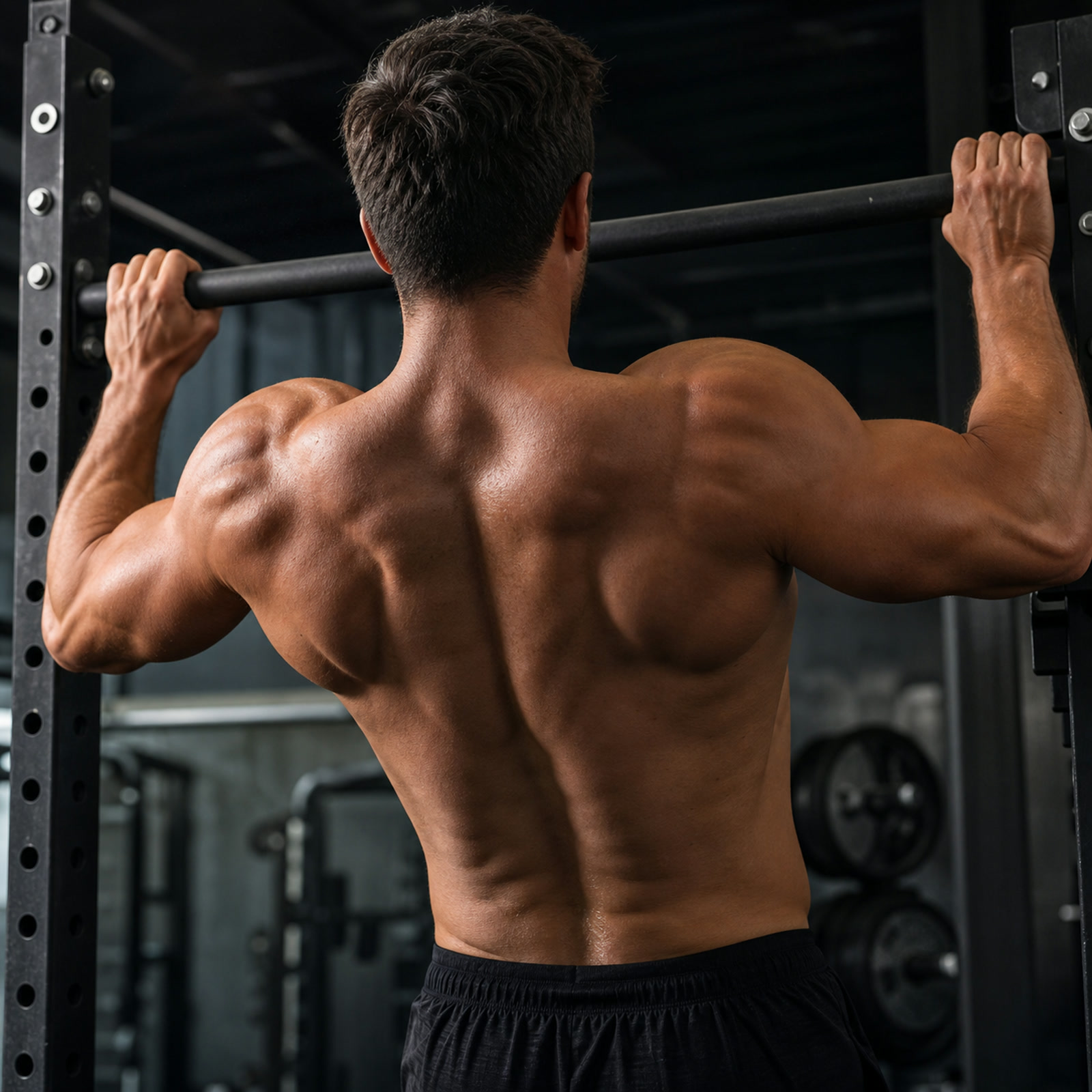
Rhomboids (Major and Minor)
0% read · 1 min left
Two muscles between the spine and the inner edge of the scapula that retract (draw together) and downwardly rotate the shoulder blades — key to upright posture and rowing movements.
Detail
The rhomboid major and rhomboid minor lie deep to the trapezius, running from the spinous processes of the upper vertebrae to the medial (inner) border of the scapula. They retract the scapula (pull the shoulder blades toward the spine) and assist in downward rotation and elevation of the scapula. They are the functional opposite of the serratus anterior (which protracts).
The source labels both rhomboid major and rhomboid minor on the posterior upper-back diagram together with the trapezius and serratus anterior. They appear in the exercise tables as primary or secondary muscles in pulling/rowing movements, and the source notes that horizontal abduction of the arm "primarily emphasizes the trapezius and rhomboids."
Key facts
- Action: scapular retraction; assists downward rotation and elevation of the scapula.
- Two parts: rhomboid major (lower, larger) and rhomboid minor (upper).
- Location: between the spinous processes and the medial border of the scapula, deep to the trapezius.
- Recruited strongly in rows and other scapular-retraction (pulling) movements.
Connections
- scapular-movement — retraction is the scapular movement they produce.
- serratus-anterior — antagonist (protraction vs retraction).
- trapezius — overlying partner in scapular control.
- seated-row, bent-over-row — rowing exercises that recruit them.
Educational content only — not medical advice. Always consult a qualified professional for individualized guidance, especially around injury, pregnancy, or medical conditions.