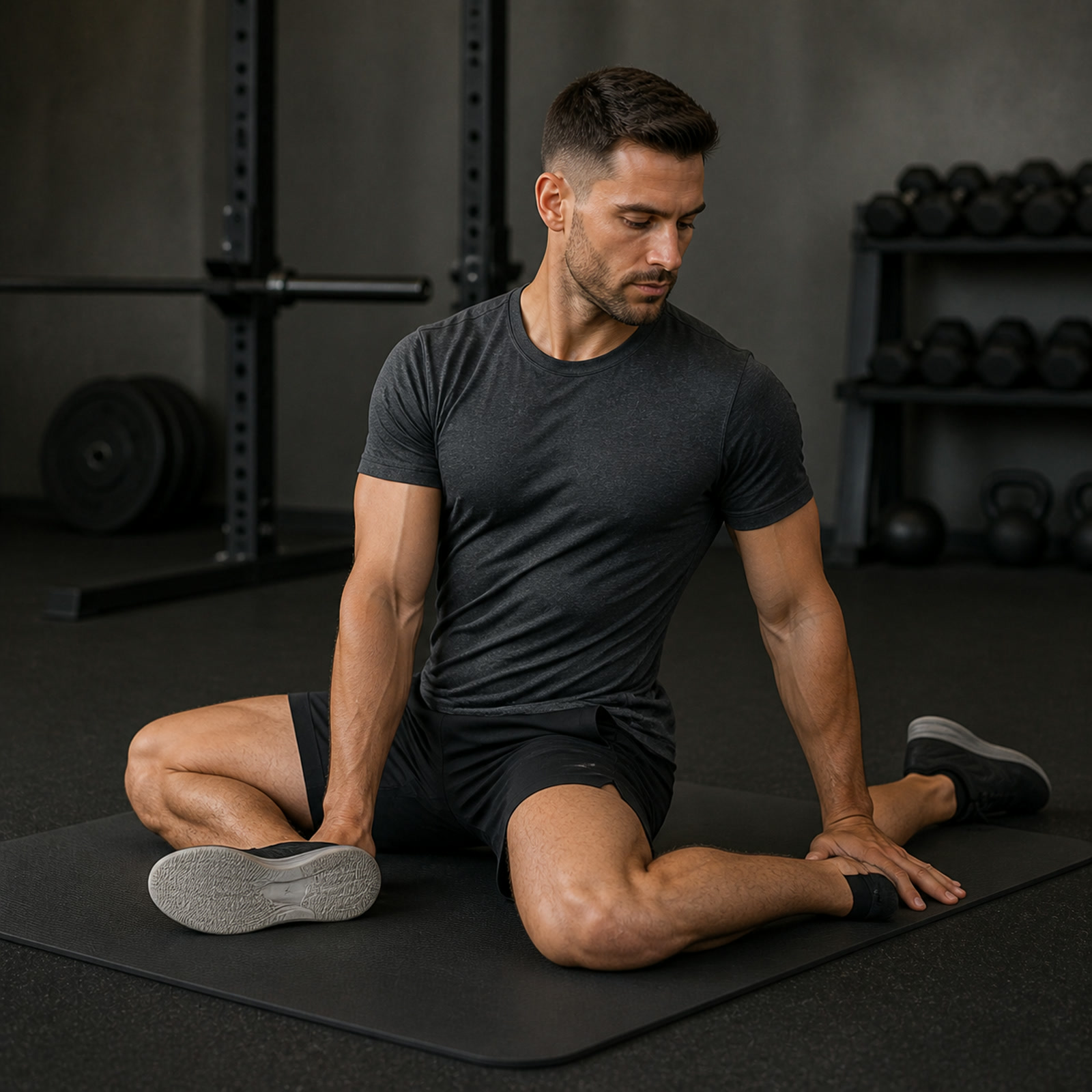
Active Stretching
0% read · 1 min left
Stretching using only your own muscles, with no external assistance — it builds active flexibility (which correlates more highly with sports achievement) but can trigger the stretch reflex.
Detail
Active stretching is accomplished using your own muscles, without any assistance from an external force. An example of active stretching is standing upright and slowly lifting one leg to a 45° angle. Active stretching is important because it develops active flexibility, which in turn has been found to have a higher correlation with sports achievement than does passive flexibility.
The major disadvantages of active stretching are that it may initiate the stretch reflex (see stretch-reflex-resetting), and that it may be ineffective in the presence of certain dysfunctions and injuries such as severe sprains, inflammation, or fractures.
Key facts
- Method: stretching using your own muscles, with no external assistance (e.g., slowly lifting one leg to a 45° angle).
- Develops active flexibility, which correlates more highly with sports achievement than passive flexibility.
- Disadvantages: may initiate the stretch reflex; may be ineffective with certain dysfunctions/injuries (severe sprains, inflammation, fractures).
Connections
- static-stretching, ballistic-stretching, passive-stretching, pnf-stretching — the other four of the five basic techniques.
- stretch-reflex-resetting — active stretching may initiate this reflex.
Educational content only — not medical advice. Always consult a qualified professional for individualized guidance, especially around injury, pregnancy, or medical conditions.