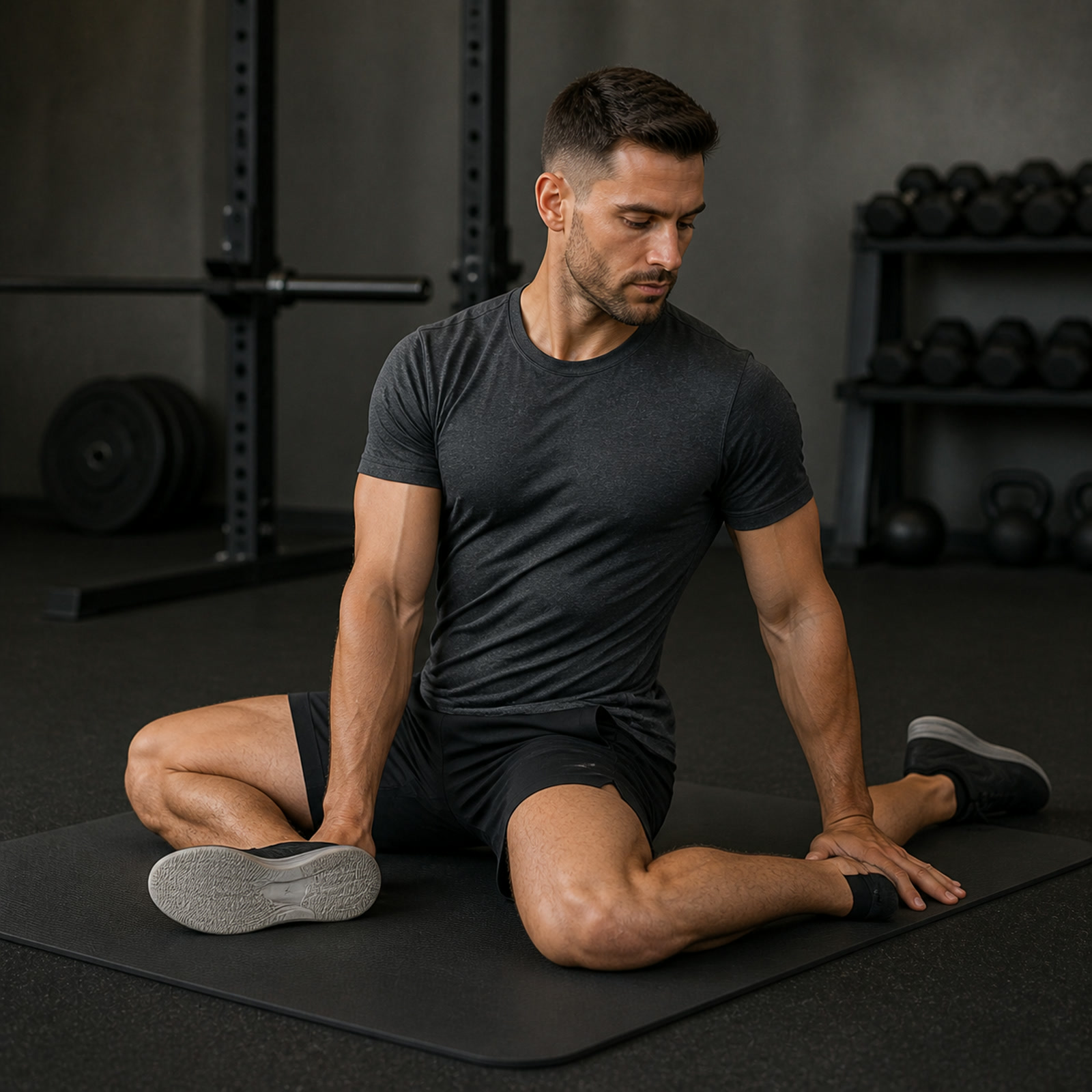
Proprioceptive Neuromuscular Facilitation (PNF)
0% read · 1 min left
A range-of-motion strategy (also called a muscle energy technique) originally developed for rehabilitation; its two most common forms are the contract-relax and the contract-relax-contract techniques.
Detail
Proprioceptive Neuromuscular Facilitation (PNF) is another broad strategy that can be implemented to improve your range of motion. This technique is also referred to in certain disciplines as a muscle energy technique. PNF was originally designed and developed as a physical therapy procedure for the rehabilitation of patients. Today, several different types of PNF are used in the arena of sports medicine. Two of the most prevalent are:
- the contract-relax technique, and
- the contract-relax-contract technique.
PNF is the fifth of the five basic stretching techniques (static, ballistic, passive, active, proprioceptive).
Key facts
- PNF = Proprioceptive Neuromuscular Facilitation; also called a muscle energy technique.
- Originally developed as a physical therapy / rehabilitation procedure.
- Two most prevalent forms: contract-relax; contract-relax-contract.
Connections
- static-stretching, ballistic-stretching, passive-stretching, active-stretching — the other four of the five basic techniques.
- golgi-tendon-organ — the proprioceptors PNF exploits to induce muscular relaxation.
Educational content only — not medical advice. Always consult a qualified professional for individualized guidance, especially around injury, pregnancy, or medical conditions.