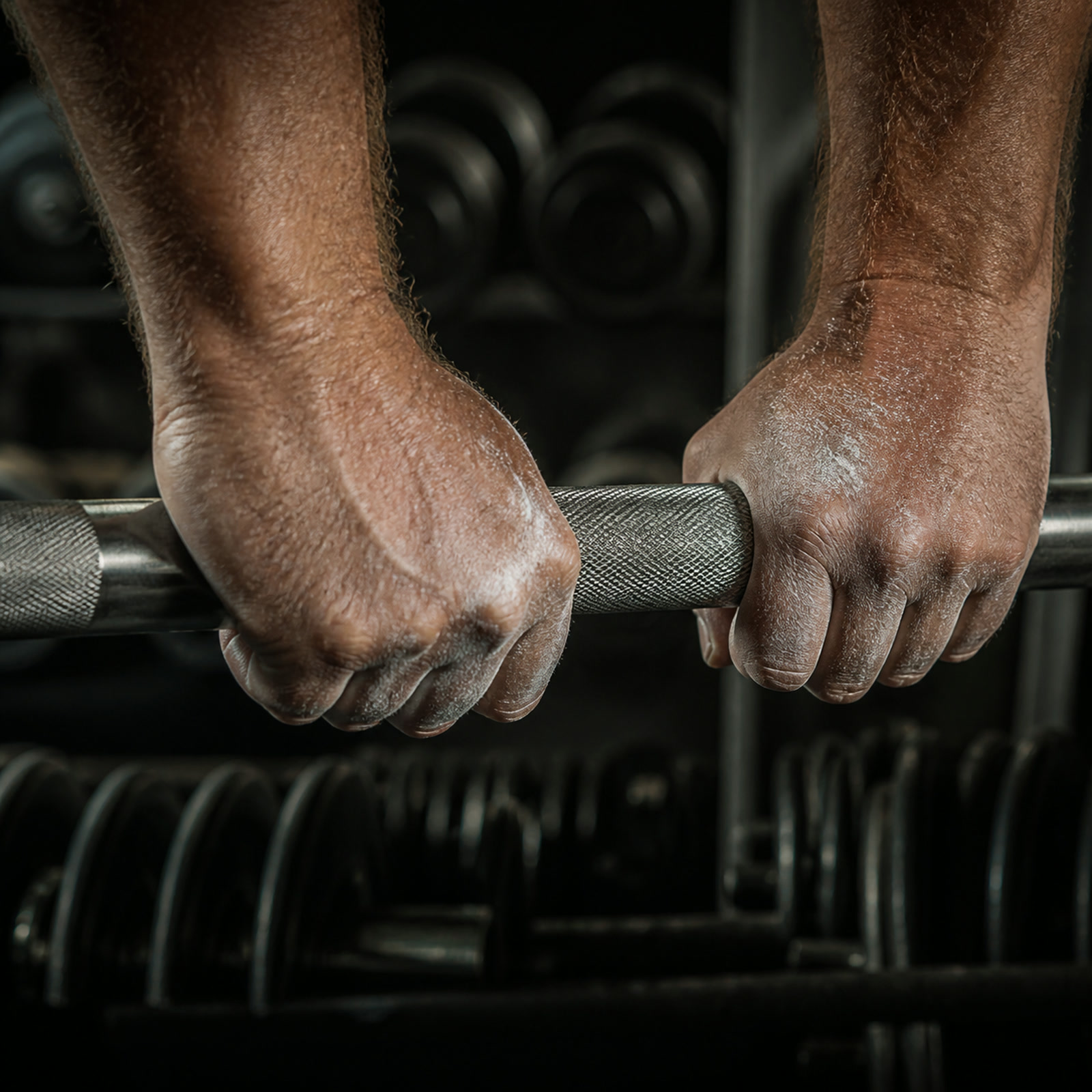
Lifting Chalk
0% read · 1 min left
Magnesium carbonate that dries sweat and boosts friction between hand and bar — improving grip on heavy pulls and pull-ups without removing grip training the way straps do.
Detail
Chalk is magnesium carbonate (MgCO₃). Applied to the hands, it absorbs sweat and oil and increases friction, so the bar, pull-up-bar, or gymnastic-rings are less likely to slip. Unlike lifting-straps, chalk improves grip while still training the grip — the hands still do the work.
Where it helps most: heavy deadlifts, rows, pull-ups and hangs (dead-hang), and gymnastics work, especially with sweaty hands.
Forms: block/loose chalk (most effective, but messy and banned in some gyms), chalk balls (refillable cloth ball, less dust), and liquid chalk (alcohol suspension that dries to a thin coat — far less mess, gym-friendly, popular for travel and climbing).
Pros: cheap, effective, keeps grip training intact, no setup. Cons: messy (loose chalk), banned in some facilities (liquid chalk is the workaround), can over-dry/crack skin with heavy use; not a substitute for actual grip strength on truly maximal pulls (that's where straps come in).
Key facts
- Magnesium carbonate; absorbs sweat and raises hand-to-bar friction.
- Improves grip while keeping the grip trained (unlike straps).
- Best for heavy deadlifts, rows, pull-ups/hangs, gymnastics.
- Forms: block/loose (best, messy), chalk ball, liquid (clean, gym-friendly).
Connections
- lifting-straps — alternative that removes grip work entirely.
- deadlift — prime use case.
- dead-hang / pull-up-bar / gymnastic-rings — hanging grip work.
Educational content only — not medical advice. Always consult a qualified professional for individualized guidance, especially around injury, pregnancy, or medical conditions.