Meal Planning and Prep
0% read · 2 min left
Planning and batch-cooking meals ahead removes daily decisions, controls portions, and is one of the strongest levers for dietary adherence.
Detail
Meal planning and prep mean deciding and preparing meals in advance rather than improvising when hungry. It is a behavior strategy, not a diet, and it directly supports the "best diet is the one you adhere to" principle (see diet-adherence-principle) — fewer in-the-moment decisions means fewer impulsive, high-calorie choices.
A practical workflow:
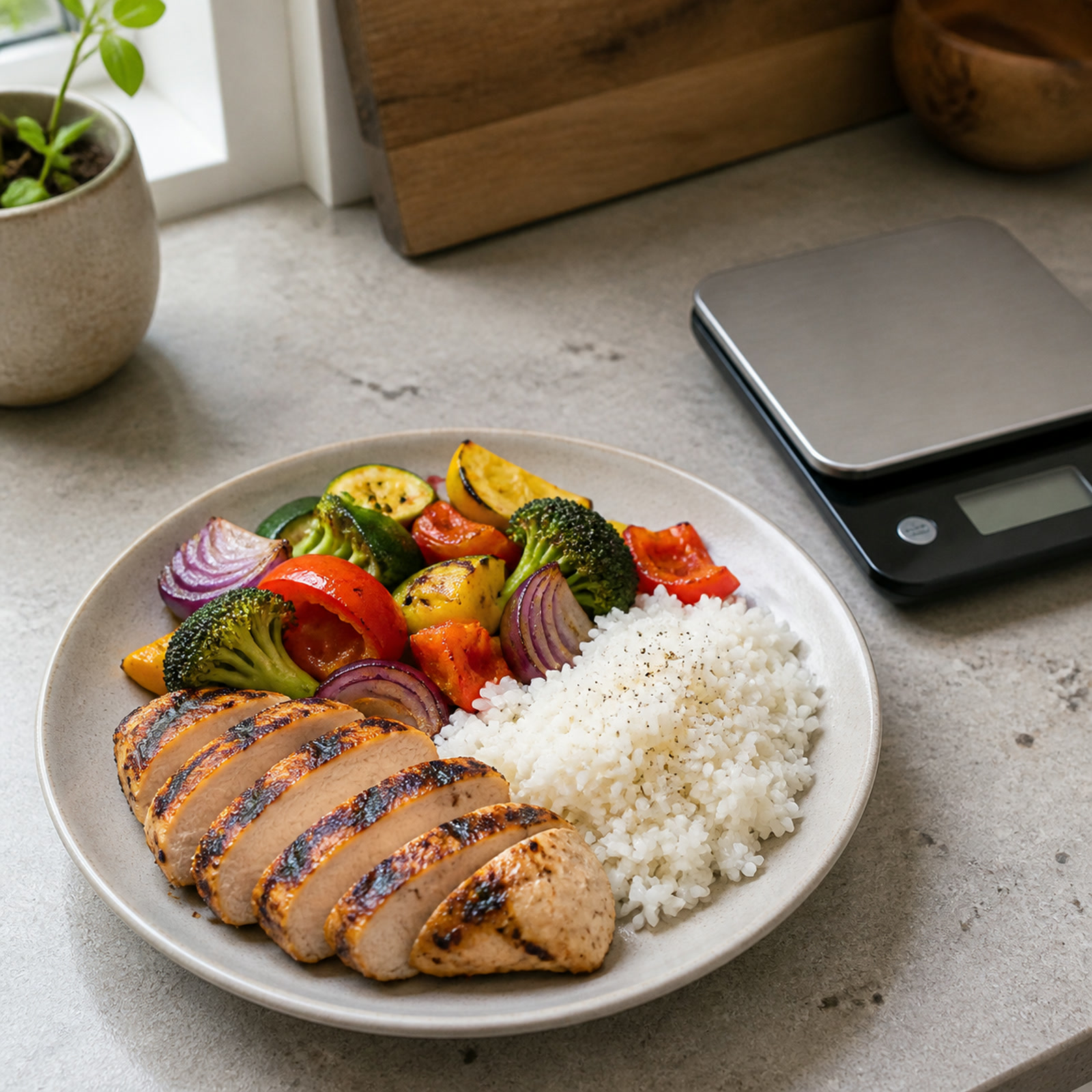
- Plan: pick meals for the week, building each around a protein anchor (see protein) plus a carbohydrate, vegetables, and a fat, using portion estimates (see portion-estimation).
- Shop: make a grocery list from the plan and shop it (not while hungry); a stocked kitchen prevents takeout defaults.
- Prep: batch-cook staples — proteins (chicken, beans, eggs), grains (rice, oats), and chopped vegetables — that mix and match across meals. Cook once, eat several times.
- Portion and store: divide into containers so servings are pre-measured and grab-and-go.
Benefits: consistent portions and calories (see calorie-targets), time and money savings, less decision fatigue, and a buffer against busy days. Tips: start small (prep just lunches, or just proteins), keep "safety" meals on hand, repeat a few reliable recipes rather than chasing variety, and plan for eating out intentionally (see eating-out). Pairing prep with existing routines makes it a durable habit (see habit-formation).
Key facts
- Plan → shop → batch-cook → portion/store.
- Build meals around a protein anchor + carb + vegetables + fat.
- Reduces impulsive choices and decision fatigue; strong adherence lever.
- Batch-cook staples to mix and match; pre-portion into containers.
- Start small, repeat reliable recipes, and plan eating-out occasions.
Connections
- diet-adherence-principle — prep is an adherence tool.
- portion-estimation — portioning prepped meals.
- protein — protein anchor for each meal.
- habit-formation — making prep a sustainable routine.
Educational content only — not medical advice. Always consult a qualified professional for individualized guidance, especially around injury, pregnancy, or medical conditions.