Portion Estimation
0% read · 2 min left
Hand-based portions and the plate method let you control intake without weighing every meal — a palm of protein, a fist of carbs, a thumb of fats.
Detail
Portion control drives energy balance, but most people don't want to weigh food forever. Two practical estimation systems:
Hand portions (scale with body size, so they self-adjust):
- Protein: a palm-sized portion (~20–30 g protein) per meal — e.g., 2 palms for larger or muscle-building appetites (see protein).
- Carbohydrate: a cupped-hand / fist-sized portion of grains, starches, or fruit.
- Fats: a thumb-sized portion of oils, nut butters, or cheese (energy-dense — see dietary-fats).
- Vegetables: a fist or two — high volume, low calories; fill up here.
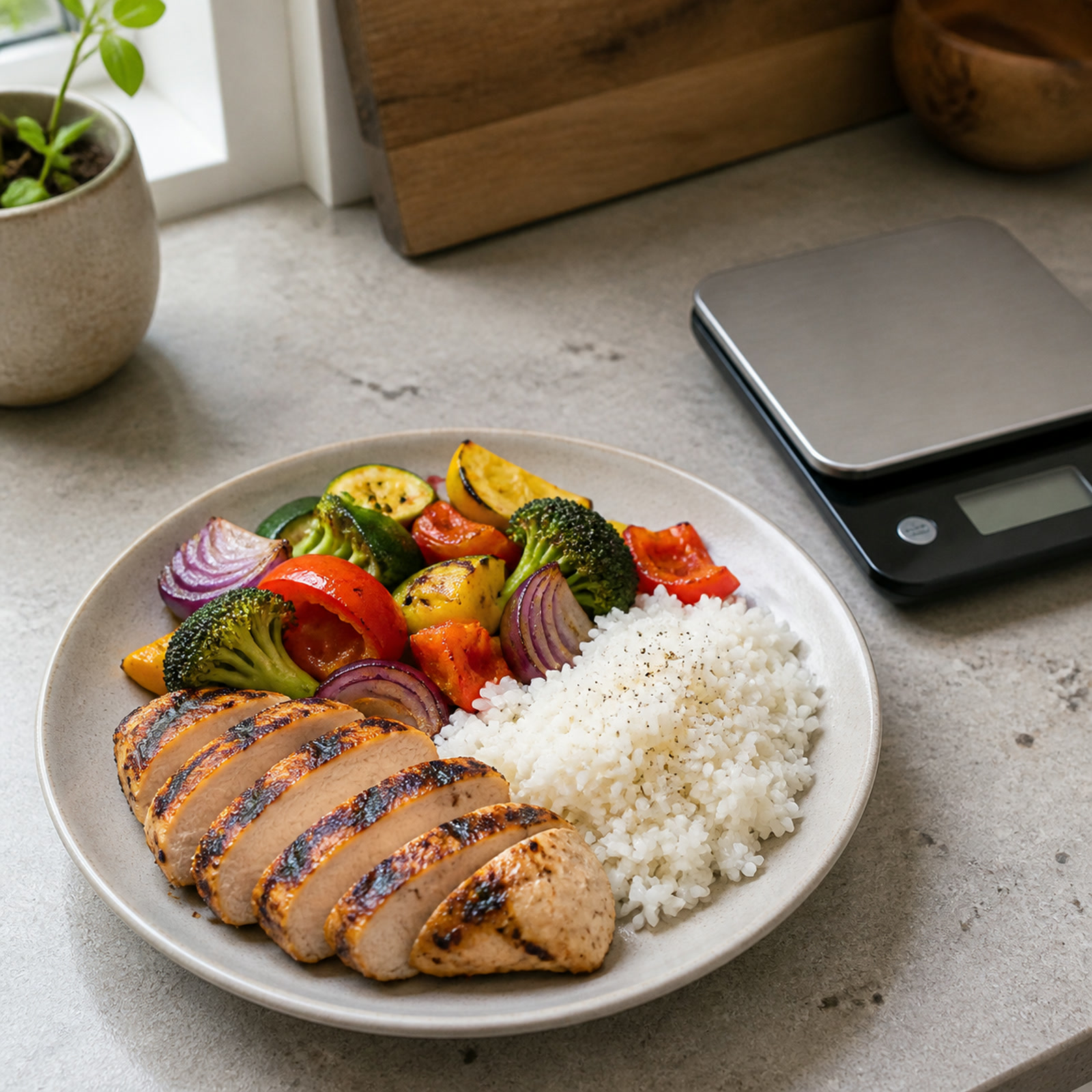
The plate method: fill ½ the plate with vegetables/fruit, ¼ with lean protein, and ¼ with whole-grain or starchy carbohydrate, with a small amount of healthy fat. Simple, no counting, and naturally portion-controlled.
Visual cues for reference: a deck of cards ≈ 3 oz meat; a tennis ball ≈ 1 cup; a golf ball ≈ 2 tbsp; a thumb tip ≈ 1 tsp. Calibrate occasionally by weighing a few foods so your hand/eye estimates stay honest — portions tend to drift larger over time, which is a common hidden cause of stalled fat loss. For label foods, anchor to the stated serving size (see nutrition-labels).
Key facts
- Hand portions: palm = protein, fist/cupped hand = carbs, thumb = fats, fist+ = veg.
- Plate method: ½ vegetables/fruit, ¼ protein, ¼ whole-grain/starchy carb.
- Visual cues: deck of cards ≈ 3 oz; tennis ball ≈ 1 cup; thumb tip ≈ 1 tsp.
- Hand portions self-scale with body size.
- Recalibrate by occasionally weighing food; portions drift larger over time.
Connections
- nutrition-labels — serving sizes anchor portions.
- calorie-targets — portions execute the calorie goal.
- meal-planning — building meals from portions.
- eating-out — estimating restaurant portions.
Educational content only — not medical advice. Always consult a qualified professional for individualized guidance, especially around injury, pregnancy, or medical conditions.