Proper Alignment & Stabilization
Sources and review status
Review pending — this text hasn’t been signed off by a reviewer yet.
Historical reference: its only source is the original reference manual, and some of it may be out of date. Not used for AI answers until re-sourced.
See this lesson’s sources0% read · 1 min left
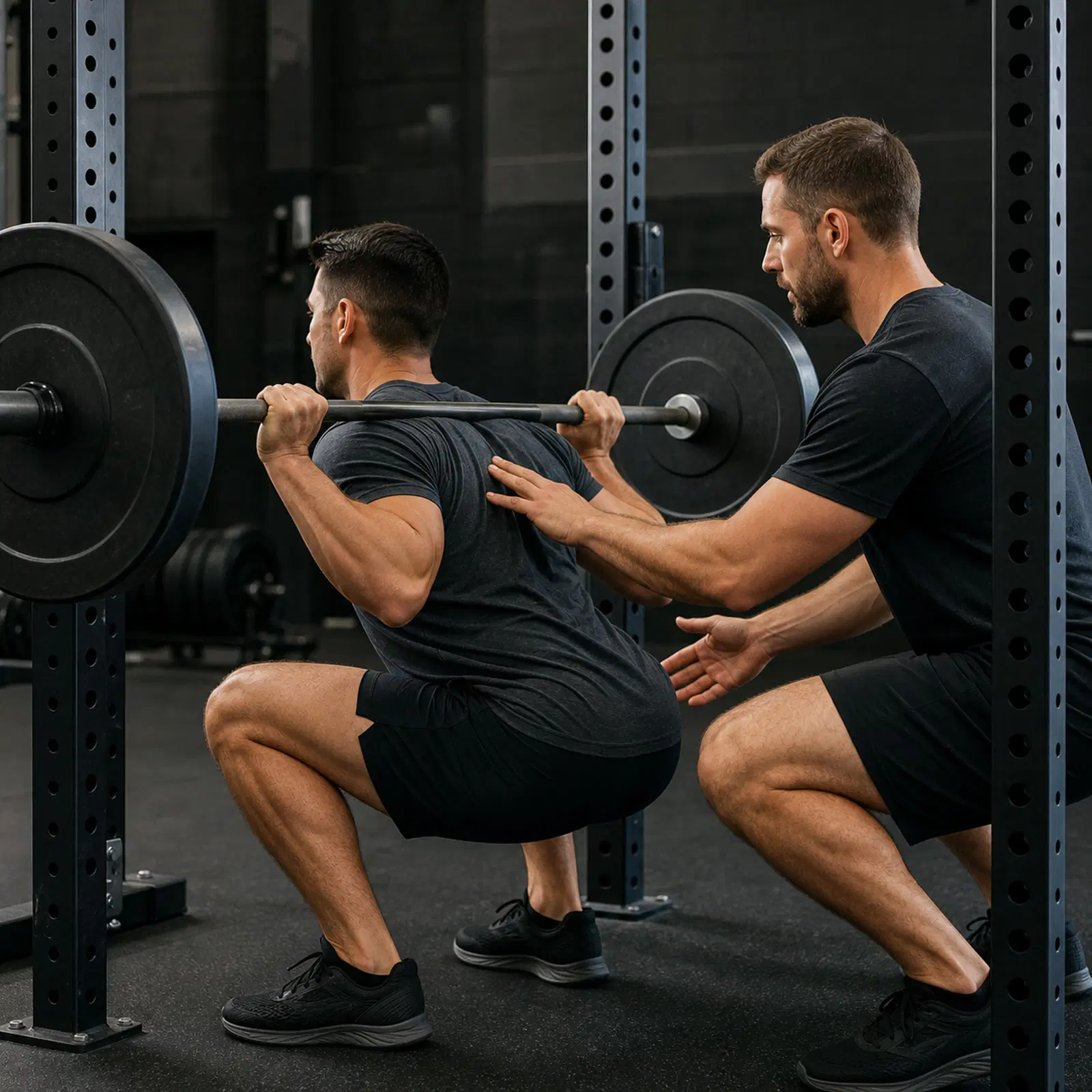
Set the body up to oppose the resistance, align the joint's axis of rotation with the machine's, and start and end each rep in the same stabilized position.
Detail
Proper body positioning is set up to oppose the resistance; proper spinal alignment is essential; and stabilization means starting and ending the movement in the same position. Specific applications throughout the material:
- Leg extension: align the patella with the cam's axis of rotation; slightly inward-rotate the quads so extension is vertical.
- Prone leg curl: align the axis of rotation (the knee shouldn't be on the pad) and stabilize by tightening the abs.
- Arms training: be aware of proper alignment and stabilization.
- Lat training: align and then stabilize the spine (e.g., stabilize the spine using hip rotation); for one-arm rows, ensure the trunk is square before movement begins.
Ensuring proper placement of the axis of rotation is part of the ROM step of safe exercise evaluation.
Key facts
- Body positioning is set up to oppose the resistance.
- Align the joint's axis of rotation with the machine's cam/axis.
- Stabilization: start and end the movement in the same position.
- Proper spinal alignment is essential.
Connections
- Five-Step Evaluation of Proper Resistance Exercise — body-positioning and ROM steps.
- Spine Positioning — "S" Shape, Never "C" — spinal alignment "S" not "C".
- Knee Safety in the Leg Extension — patella/cam axis alignment.
- Two-Joint (2-Joint) Muscles — stabilize one joint of a 2-joint muscle.
- Knee Safety in the Squat — alignment in the squat.
Sources
Topics like this depend on your health and history. A qualified coach or clinician can apply it to you safely.
Educational content only — not medical advice. Always consult a qualified professional for individualized guidance, especially around injury, pregnancy, or medical conditions.