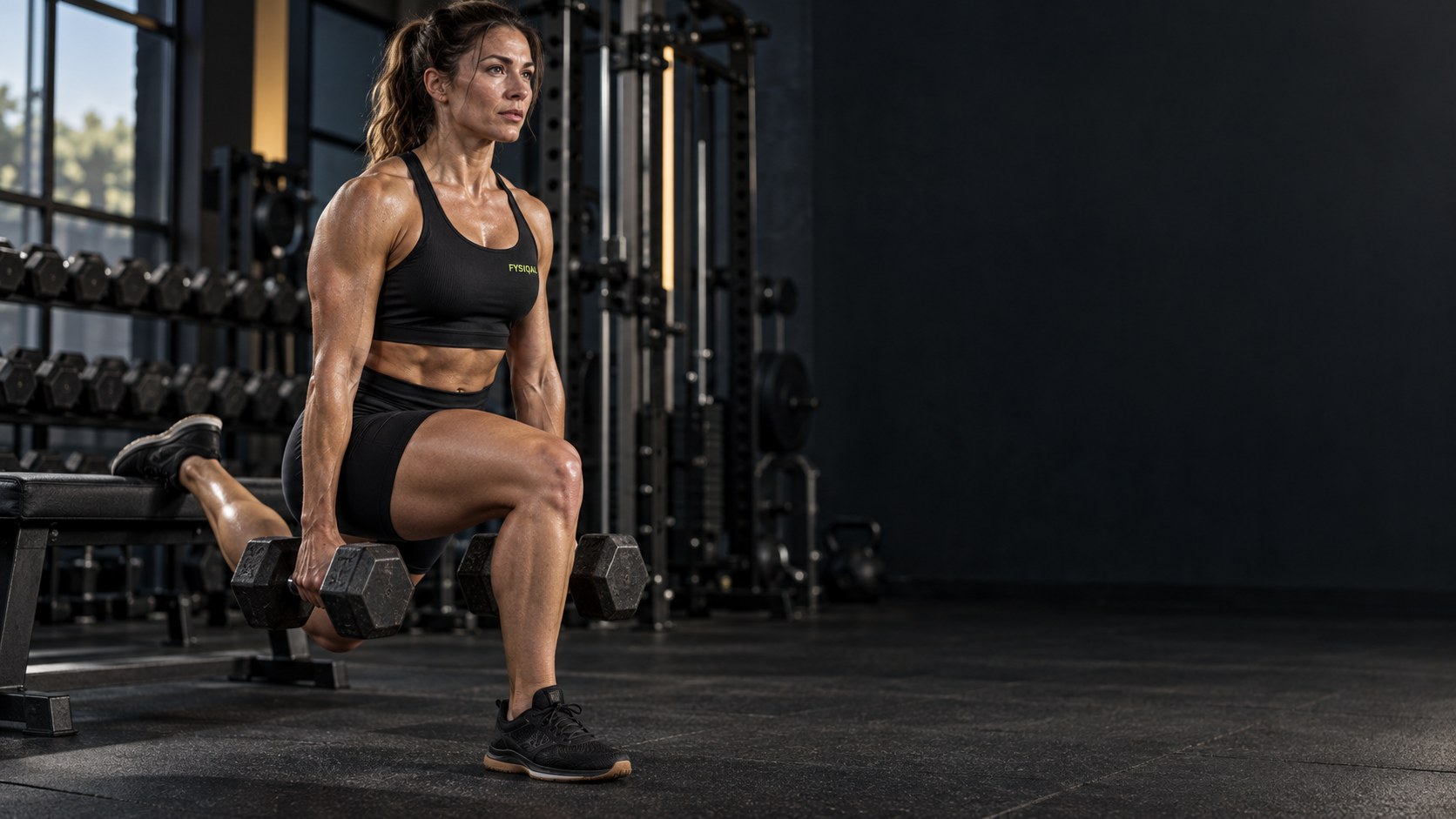
The strength kit
What actually earns a place in your bag when the goal is getting stronger.
Fysiqal Journal · · 2 min read
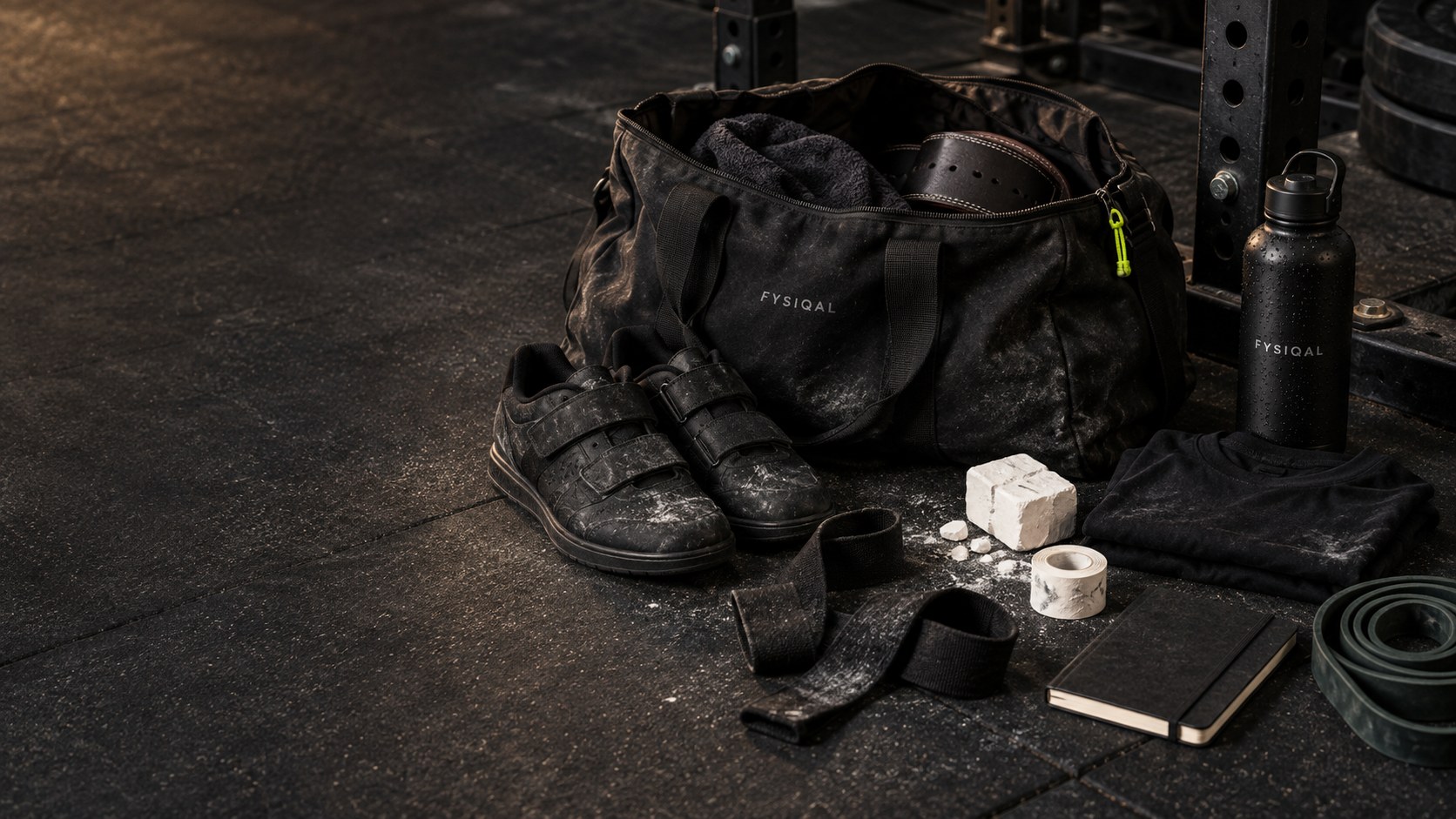
Heavy training rewards consistency more than kit. The things worth carrying are the ones that remove friction: layers you can warm up in and strip off, water within reach, and a bag that holds a belt and shoes without a fight.
Everything below is chosen for that job. The reading list covers how strength is actually built — progressive overload, bracing, and estimating your working maxes.
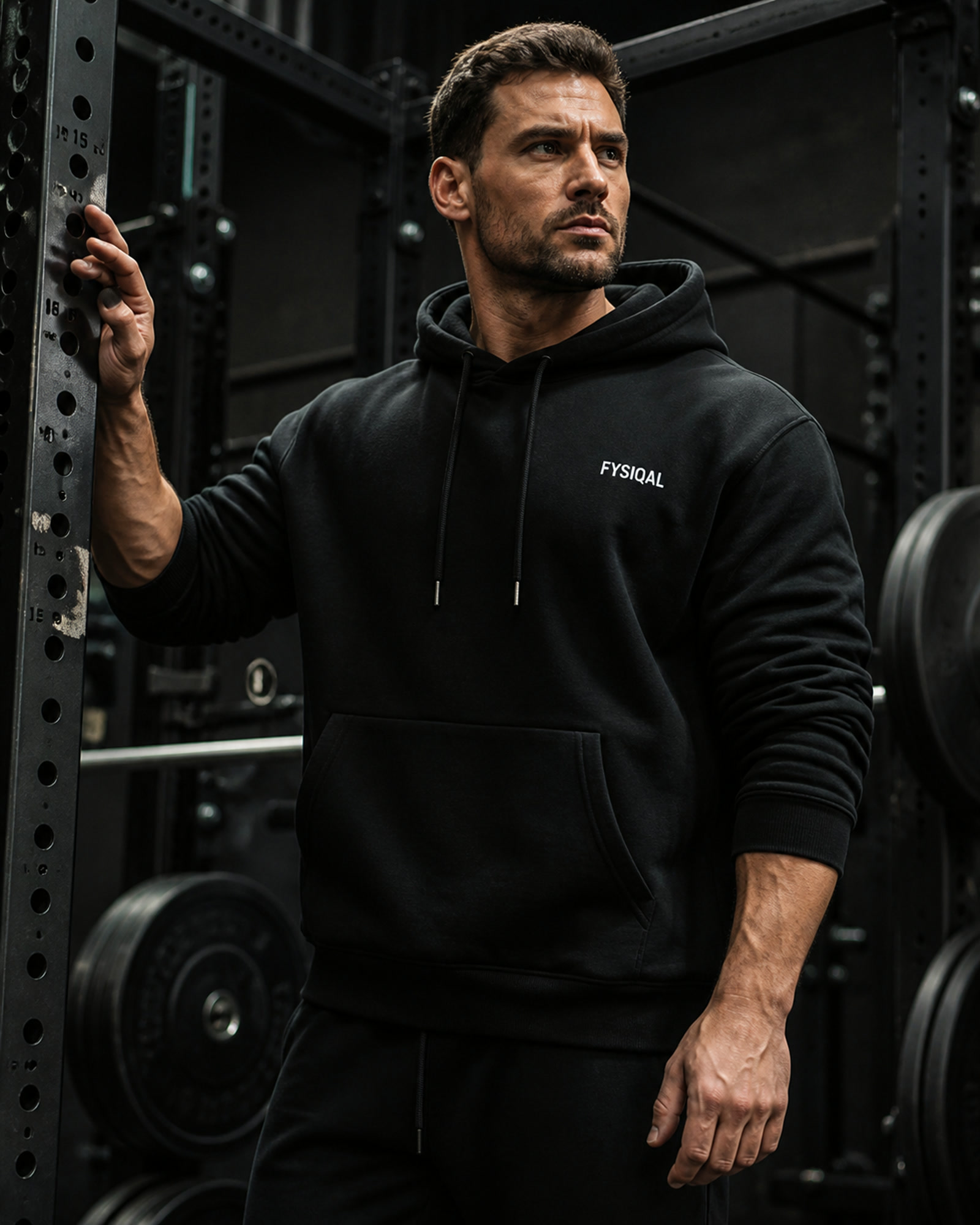
Warm up in it, then take it off
A good lifting warm-up is specific: you rehearse the lift itself with lighter loads before the working sets, rather than just raising your heart rate.
That ramp can take ten minutes or more, and you want to stay warm through it. A layer you can train in and pull off once the heavy sets start earns its place.
Nothing in the way of the bar
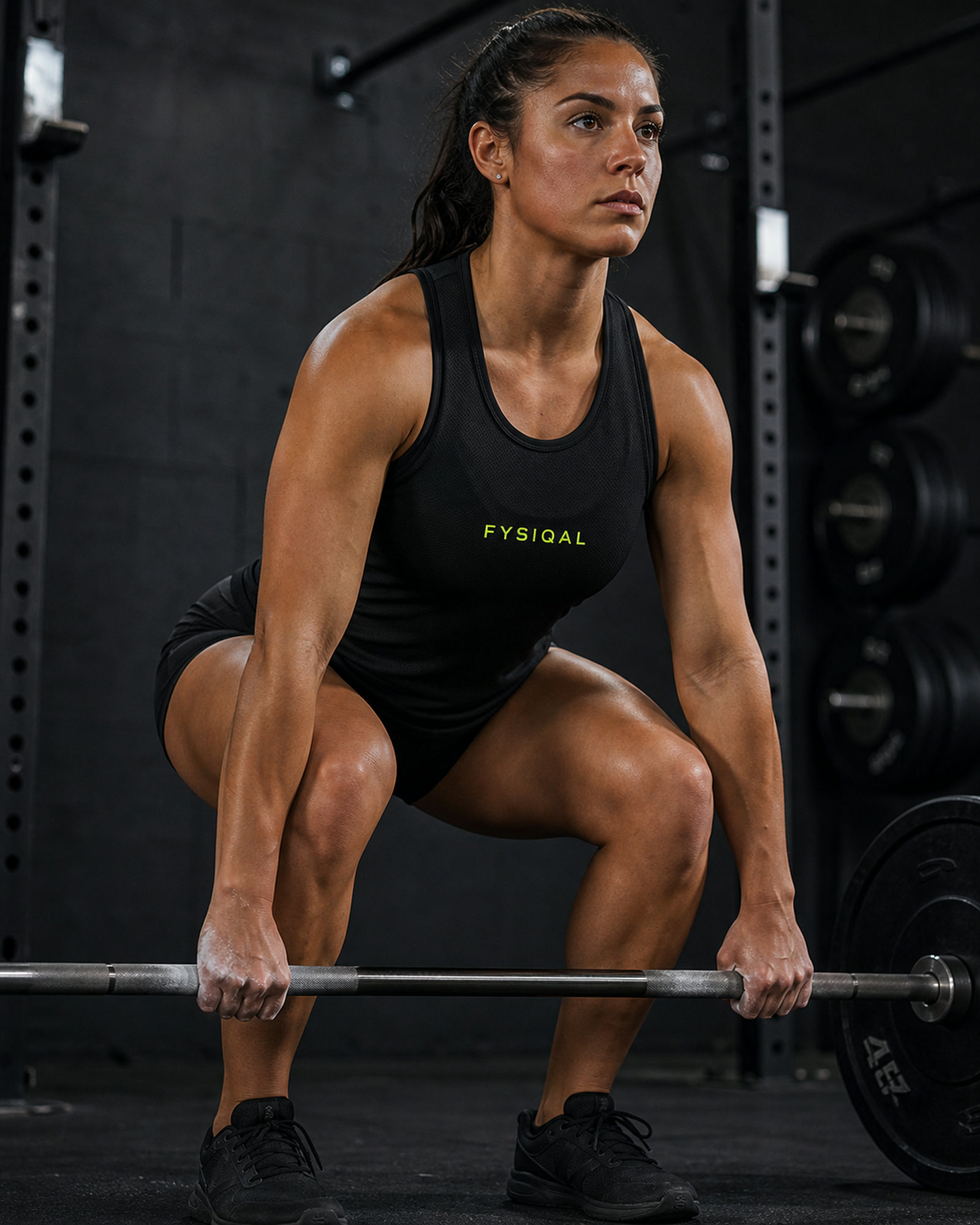
Once the working sets start, what you wear should disappear. Room through the shoulders for the bar and your arms to move freely.
“The things worth carrying are the ones that remove friction between you and the next heavy set.”
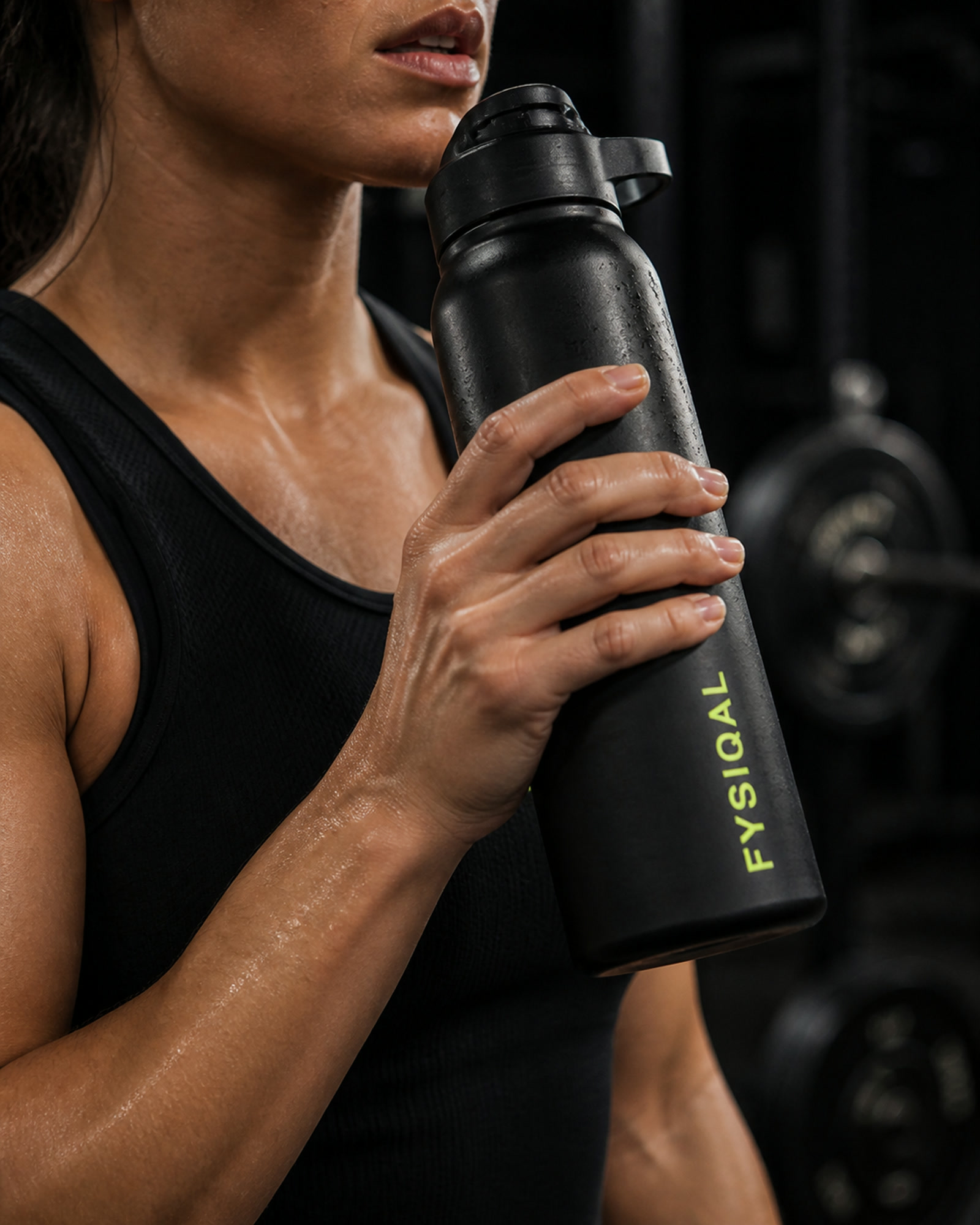
Water within reach
Start the session hydrated and drink enough to keep fluid losses under about 2% of body weight. Past that, performance measurably drops.
Long sessions with short rests make it easy to forget. A bottle on the bench fixes that.
A bag for the real kit
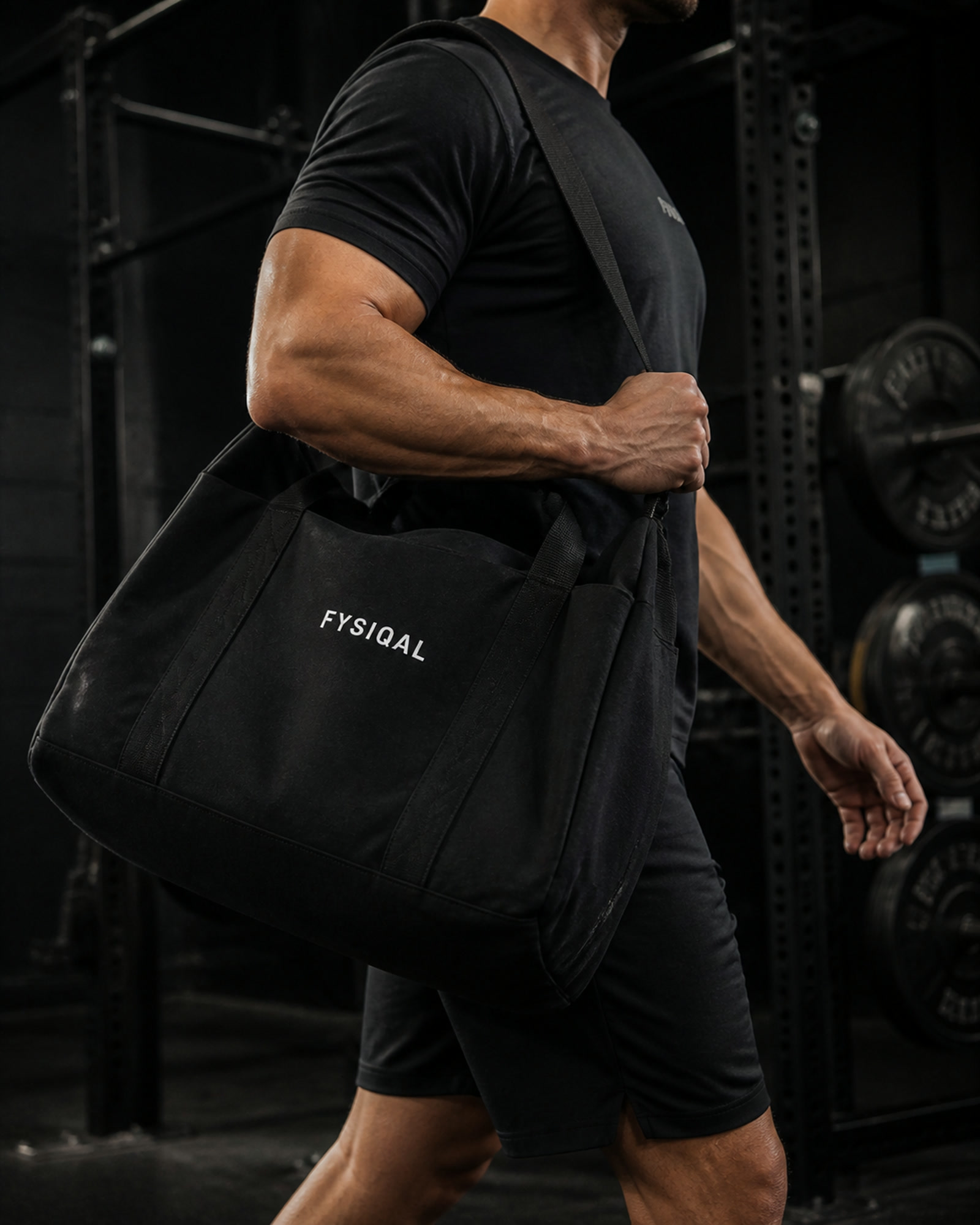
Two things are worth bringing for heavy days. A stiff belt gives your abdominal wall something to brace against on near-maximal lifts; it’s a tool for heavy sets, not a back brace for every set. And a firm, flat shoe gives you a stable base; a soft running shoe does not.
What actually makes you stronger
None of this replaces the work: adding load or reps over weeks, bracing well, and knowing roughly what your working maxes are. You can estimate a max from a hard set of reps at a lighter weight, without ever testing a true one-rep max.