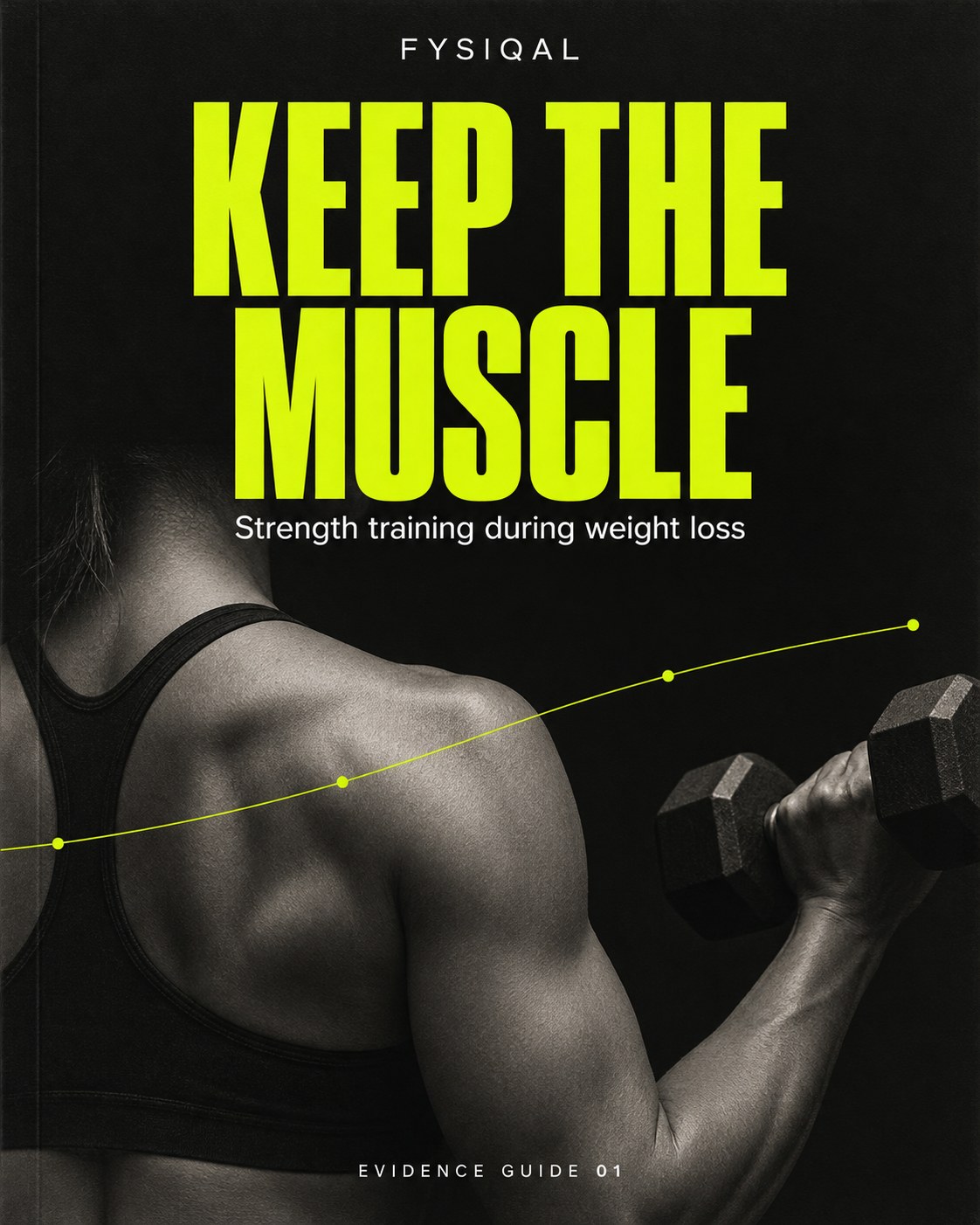
Keep the muscle while you cut
Losing fat without giving back the strength you built.
Fysiqal Journal · · 1 min read
A calorie deficit is when muscle is most at risk. Keeping protein high and keeping the heavy work in the program are the two levers the evidence supports most consistently.
The Evidence Guide walks through both, and the reading list adds the cardio and appetite questions that come up along the way.
Why a cut puts muscle at risk
A cut is a deliberate fat-loss phase: a moderate calorie deficit, with protein kept high and training kept going. Take away either of those and more of the weight you lose can come from muscle.
Lever one: protein
In a deficit, trained people are generally advised to eat more protein than usual. Library guidance puts it around 2.3–3.1 g per kg of body weight, spread across the day in roughly even doses.
“The scale can’t tell you whether you lost fat or muscle. What you do in the gym and on your plate decides it.”
Lever two: keep the heavy work
The strength training that built the muscle is the signal to keep it. Cutting volume a little is fine; dropping the heavy work is where people give strength back.
Sessions in a deficit can feel harder, so keep water close and your kit simple.
If you’re on a GLP-1 medication
Appetite drops sharply, which makes the protein lever harder to pull. Our Evidence Guide covers this case in detail: what the “lean mass” numbers actually measure, and a weekly plan you can run.