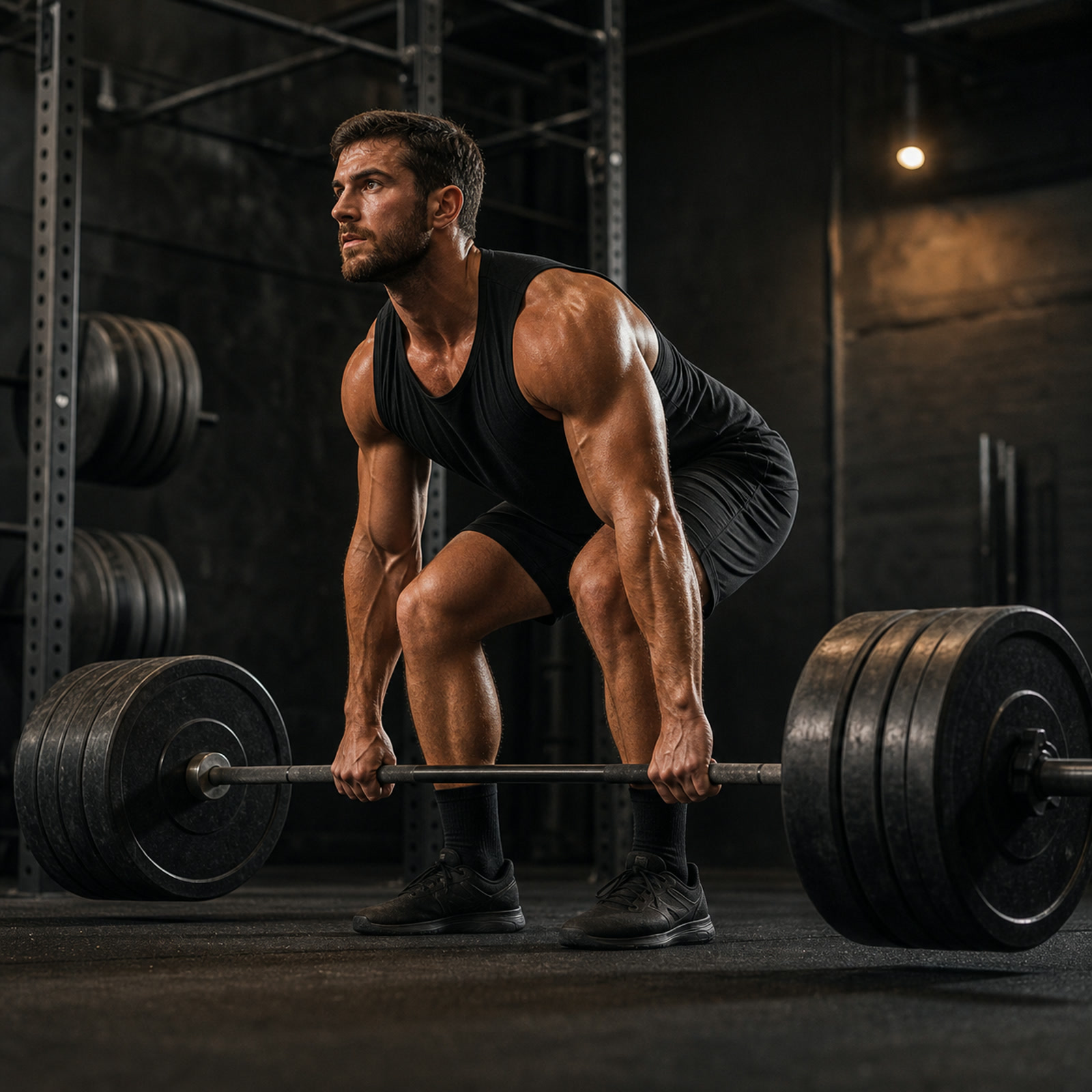
Back Squats
0% read · 2 min left
Squat with the bar across the shoulders behind the neck (high-bar "back squat" or low-bar "power back squat"), working all four quads.
Detail
The back squat holds the bar behind the neck on the shoulders. High bar placement is the "Back Squat"; low bar placement is the "Power Back Squat" — now its own structured record, low-bar-squat, since it shifts enough emphasis toward the posterior chain to warrant separate muscle attribution rather than being folded into this one. This module (and its spine record ex.back-squat) covers the high-bar version specifically. In the powerlifting back squat the athlete starts standing, squats until the thighs are parallel to the floor, then returns to standing. All four quadriceps are involved. From standing to a 90-degree knee bend the knee joint experiences 8 times more pressure. Squat to near-parallel (full ROM not recommended for squats); do not lock out the knee; maintain proper spinal alignment (semi-isometric, S-shape); feet about shoulder width. Understand the femur-vs-torso length, knee-toe, hip-knee, and knee-foot relationships. A long femur shifts emphasis to glutes and erector spinae. A weightlifting belt is recommended for heavy squats.
Key facts
- Primary Muscles: Vastus Lateralis, Vastus Medialis, Vastus Intermedius.
- Secondary Muscles: Rectus Femoris, Adductor Longus, Adductor Brevis, Adductor Magnus, Gluteus Maximus.
- High-bar = Back Squat; low-bar = Power Back Squat.
- Knee experiences ~8x pressure at a 90-degree bend; squat to parallel only.
Connections
- quadriceps — the four knee extensors.
- rectus-femoris / hip-adductors / gluteus-maximus — secondary.
- knee-toe-relationship / femur-torso-length — technique relationships.
- deep-knee-bend — deep squats contraindicated.
- weightlifting-belt-safety-concerns — belt for heavy squats.
- bar-placement — high/low/front bar placement, this variant's line of force.
- squat — general squat entry; front-squat — front-bar variation.
- low-bar-squat — the low-bar ("Power Back Squat") sibling, its own structured record.
Educational content only — not medical advice. Always consult a qualified professional for individualized guidance, especially around injury, pregnancy, or medical conditions.