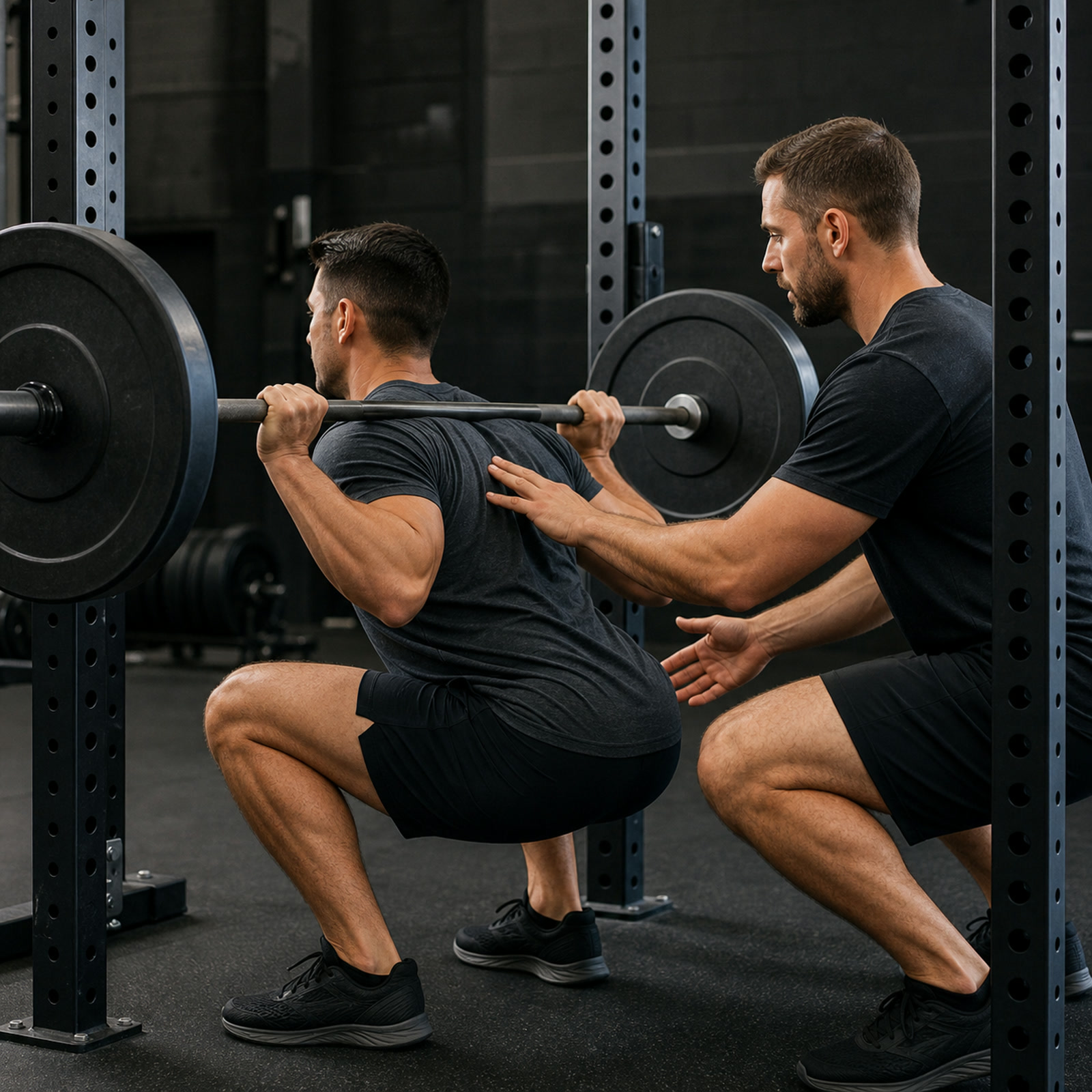
Bar Placement in the Squat (High / Low / Front)
0% read · 2 min left
Three squat bar positions — high bar (Back Squat), low bar (called "Power Back Squat" in the source; known today as the low-bar squat), and bar-in-front (Front Squat) — each set a different line of force and require proper alignment.
Detail
The placement of the bar in the squat is a flagged safety/technique concern ("PLACEMENT OF BAR!"). The source shows three squat stances, each with the bar positioned differently and a vertical line indicating the line of force:
- High Bar Placement → "Back Squat"
- Low Bar Placement → "Power Back Squat" (current terminology: low-bar squat / low-bar back squat — see
terminology_note) - Bar in Front → "Front Squat"
Because the bar position shifts the line of force relative to the body, it interacts with trunk lean, femur-vs-torso proportions, and spinal alignment. Checking the position of the bar is one of the listed points of safe squat technique. This still matches current biomechanics: low-bar placement shifts leverage toward the hips/posterior chain (glutes, hamstrings) and shortens the effective ROM, while high-bar placement keeps the torso more upright and biases the quads more.
Key facts
- High bar placement = Back Squat.
- Low bar placement = the source's "Power Back Squat"; called the low-bar squat in current terminology.
- Bar in front = Front Squat.
- Each placement changes the line of force; proper alignment is required.
- Low bar → more hip/posterior-chain loading, shorter ROM; high bar → more upright torso, more quad loading (still accurate per current sources).
Connections
- knee-squat-safety — "check position of the bar" is a squat-safety point.
- knee-toe-relationship — knee/toe alignment under load.
- femur-torso-length-squat — proportions and trunk lean.
- femur-torso-length — femur vs. torso length.
- back-squat — high/low-bar back squat.
- front-squat — front-rack bar placement.
Educational content only — not medical advice. Always consult a qualified professional for individualized guidance, especially around injury, pregnancy, or medical conditions.