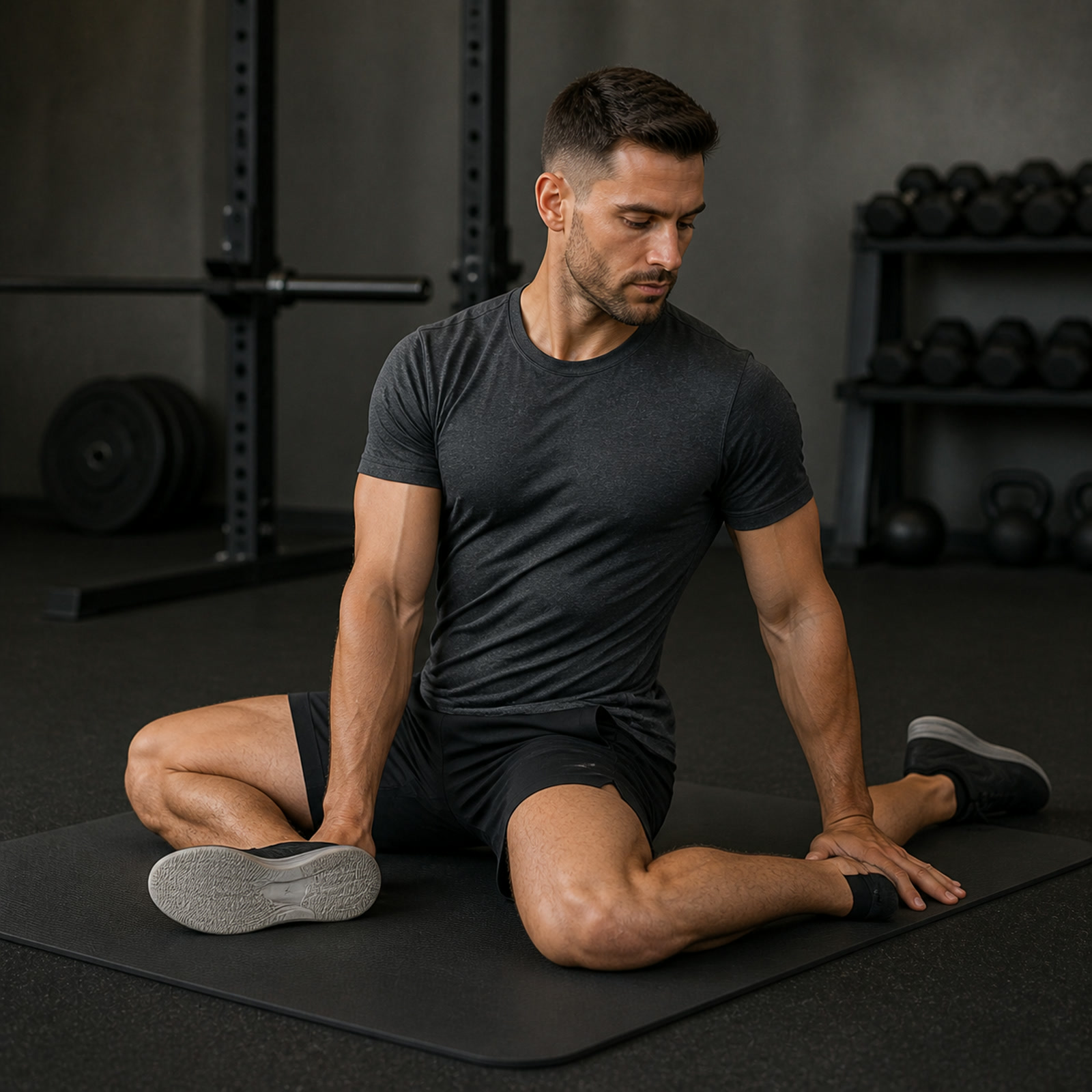
The Five Basic Stretching Techniques
0% read · 1 min left
Stretching (the process of elongation) can be done five ways — static, ballistic, passive, active, and proprioceptive (PNF) — chosen by goal, ability, and state of training.
Detail
Just as there is more than one way to "skin a cat," there is more than one way to stretch your muscles. Stretching refers to the process of elongation. Stretching exercises are performed in a variety of ways depending upon your goals, abilities, and state of training. For example, a world-class gymnast or a black belt in karate should perform more advanced stretches than individuals who are beginning stretching programs to improve their general flexibility.
There are five basic stretching techniques:
- Static — see static-stretching
- Ballistic — see ballistic-stretching
- Passive — see passive-stretching
- Active — see active-stretching
- Proprioceptive (PNF) — see pnf-stretching
Key facts
- Stretching = the process of elongation.
- Technique choice depends on goals, abilities, and state of training.
- Five basic techniques: static, ballistic, passive, active, proprioceptive (PNF).
Connections
- static-stretching — technique 1.
- ballistic-stretching — technique 2.
- passive-stretching — technique 3.
- active-stretching — technique 4.
- pnf-stretching — technique 5.
Educational content only — not medical advice. Always consult a qualified professional for individualized guidance, especially around injury, pregnancy, or medical conditions.