Older Adults / Seniors
0% read · 3 min left
Adults 65+ should aim for the adult activity target (150–300 min/week moderate aerobic) PLUS muscle-strengthening on ≥2 days/week AND multicomponent balance/functional training on ≥3 days/week to preserve independence and prevent falls.
Detail
WHO 2020 / U.S. Physical Activity Guidelines (2nd ed.) / ACSM for adults ≥65:
- Aerobic: 150–300 minutes/week of moderate-intensity, OR 75–150 minutes/week of vigorous-intensity, OR an equivalent combination — same target as younger adults.
- Muscle-strengthening: moderate-or-greater intensity involving all major muscle groups on ≥2 days/week.
- Multicomponent activity that emphasizes functional balance and strength training on ≥3 days/week to enhance functional capacity and prevent falls — this is the key addition for older adults. See fall-prevention-exercise, fall-prevention-overview.
- If 150 min/week is not achievable due to health conditions, older adults should be as physically active as their abilities and conditions allow — some activity is better than none.
Why strength + balance: aging brings sarcopenia (loss of muscle mass/strength, see sarcopenia), reduced power, bone loss, and impaired balance. Resistance training (and especially power training — moving moderate loads quickly, where safe) is highly effective for maintaining function, gait speed, and independence. Balance and gait training reduce fall risk.
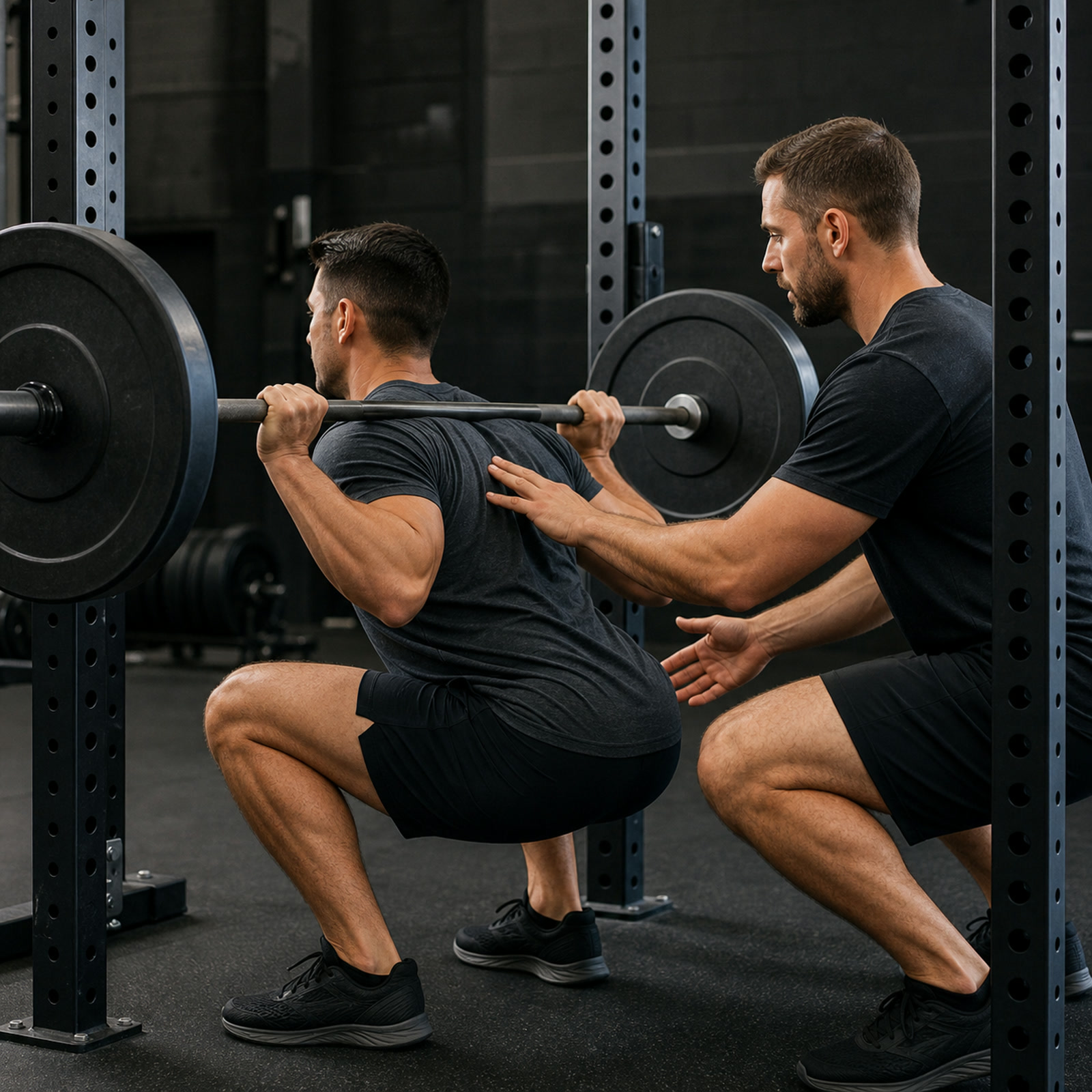
Practical resistance prescription: ~2–3 days/week, 1–3 sets of 8–15 reps for major muscle groups; begin with lower intensity and longer learning period; include functional/multijoint patterns (sit-to-stand, step-ups, carries).
Special considerations / precautions
- Longer warm-ups and recovery; tissues are less tolerant of rapid load jumps.
- Common comorbidities (hypertension, type 2 diabetes, osteoarthritis, osteoporosis, CVD) modify the program — see those modules.
- Polypharmacy: medications (e.g., beta-blockers blunt HR; diuretics/antihypertensives affect BP/hydration; some raise fall/dizziness risk) alter exercise response → use RPE alongside HR.
- Sensory/cognitive changes: ensure safe environment, good footwear, supervision as needed.
Contraindications / red flags / clearance
- Recommend medical clearance for those with known/symptomatic CV/metabolic/renal disease before vigorous activity (see medical-clearance-screening).
- Red flags to stop and seek care: chest pain/pressure, severe breathlessness, dizziness/fainting, new severe joint pain, sudden weakness.
Non-medical-advice disclaimer
Educational only; not a substitute for medical advice. Older adults with conditions should consult their physician.
Key facts
- ≥65: 150–300 min/wk moderate (or 75–150 vigorous) aerobic.
- Muscle-strengthening ≥2 d/wk; multicomponent balance + functional training ≥3 d/wk for fall prevention.
- If full target not possible: be as active as conditions allow — some is better than none.
- Counter sarcopenia/power loss with resistance + (where safe) power training.
- Use RPE alongside HR (medications blunt HR response); longer warm-up/recovery.
Connections
- fall-prevention-exercise — the balance component in depth.
- sarcopenia — why strength training is essential with age.
- osteoporosis — bone-loading for older adults.
- recovery-nutrition-40plus — age-adjusted protein dosing and recovery spacing.
- otago-exercise-programme — evidence-based fall-prevention program.
Educational content only — not medical advice. Always consult a qualified professional for individualized guidance, especially around injury, pregnancy, or medical conditions.