Sports Associated with Resistance Training (Olympic Lifting, Powerlifting, Bodybuilding)
0% read · 3 min left
Olympic weightlifting, powerlifting, and bodybuilding are the three competitive activities built on resistance training, each with a distinct goal and its own two-or-three defining lifts — and their programs are not interchangeable with each other or with general training.
Detail
Olympic weight lifting, power lifting, and bodybuilding are the activities normally associated with resistance training. Each has a different goal, tested through a specific, fixed set of competition lifts:
Olympic weightlifting — the goal is to lift as much weight as possible to an overhead position, in two competition lifts:
- The snatch — the weight is pulled from the floor, caught overhead in one motion while in a full squat, then stood up to full extension with the weight still overhead.
- The clean & jerk — two separate movements. The clean: the athlete pulls the weight from the floor, catches it at the shoulders (normally in a full squat), then stands. The jerk: the weight moves from the shoulders to a position with the arms completely extended overhead.
Powerlifting — the goal is to lift the maximum weight possible in three lifts:
- Bench press — lying supine, lowering the weight from arm's length to the chest, then pressing back to arm's length.
- Back squat — the weight held behind the neck on the shoulders; standing to a position where the thighs are parallel to the floor, then returning to standing.
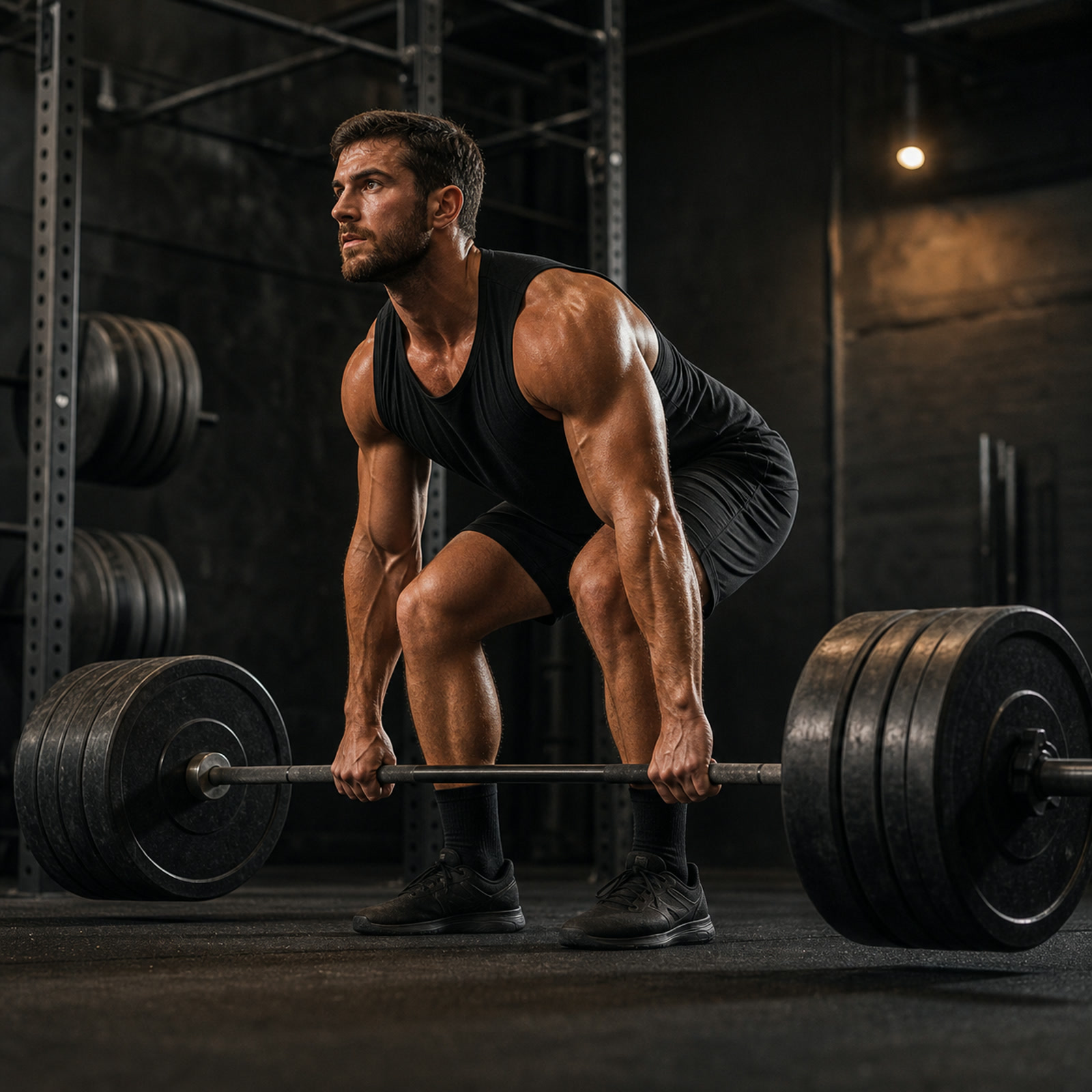
- Deadlift — grasping a weight on the floor and standing up with it; the final position has the weight hanging at arm's length at about mid-thigh level.
Bodybuilding — the goal is to develop a large amount of muscle hypertrophy and definition (there is no lift or lift combination being tested — the outcome itself, physique, is judged).
Because each sport's programs (the specific exercises and the sets/reps per set) are built to achieve a different goal, they are quite different from each other and from programs built for other sports or for recreational weight training. Training programs used by competitive weight lifters are not interchangeable, nor are they ideal for other athletes or recreational lifters — the same specificity logic as specificity, applied at the level of "which sport is this program actually for," not just "which muscle/pattern."
Key facts
- Three sports associated with resistance training: Olympic weightlifting, powerlifting, bodybuilding.
- Olympic weightlifting goal: max weight overhead, via the snatch and the clean & jerk.
- Powerlifting goal: max weight in the bench press, (back) squat, and deadlift.
- Bodybuilding goal: hypertrophy and definition (physique, not a lift, is judged).
- Programs across these three (and vs. general/recreational training) are NOT interchangeable — each is specific to its own goal.
Connections
- specificity — the underlying principle: programs must match the goal being trained for.
- individuality — goal-based programming still adapts to the individual.
- exercise-selection — the actual sets/reps/exercise choices that differ per goal.
- olympic-lift-derivatives — how non-competitors borrow Olympic-lift training effects without the competition lifts themselves.
- back-squat / bench-press / deadlift — the three powerlifting competition lifts, already in the spine.
- body-shape-somatotypes — the companion topic on this source page (individual body-type variation).
Educational content only — not medical advice. Always consult a qualified professional for individualized guidance, especially around injury, pregnancy, or medical conditions.