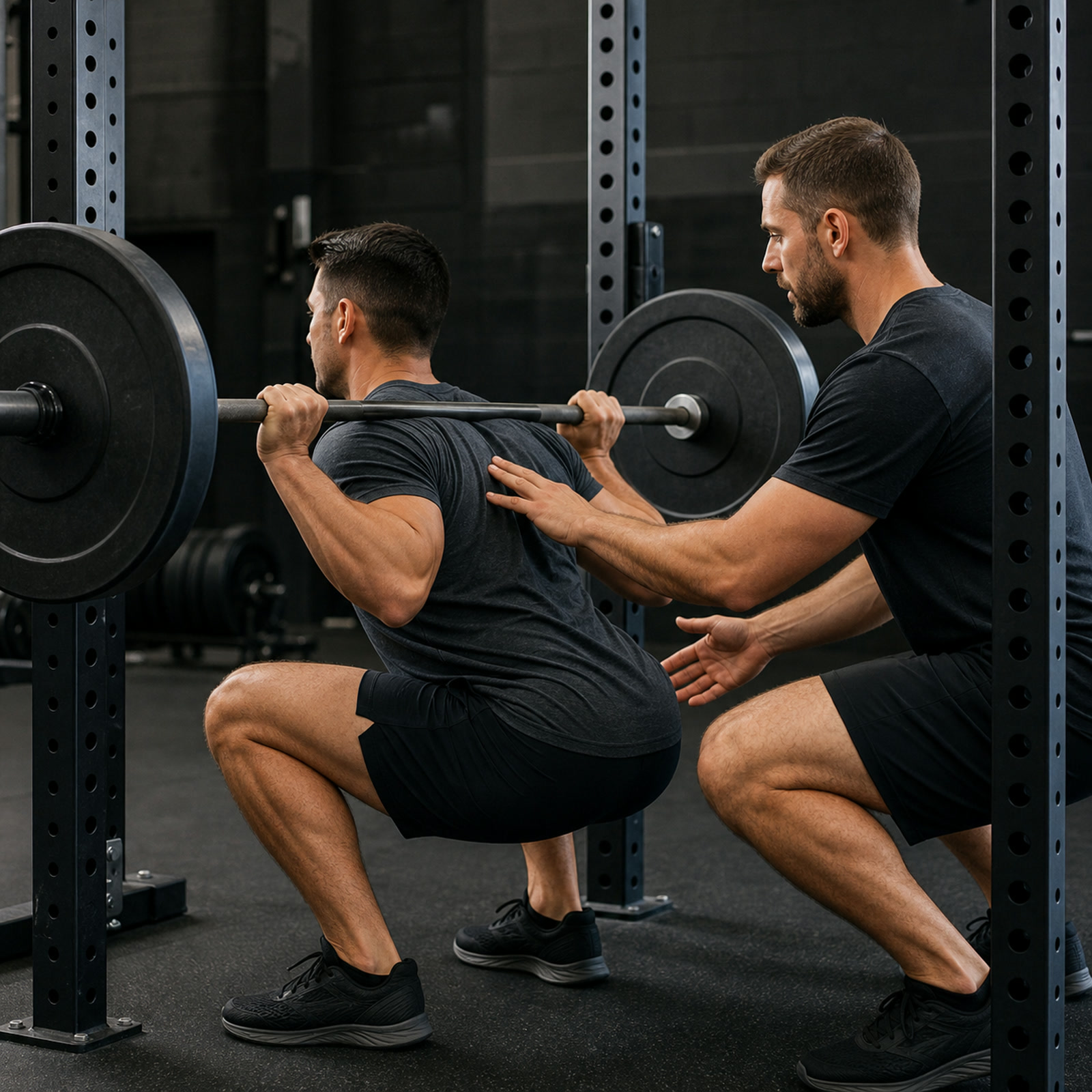
Femur Length vs. Torso Length in the Squat
0% read · 1 min left
Body proportions change squat mechanics — a long femur forces more forward lean and shifts emphasis to the glutes and erector spinae; lifters must adapt their technique accordingly.
Detail
The "Femur Length vs. Torso Length!" relationship is a flagged squat concept. The source's stick figures show that a lifter with a long femur leans more forward in the squat, which emphasizes the glutes and erector spinae. A taller individual (e.g., a tall basketball player) must adapt their squat to their proportions.
This is why "not all people can squat to a parallel position," and why understanding femur-vs-torso length is one of the listed points of safe squat technique. Forward lean increases the demand on the lower back, so proper spinal alignment becomes especially important for long-femured lifters.
Key facts
- A long femur produces greater forward lean in the squat.
- Long-femur squats emphasize the glutes and erector spinae.
- Taller lifters must adapt their squat to their proportions.
- Not all people can squat to a parallel position.
Connections
- knee-squat-safety — understanding femur-vs-torso length is a squat-safety point.
- bar-placement — bar position interacts with trunk lean.
- knee-toe-relationship — managing knee travel and CG.
- femur-torso-length — anatomy-domain treatment.
- erector-spinae — loaded by forward lean.
- gluteus-maximus — emphasized with greater lean.
Educational content only — not medical advice. Always consult a qualified professional for individualized guidance, especially around injury, pregnancy, or medical conditions.