Fysiqal
Safety
Safety

"X-Rated" Exercises (Contraindicated Stretches) — Overview

Evidence-grounded — sourced from Fysiqal's fitness knowledge graph· 2 min read
contraindicatedstretchingx-ratedinjury-preventionflexibility

0% read · 2 min left

In one line

A set of stretches rated "X" because they are too advanced or dangerous for the average fitness participant — and sometimes even for advanced athletes.

Detail

Alter (1996) labels certain stretches as "X-Rated." By this he means they are in all likelihood too advanced or dangerous for the average fitness participant who is just starting an exercise program — and perhaps for advanced athletes as well. Many of these and other stretches are nonetheless considered an integral part of dance, gymnastics, the martial arts, wrestling, and yoga.

Virtually every stretch presents some degree of risk. Whether an injury results depends on numerous variables, including the athlete's state of training, age, previous injuries, structural abnormalities, fatigue, and improper technique.

The eight stretches in the standard list of "X-Rated Exercises" are:

  • a. Plough
  • b. Hurdler's Stretch
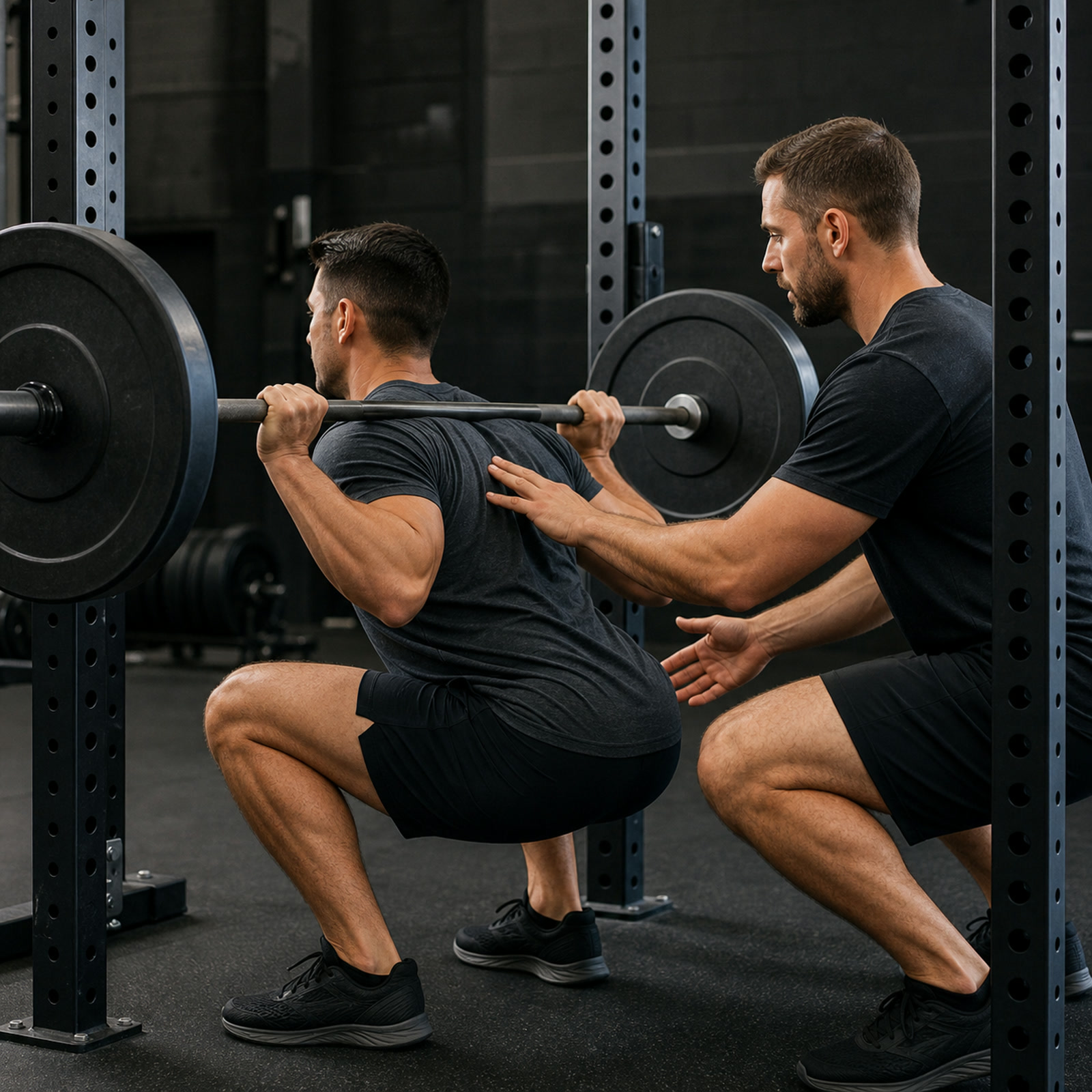
  • c. Deep Knee Bend/Lunge/Squat
  • d. Torso Twist
  • e. Straight-Leg Straddle and Floor/Toe Touch
  • f. Straight-Leg Standing Floor/Toe Touch
  • g. Bridge
  • h. Inversion

In the source these contraindicated exercises are illustrated with a large "X" through each figure to mark them as movements that should NOT be performed.

Key facts

  • 8 named "X-Rated" stretches: Plough, Hurdler's Stretch, Deep Knee Bend/Lunge/Squat, Torso Twist, Straight-Leg Straddle and Floor/Toe Touch, Straight-Leg Standing Floor/Toe Touch, Bridge, Inversion.
  • Risk depends on: state of training, age, previous injuries, structural abnormalities, fatigue, improper technique.
  • Too advanced/dangerous for the average beginner and possibly for advanced athletes too.

Connections

  • plough, hurdlers-stretch, deep-knee-bend, standing-torso-twist, straight-leg-straddle-toe-touch, straight-leg-standing-toe-touch, bridge, inversion — the eight individual contraindicated stretches.
  • stretching-precautions — conditions under which one should not stretch at all.
  • static-stretching — the safest stretching method, contrasted with these.
SourceReference manual
p.96p.204
Cited authorities in source: Alter (1996), Science of Stretching, 2nd Edition.
Concerns like this deserve a real coach’s eyes, not just an article.Browse coaches

Educational content only — not medical advice. Always consult a qualified professional for individualized guidance, especially around injury, pregnancy, or medical conditions.

Explore related topics

Atlas Connections

Static Stretching
Stretching to the farthest point and holding the position — the safest technique, requiring the least energy and giving time to reset the stretch reflex, change length, and relax the muscle via the GTOs.
The Bridge — Contraindicated StretchClosely related
The back-bridge (wrestler's bridge) squeezes the spinal discs and pinches the nerve fibers — marked "X".
Deep Knee Bend / Lunge / Squat — Contraindicated StretchClosely related
Deep knee bends, lunges, and squats (with or without weights) endanger the knee's lateral ligaments, compress the kneecap, and damage cartilage — marked "X".
The Hurdler's Stretch (Inverted) — Contraindicated StretchClosely related
The single- or double-leg inverted hurdler's stretch endangers the knee — stretching its medial ligaments, crushing the meniscus, and side-slipping the kneecap.
Inversion (Inverted Hanging) — Contraindicated StretchClosely related
Hanging upside down raises blood pressure, may rupture blood vessels (especially in the eyes), and may injure those with spinal instability — marked "X".
The Plough — Contraindicated StretchClosely related
A folded-over inversion (legs brought over the head while lying on the back) that overloads the lower back and discs and compresses the chest — marked with an "X" as not-to-be-performed.
The Standing Torso Twist — Contraindicated StretchClosely related
The standing torso twist (with or without weights) strains the knee ligaments and relies on momentum that can exceed the tissues' absorbing capacity — marked "X".
Straight-Leg Standing Floor/Toe Touch — Contraindicated StretchClosely related
Bending fully forward with straight legs to touch the toes forces knee hyperextension and loads the lower (lumbar) vertebrae — marked "X".
Straight-Leg Straddle Stand and Floor/Toe Touch — Contraindicated StretchClosely related
Bending over to the floor from a wide straight-leg straddle stresses the medial knees, can cause permanent deformity, hyperextends the knees, and loads the lumbar vertebrae — marked "X".
Stretching Precautions & Contraindications
Stretching is not a panacea — for some it can increase the risk of ligament injury and joint dislocation; do not stretch under several specific conditions, and avoid too much ROM.