Barbell (Overview & Types)
0% read · 3 min left
A long steel bar loaded with plates on each end — the foundational free-weight tool for heavy compound lifts because it lets you load more weight than any other implement and progress it in small steps.
Detail
A barbell is a straight (or specially shaped) steel bar that holds weight-plates on sleeves at each end, secured by collars-clips. It is the primary tool for the major barbell lifts — squat, deadlift, bench press, overhead press, rows, and the Olympic lifts. Its chief advantage is load capacity and granular progression: you can add weight in very small increments and keep adding it almost indefinitely, which makes the barbell the most direct vehicle for progressive-overload.
Common barbell categories:
| Type | Length / weight | Sleeve diameter | Typical use |
|---|---|---|---|
| Olympic bar (men's) | ~7.2 ft / 20 kg (44 lb) | 50 mm (rotating sleeves) | Standard for most strength/Olympic lifting; rated for heavy loads |
| Olympic bar (women's) | ~6.6 ft / 15 kg (33 lb), 25 mm grip | 50 mm | Smaller grip diameter, no center knurl; common in Olympic lifting |
| Standard bar | ~5–6 ft / ~4.5–9 kg (10–20 lb) | ~1 in (25 mm), fixed | Home use, lighter loads; plates with 1 in holes |
| Specialty bars | varies | varies | Trap/hex, safety squat, EZ-curl, Swiss/football, cambered (see specialty-barbells) |
Olympic vs. standard — the key distinction. Olympic bars have 50 mm rotating sleeves (the spinning sleeve reduces torque on the wrists/elbows during fast lifts) and are built to a known weight (20 kg / 15 kg) with high load ratings. Standard bars have thin, non-rotating ~1 in ends, lower capacity, and a less predictable weight — fine for light home training but not for serious loading. Olympic plates and bars are the gym standard and are interoperable.
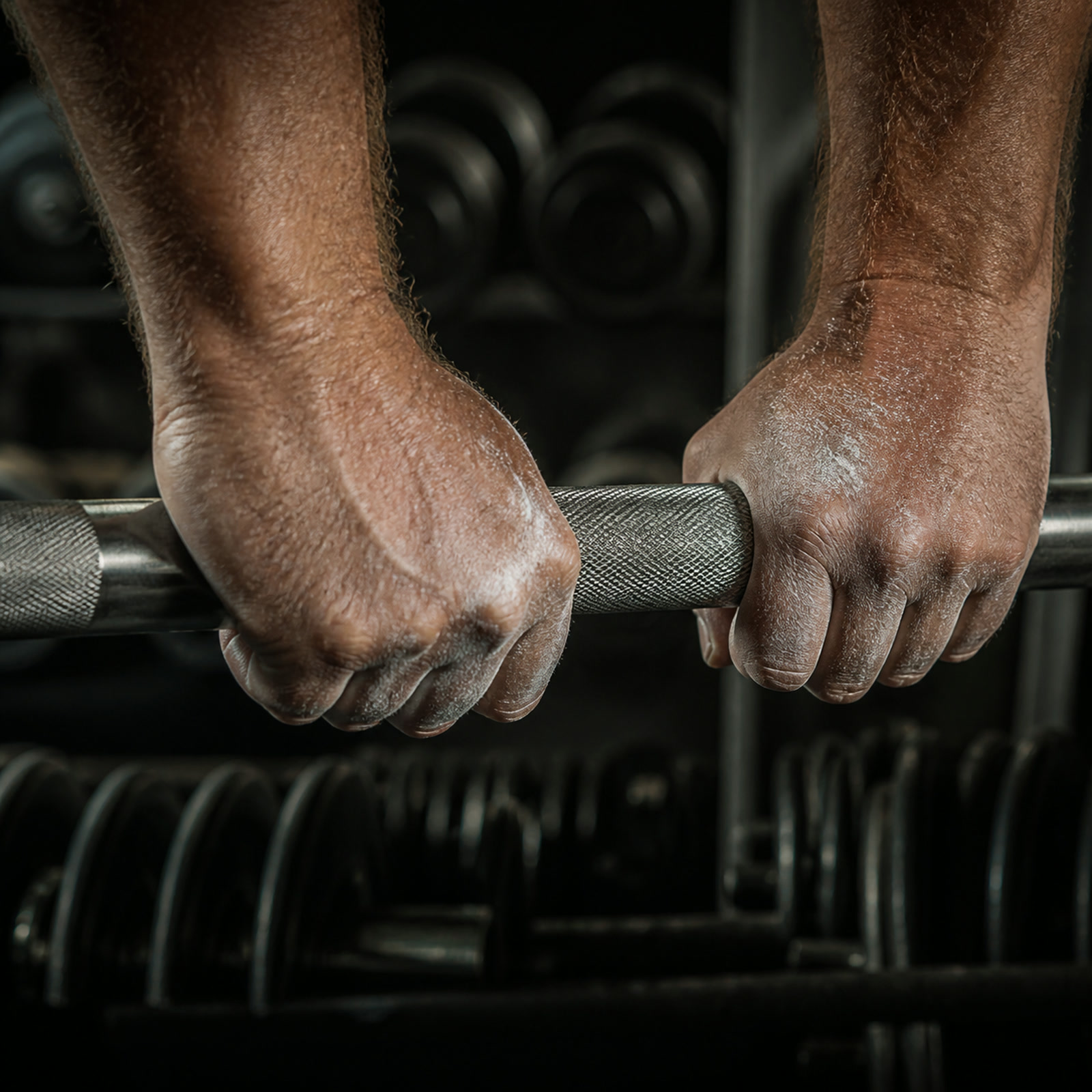
Knurling (the cross-hatched grip texture) varies: aggressive knurl for deadlifts/heavy pulls, moderate for general use. A center knurl helps the bar grip the back during squats but can scrape the neck in cleans.
Why a barbell over machines: it allows movement in all three planes, demands stabilizer recruitment, and carries over to athletic tasks — but it requires more technique and often a spotter (see free-weights-vs-machines, spotting).
Key facts
- Men's Olympic bar: ~20 kg (44 lb), ~7.2 ft, 50 mm rotating sleeves.
- Women's Olympic bar: 15 kg (33 lb), 25 mm grip.
- Standard bar: ~1 in ends, ~4.5–9 kg, lower load rating.
- Olympic bars/plates are the gym standard; rotating sleeves protect joints in fast lifts.
- Best tool for granular, near-unlimited progressive overload.
Connections
- weight-plates — what loads the bar.
- specialty-barbells — trap, safety-squat, EZ-curl and other shaped bars.
- collars-clips — secure plates on the sleeves.
- free-weights-vs-machines — barbell is the archetypal free weight.
- progressive-overload — small-increment loading drives this principle.
Educational content only — not medical advice. Always consult a qualified professional for individualized guidance, especially around injury, pregnancy, or medical conditions.